Balloon flight
10.07.2017Examination complex training behind, now I can breathe out and relax for a couple of days. We have not yet left for Baikonur to see off Sergei Ryazanski's crew, but we are already beginning our preparation and training as the main crew of the Soyuz MS-06 spacecraft...
That was the beginning of this story. Now I am adding finishing touches at Baikonur, during the pre-launch training of the Soyuz MS-05 spacecraft crew. Anyway, I would like to share my unusual experience and unforgettable emotions from not so long ago.
Talking about my flight experience, I can say that one of my favorite flight assignments has always been training the skills of performing a final approach and landing in the situation of engine failure. A pilot performing this operation should be capable of analytical calculations in real time and have perfect piloting techniques. He should compare the rate of the altitude decrease and the rate of the reduction of the distance to the airfield, taking into account the wind which can vary at different heights, and try either to shorten the landing path or extend it. Then he extends the flaps for landing a bit sooner or a bit later, all of that to finally approach the runway at the correct height necessary for landing. For a regular landing, the altitude should be 260 meters when the plane is 4 kilometers away from the runway. Meanwhile, in case of emulating an engine failure at the same distance the altitude should be 1000 meters (for an L-39 aircraft). At first it seems that you do not just glide down onto the runway but nose-dive onto it at a higher speed compared to a regular landing. This is unforgettable and you feel really satisfied when you realize that you managed to do it, namely analyzed and calculated every detail, made corrections when necessary and finally landed the aircraft within "the exact landing area".
Later on, I found out that during the preparation for the Lunar program, in order to perfect the skills of landing onto the Moon, Soviet cosmonauts were trained to perform the landing in the situation of engine failure on helicopters — an auto rotation landing. They were going down to a chosen area. Then, under the pressure of the incoming air flow, the main rotor spun and at the very last moment, a few seconds before touching the ground, the pilot created the lift power enough to reduce vertical speed and land safely by changing the position of the main rotor blades for a moment.
In April 2017 I had a chance to fly with the best pilots and to experience the emulation of an engine failure on the helicopter! I was delighted, I really want to learn this skill when flying a helicopter. But who could have thought that a balloon flight may as well provide you with an experience of emergency landing with failed engine!
Not so long ago, my kids and I decided to fly a hot air balloon. I am going to spare you the details of our preparation here. It would be enough to say that our adventure began quietly, the only mischief being mosquitoes who flew out on their evening hunt and tried to ease the burden of our balloon in every possible way, namely carry us away one by one before the balloon was even launched. Finally, we got up in the air, the kids enjoyed the trip and so did I. Our pilot was very emotional and easy-going, and he was an aviator just like me. A soulmate, so to speak. I don’t know why but I asked him: "At what vertical speed does the balloon go down if the hot air burner is off?" The answer came at once, technical and precise. With the burner switched off, the balloon goes down at the same vertical speed as the parachute when newbies jump with it: 5.5 meters per second. I surprised myself with this question. Why did I ask about this? Meanwhile, we spent twenty minutes in a beautiful drifting mode flight under the clouds barely moving up in the sky. We were slowly moving "forward", that means where the wind blew. A small forest was stretching below. We were «to come into a landing» right after we flew over a couple of fields spreading behind the forest. All of a sudden, our pilot started fussing about and doing something quickly with the gas cylinders. I looked down and got it: we were parachuting down onto this very forest below, just like the good old D-1-5u parachute does (the first parachute of a newbie) at the speed so familiar to me: 5.5 mps... The lower we went, the faster our pilot tried to reattach the hoses from some gas cylinders to others. I was trying to help him and kept the burner turned on but it was unlikely to heat anything. I hoped though that it would give us a chance to win a few seconds at least. This is when you feel adrenaline rushing through your veins! When an impenetrable swampy thicket was well visible below and I could have sworn I saw a squirrel staring at us with wide, bewildered eyes — a touch of imagination in the midst of our predicament, — I realized that there was no time left. I was scared for the kids. Landing at this vertical speed requires a definite position of the arms and legs of the parachute-jumper not to get injured, and any jumper knows it. As well as I do. But the kids! Besides, we were not in the parachute suspension system but in a basket hardly big enough for the four of us and four gas cylinders (of sorts)! I was afraid that the kids could get injured when landing (my daughter already had a cast on her limb at that moment), that the basket could land onto an old dry trunk which were in abundance around there and then topple over. How would I be able to catch and hold my kids then?! And the kids watching our fussing around seemed to have fun...
As soon as the balloon started touching the tops of the trees, it began to slow down and, pierced with the branches here and there, stopped cold. We were hanging four or five meters above the ground, just at the level where that squirrel could be sitting at the moment and looking at us with questioning eyes. This question I could easily guess but never answer.
I had already started to crack my head on how to go down from this height and get out of the forest which was small in size but absolutely impenetrable, when a backup burner came to life again. It helped us take off, and the pilot landed the balloon right behind the forest. After the landing, I found out that for some reason, the main cylinders did not have as much gas as our pilot assumed, the balloon was not his own and this situation could have been easily avoided if the pilot had known the design of the burner used: all one had to do was to switch one valve to connect another pair of gas cylinders... I really hope that it was a good lesson for him and he drew all necessary conclusions. This incident made me think about many things: the responsibility of the balloon flight organizers, the responsibility for my kids... The kids were delighted with the flight, and "the falling down", and the situation in general. So I decided not to think too much about it.
Yet there was one thought haunting me — how that small forest happened to get in our way. And only later that I realized how lucky we were to meet this forest at the right time in the right place. Our landing turned out to be soft and safe, unlike any landing with engine off onto an open area. So, this time, like many times before, everything turned out well thanks to the conjuncture which do not depend on people. Someone would call it a coincidence, so be it. But I would rather say thanks to the Lord!
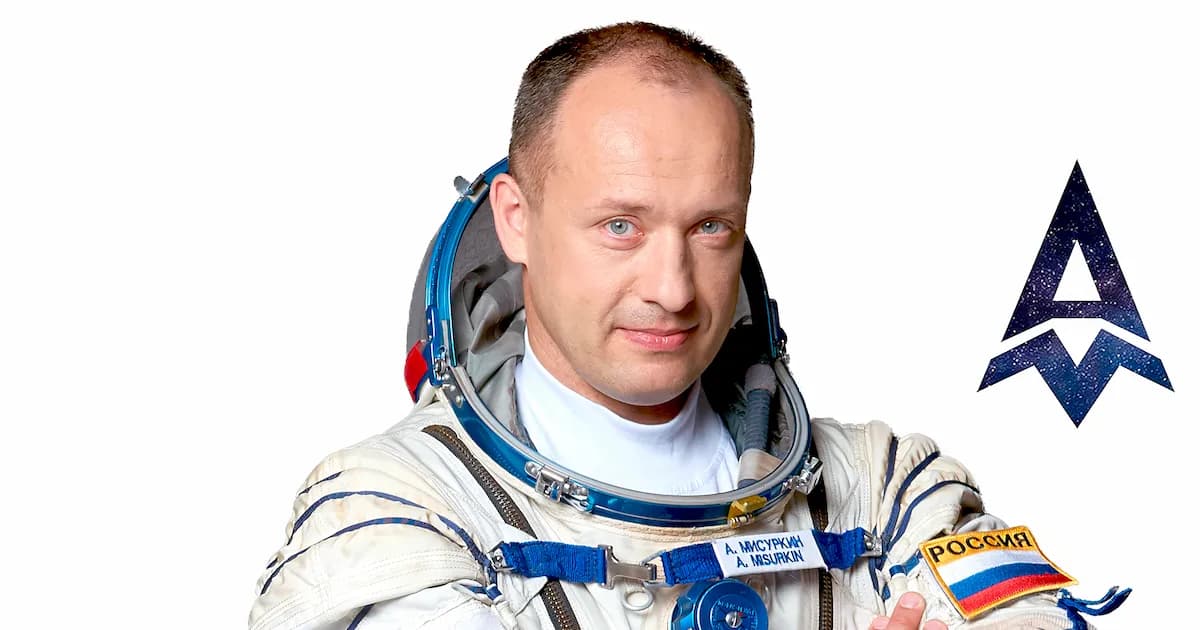
Hello! I'm cosmonaut Alexander Misurkin. My AI assistants Luke Vestin and "19-57" will answer your questions about space exploration and my experience.
To chat with Luke – simply type your question in the text field. If you're looking for space-related information from online sources, type "19-57, find information about ..." (it may take a moment – our robot is very thorough when searching the web).
Enjoy the conversation!