Cosmonauts of the Future: Generation Transformation and New Opportunities
30.04.2025How Modern Teenagers and Students Think About Space
Over the past decades, young people’s attitude to space has changed significantly. In Soviet times the profession of a cosmonaut had an aura of romantics and patriotism, and today they have a more pragmatic approach to this area.
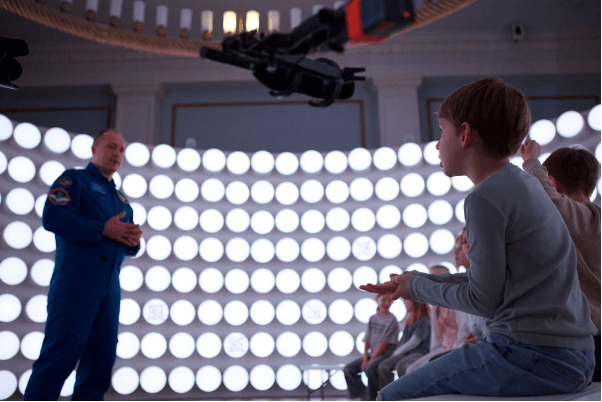
Modern teenagers are growing up in a world where space no longer seems unattainable and mysterious. They are used to high-quality photographs of distant galaxies, regular rocket launches, broadcasts from the ISS, and even the idea of space tourism. Space technologies have become part of everyday life: from satellite navigation in smartphones to images from space in mapping services.
However, today the space industry competes for youth’s attention with a huge number of other activities. Computer games, social networks and digital entertainment that do not require much effort easily capture the attention of teenagers, while the road to cosmonautics means many years of targeted work.
Space as a Profession: a Dream or a Real Goal?
For today's youth, the profession of cosmonaut remains one of the most respected, but no longer occupies the same dominant position in career aspirations as in the days of Yuri Gagarin or Alexey Leonov, due to a few factors.
First, the ideas about the diversity of space professions have expanded. Young people realize that work in the industry does not necessarily mean flying into space. One may create rockets, develop life support systems, design Mars rovers or analyze data from space telescopes.
Second, the information field has changed. In Soviet times, information on how to become a cosmonaut was very limited. Today young people are well aware of the difficulties of this road, strict requirements and length of training.
At the same time, the emergence of private space companies and the prospect of space tourism create the impression that space is becoming more accessible. This generates new interest, although with a different motivation than in the era of the “space race”.
My personal experience shows that many young people are genuinely interested in space, but they rather see it as a fascinating field of study than a viable career. For this interest to develop into a professional aspiration, additional motivational factors and accessible educational opportunities are needed.
Values and Motivation of the New Generation
The motivation of modern youth to work in space industry is significantly different from that of the first generations of cosmonauts. Patriotic motives and the desire to be the first were key earlier, and nowadays young generation has different values.
Interest in solving global challenges facing humanity is coming to the fore: climate change, search for new resources, planetary protection from asteroids, fundamental scientific research. Young people want to see a direct connection between their work and results that are significant for humanity.
For many young people today, a balance between professional and personal life is also important. However, it is extremely difficult to achieve in the profession of a cosmonaut that suggests many years of training, long expeditions and strict restrictions.
It is also important that modern youth wants to see quick results from their efforts, and the road to becoming a cosmonaut requires many years of work with no guarantee of achieving the goal. For example, it may take 15 to 20 years of training and work from entering university to the first flight.
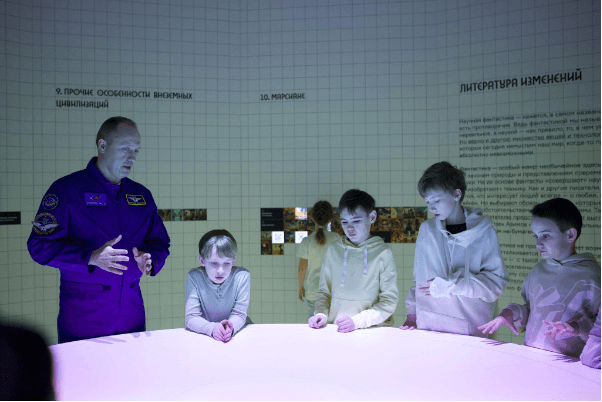
At the same time, unlike the Soviet period, when the space program was exclusively state-owned, today young people are attracted to innovative projects of private space companies with their dynamic corporate culture and ambitious plans to explore Mars and other planets.
How the Road to Cosmonautics Is Changing
Back to the Past: a Brief Overview of the Soviet System
In Soviet times, the way to cosmonautics was strictly regulated and much less transparent than today. Recruitment to the corps took place primarily through departmental channels: among military pilots and engineers working in the space industry. Information was distributed only within the relevant organizations.
A typical example from my personal experience: even as a military pilot in the early 2000s, I might never have known about the opportunity to submit a report for selection to become a cosmonaut. At that time, aviation was going through difficult times, and the regimental senior executives were not interested in trained pilots leaving their place of service, so orders for recruitment would not reach the flight crew. Anyway, thanks to a speech by Vasily Vasilyevich Tsibliyev, then head of the Cosmonaut Training Center, that I accidentally heard on the radio I could find out the contacts of those responsible for the recruitment, which helped me submit my report in time.
The training of cosmonauts was carried out in secrecy, and information about the requirements and stages of selection was not available to the general public.
What's Available Now: Digital Resources and New Tools
Today, the situation has changed dramatically. Since 2012, Russia has been holding open recruitments for the cosmonaut corps. Any citizen who meets the requirements can apply. Information about the selection criteria, required documents and testing stages is available on the official website of the Cosmonaut Training Center.
The digital age provides unprecedented opportunities for self-study. Access to domestic educational resources has expanded significantly. Educational platforms such as Open Education (a project of leading Russian universities), Modern Digital Educational Environment (Ministry of Science and Higher Education of the Russian Federation), and University Without Borders (Lomonosov Moscow State University) offer courses in astronomy, space technology, and related sciences from leading Russian universities. Another important resource is “Roscosmos Scientific and Educational Platform” (Roscosmos State Corporation), with materials on the space industry, adapted to different educational levels.
Coursera, edX, and Stepik platforms are developing abroad; they are also available to Russian users and offer courses from top global universities and space agencies.
Professional simulators and virtual laboratories are used for mastering skills in working with space systems. For example, software for modeling orbital maneuvers or gravitational interactions between space objects is available in educational versions. In Russia, such projects as the "Virtual Mission Control Center" (Bauman Moscow State Technical University) are being developed. Yuri Gagarin Cosmonaut Training Center provides special educational programs for children, including excursions, visits to simulators, meetings with cosmonauts, interactive classes. These events help schoolchildren master the basic principles of spacecraft control. Cosmocenter is particularly valuable. It is an interactive educational complex at the Cosmonaut Training Center, where you can try yourself as a cosmonaut or a Mission Control Center employee. The environment of the International Space Station has been recreated there, and simulators have been installed to practice spacecraft control skills.
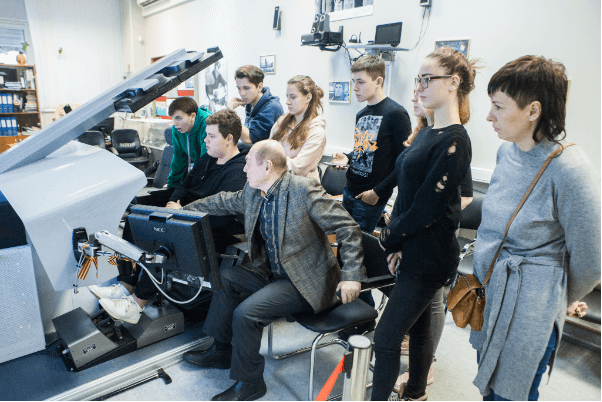
The possibilities for remote participation in scientific projects related to space have expanded significantly. Russian citizen science projects such as Astrokurs (Moscow Planetarium), Map of the Universe (P.K. Sternberg State Astronomical Institute) allow anyone to contribute to the analysis of space research data.
Educational experiments on the ISS involving student teams have become a particularly important tool. For example, as part of the Sphere experiment, students were able to program robotic spheres that carried out specified programs in orbit with the participation of cosmonauts. This direct interaction between education and space program creates a strong connection between the educational process and real work.
Russian space education is actively integrating into international programs through such initiatives as the Skolkovo Space Program (Skolkovo Foundation), Space-π (Foundation for Assistance to Small Innovative Enterprises), and other projects that allow young researchers to take part in global space development.
However, despite these opportunities, the challenge of competing for young people’s attention remains. In a world where computer games and social media provide instant feedback and fun without much effort, the long, laborious preparation for a space career may seem less appealing. Therefore, the key task is to create interesting, exciting educational formats that can compete with digital entertainment.
What Opportunities Do Future Cosmonauts Have Today?
Clubs, Olympiads and Workshops for Schoolchildren
There is a diverse infrastructure of extracurricular education for children and teenagers interested in space. Clubs of astronautics, aircraft modeling and rocket modeling exist in many schools, creative centers and planetariums.
In Moscow, a significant career guidance center is the Moscow Museum of Cosmonautics, where regular educational programs are held for schoolchildren of all ages. The Moscow Planetarium also offers astronomy workshops and lecture programs.
Out of the space-oriented Olympiads and competitions, one should pay attention to the All-Russian Olympiad “Cosmos” (Russian Cosmonautics Federation) and the championship “Air Engineering School” (Lomonosov Moscow State University, CanSat in Russia), where schoolchildren create working models of satellites.
The “Star Relay” competition (Yu.A. Gagarin Cosmonaut Training Center) gives the winners the opportunity to visit Star City and meet working cosmonauts.
There are also specialized centers for in-depth study of space: the V.P. Savinykh Children's Space Center (Kirov), space divisions in the Quantorium technology parks (Fund for New Forms of Education Development) in many cities of Russia, aerospace shifts in the educational centers Artek (Republic of Crimea), Sirius (Sochi), Orlyonok (Krasnodar Region).
Programs, Courses and Competitions from Roscosmos
Roscosmos State Corporation is implementing a number of educational initiatives aimed at attracting young people to the space industry. The Space Class project involves the creation of specialized classes with in-depth study of space-related subjects in Roscosmos partner schools.
There are targeted training programs for students from Roscosmos enterprises, providing guaranteed employment after graduation. This is an important mean for preparing the industry's personnel reserve.
The “Planet Duty Officer” competition (Roscosmos State Corporation together with the Foundation for Assistance to Innovations and Skolkovo) gives schoolchildren the opportunity to work with real data from Earth remote sensing satellites, solving current scientific and practical problems.
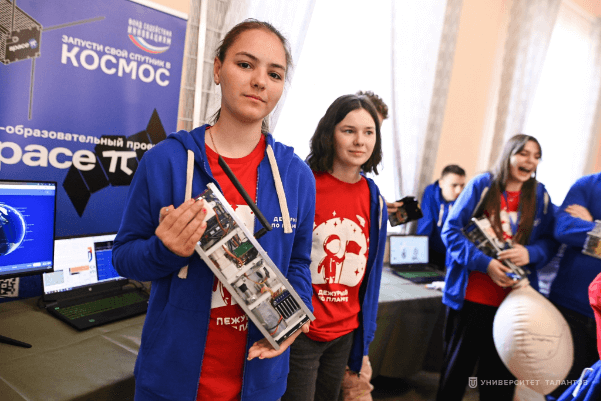
Final of the Sixth Space Shift of the Planet Duty Program
Every year, Roscosmos holds all-Russian competitions: “Star Relay”, “Space”, “I Want to Be a Cosmonaut”. Winners and prizetakers receive real opportunities for further professional development together with recognition.
The development of cooperation between Roscosmos and a wide range of universities within the framework of student competitions and projects deserves special attention. Active involvement of students at the early stages of training may become the key to forming a new generation of specialists in space industry. Formats such as the Sphere experiment, where student teams develop software for spacecraft and cosmonauts in orbit become their “remote hands,” create a direct link between education and real space activities.
Where to Study to Become a Cosmonaut: Education and Main Steps
The journey to cosmonautics begins with obtaining the appropriate education. Although theoretically a specialist of almost any profile can become a cosmonaut (given he/she meets medical and other requirements), there are areas of training that provide an advantage.
Universities and Faculties
A special place in the training of cosmonauts is traditionally occupied by flight training institutions. The Krasnodar Higher Military Aviation School of Pilots and the St. Petersburg State University of Civil Aviation train pilots who have a good chance of joining the cosmonaut corps with further professional growth.
Key technical universities are the following.
- Bauman Moscow State Technical University with the faculties of Special Mechanical Engineering and Power Engineering.
- Moscow Aviation Institute (MAI) with the Aerospace faculty.
- MIPT with the Faculty of Aerophysics and Space Research.
- Samara University with the Institute of Rocket and Space Technology.
- Peter the Great St. Petersburg Polytechnic University with the Institute of Power Engineering.
At Lomonosov Moscow State University, the following departments are of interest: physics, mechanics and mathematics, biology, and the faculty of space research functioning since 2017.
For those wishing to connect their space career with medicine, the main options are S.M. Kirov Military Medical Academy (St. Petersburg), I.M. Sechenov First Moscow State Medical University and N.I. Pirogov Russian National Research Medical University. They offer programs in aviation and space medicine.
The most popular specialized programs for the space industry include “Rocketry”, “Spacecraft and Upper Stages”, “Space Medicine”, and “Life Support Systems”.
After receiving higher education, it is necessary to gain at least three years of work experience in the specialty. For pilots of state, civil and experimental aviation, a qualification category of at least “Pilot 3rd class” is mandatory.
What Skills Are Important Today
Preparing for a space career is not only about getting a formal education, but also about developing a set of skills that a future cosmonaut will need.
In the academic field, advanced study of physics, mathematics, engineering sciences, and a good knowledge of English, the international language of space programs, are needed. Programming and modeling skills are required to work with modern space systems.
Physical training plays an extremely important role. In addition to general endurance, it is necessary to develop coordination of movements, vestibular apparatus, and the ability to work under extreme conditions. Sports activities have a double value: not only they develop physical qualities, but also contribute to the formation of stress resistance. Judging by my experience, the best way to develop this quality is through participation in sports competitions, when a person learns to be efficient under high pressure and limited time.
“Soft skills” are no less important: teamwork, communication skills, leadership, the ability to make decisions in non-standard situations. A cosmonaut must effectively interact in a multinational team, often in the context of a language barrier and cultural differences.
One of the key qualities is the ability to learn and retrain. Space technologies are constantly improving, and the cosmonaut has to master new equipment and methods throughout his or her career.
Developing Children and Teens’ Interest in Space
Online Resources and Films
Digital age provides unprecedented opportunities for independent exploration of space. Among high-quality educational resources, we can name official websites of Roscosmos and NASA with pages for children containing adapted materials about space research.
For studying astronomy, I can recommend such resources as Stellarium (free software), the Astronet website — the largest Russian-language astronomical portal, and the PROCosmos educational platform (Roscosmos).
Mobile applications are becoming an effective learning tool: Star Walk 2 (Vito Technology) for exploring the starry sky, NASA App (NASA) for getting the latest news and photos from space, Space Flight Simulator (Brixton Dynamics) for emulating space flights, Solar System Scope (INOVE) for getting to know the planets.
Popular science and documentary films about space are of particular value: BBC documentary series (Universe and Wonders of the Solar System), National Geographic films about space, as well as feature films with scientific authenticity: Apollo 13, The Martian, Challenge.
Video channels dedicated to space are growing in popularity. For example, "First Space (Cosmo)" offers great popular science videos about space research, the latest missions and technologies.
While video content allows us to observe space technologies in action, books about space, which we discussed in detail in a separate article of our project, provide an opportunity to delve deeper into the theory and history of cosmonautics, and to study it systematically and consistently.
Today, a team of like-minded people and I are working on a book project that comprehensively describes modern manned cosmonautics. The book, under the working title “Human Spaceflight in the 21st Century. The Beginning,” will provide a visual representation of both the work of cosmonauts and astronauts and the ways to the profession today. It is scheduled for publishing by the next Cosmonautics Day.
The Role of Family, School, and Environment
Family plays a key role in developing an interest in space. Joint observations of the starry sky with a simple telescope or even binoculars, visiting planetariums and space museums, discussing space news may spark a child's interest in space exploration.
The school can support this interest by integrating space topics into physics, astronomy, geography, and history lessons. Organizing themed science weeks, astronomical observations, and meetings with representatives of the space industry helps schoolchildren see practical application of knowledge they receive.
An important role belongs to the informal environment: participation in astronomy clubs, scientific and technical festivals, space-oriented Olympiads. Communication with like-minded people and mentors from the space industry can become a decisive factor in choosing a future profession.
In the context of competition with digital entertainment, interactivity and fascination of educational formats are of key importance. Workshops in rocket modeling, team engineering competitions, participation in citizen science projects make the acquisition of space knowledge lively and exciting.
Who Are the Cosmonauts of the Future and What Will They Be Like?
The cosmonaut of the future is a professional with a whole range of skills and qualities that correspond to the new challenges of space exploration. In the coming decades, we are likely to see significant changes in this profession.
First of all, the range of specializations in astronautics will expand. Earlier on, it was mainly military pilots and engineers who flew into space. Today we see doctors, biologists, physicists in the crews, and in the near future, specialists in space production, construction, and resource extraction on other celestial bodies will be needed.
The set of competencies will also change. Along with traditional engineering and physical skills, the role of digital competencies, intercultural communication, and psychological stability will increase. For long-distance space missions, namely to Mars, the ability to operate autonomously in conditions of significant communication delays with Earth will become critical.
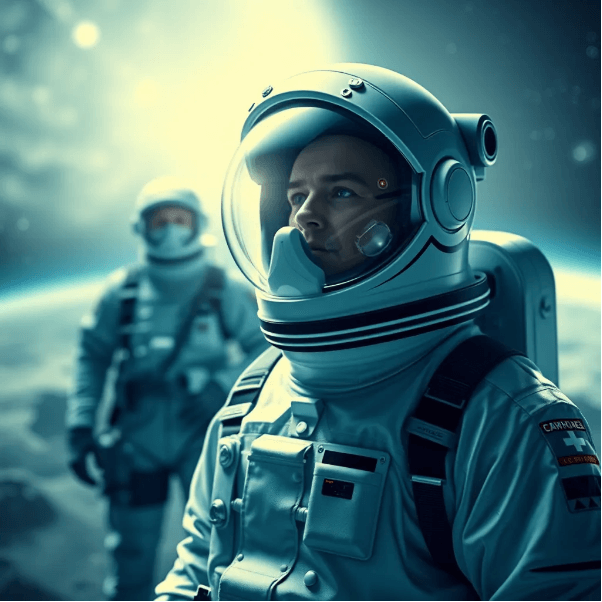
Democratization of access to space will lead to greater diversity in crews in terms of age, gender, and nationality. We already see private companies sending non-professional astronauts into space.
However, despite all the technological and organizational innovations, mandatory basic qualities for a cosmonaut will remain the same: physical and psychological endurance, the ability to work in a team, the ability to make decisions under extreme conditions, and constant readiness for training.
The way to becoming a cosmonaut will still require dedication, many years of work and overcoming numerous challenges. But for those ready to follow their dream, despite all the difficulties, this way will become more transparent and structured.
When communicating with a wide variety of audiences, from schoolchildren to company executives, I always emphasize that cosmonauts are not superhumans, but ordinary people with an extraordinary dream and a willingness to work on its implementation every day.
“In life, you need to move along your strong line to be as successful as possible,” as our psychologist told me during my next test. I fully agree. Strive to do what you truly love, and then success will definitely come, regardless of whether your road leads to space or other professional heights.
To learn more about how the cosmonaut profession is changing and what opportunities are opening up for future generations, watch the final episode of the Space Calling series.
Pilot-Cosmonaut, Hero of Russia
Alexander Misurkin
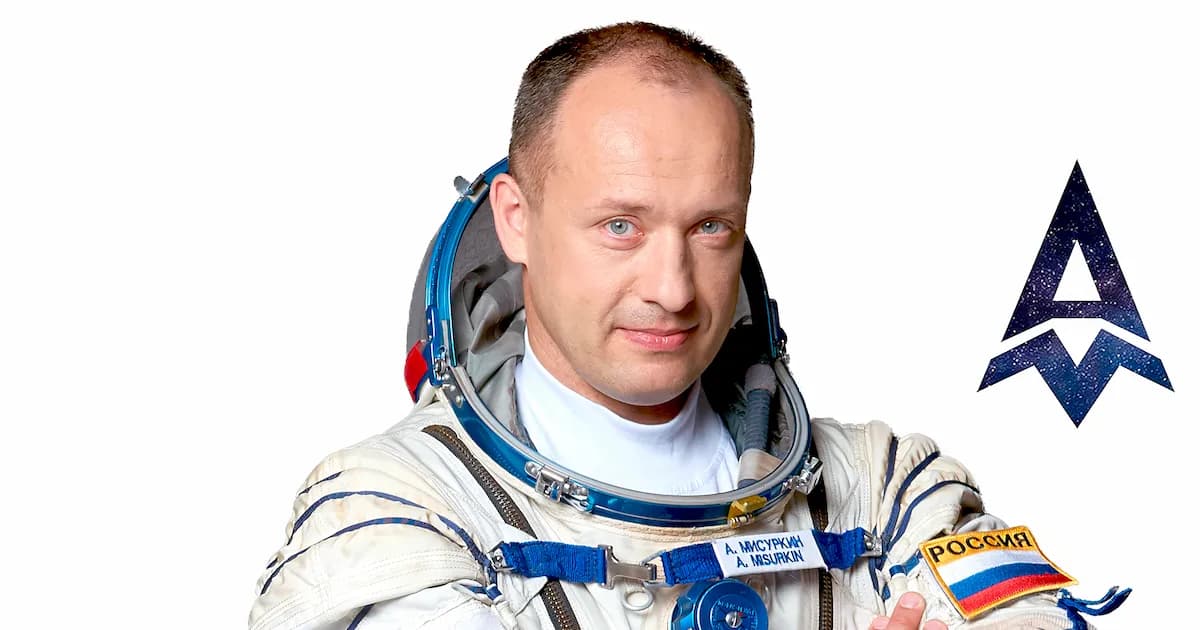
Hello! I'm cosmonaut Alexander Misurkin. My AI assistants Luke Vestin and "19-57" will answer your questions about space exploration and my experience.
To chat with Luke – simply type your question in the text field. If you're looking for space-related information from online sources, type "19-57, find information about ..." (it may take a moment – our robot is very thorough when searching the web).
Enjoy the conversation!