Evolution of Artificial Satellites: from First Prototypes to Present Day
04.05.2025As part of the “Space Calling” project, we continue a series of publications about space and everything related to it. Today, I will tell you about the history of artificial Earth satellites, from the first prototypes to modern technologies, their importance for science and humanity.
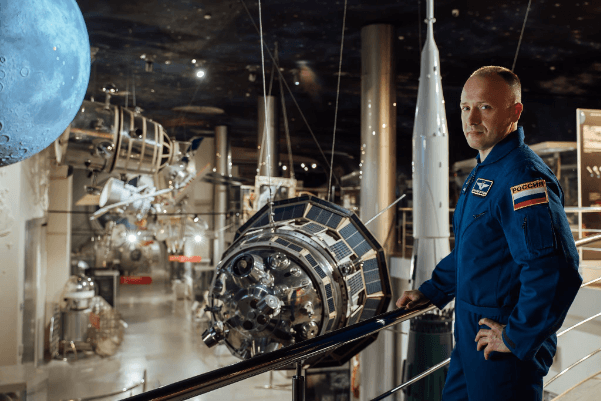
Prerequisites for the Creation of Artificial Satellites
The idea of launching an object into Earth orbit was theoretically substantiated at the beginning of the 20th century by the works of Konstantin Tsiolkovsky, who worked out the basic formula for rocket propulsion in 1903. The practical way to space satellites was long and began with experiments by rocketry enthusiasts. In the 1930s, Sergei Korolev headed GSJP — the Group for the Study of Jet Propulsion (the participants themselves jokingly called it “a Group of Scientists, Job not Paid for”). These early experiments laid the foundation for future space breakthroughs.
The Second World War gave a significant boost to the development of rocket engineering, rocket technology has advanced significantly. The post-war years became a time of rapid progress in the creation of launch vehicles capable of taking cargo beyond the atmosphere. By the mid-1950s, both the USSR and the USA announced plans to launch artificial satellites as part of the International Geophysical Year (1957–1958).
Launch of Sputnik 1
A historic event took place on October 4, 1957, when the R-7 launch vehicle was launched from the Baikonur Cosmodrome, putting the world's first artificial satellite into orbit. A team of engineers led by Sergei Korolev initially planned to launch a more complex device, but due to technical difficulties, a simplified version was created, which is remembered as Sputnik 1.
Technical Characteristics of Sputnik 1
The first space satellite was an aluminum sphere with a diameter of 58 cm and mass of 83.6 kg. The body was polished to a mirror shine for better visibility from Earth. Four 2.4–2.9 m long pin antennas provided radio transmission at frequencies of 20.005 and 40.002 MHz. Inside the satellite a radio transmitter, a power source, a fan, and a thermostat for temperature control were placed.
The satellite was placed into an elliptical orbit with a perigee of 215 km, an apogee of 939 km, and an inclination of 65.1°. The orbital period around the Earth was 96.2 minutes. The satellite's transmitters operated for 21 days, then the batteries were exhausted.
Goals and Objectives of the Mission
The main objective of Sputnik 1 was to prove the fundamental possibility of launching an artificial object into orbit. Scientific objectives included studying density of the upper atmosphere by changing the orbit, propagation of radio waves in the ionosphere, and testing methods for tracking space objects. In addition, the satellite launch had important political significance, since it demonstrated technological capabilities of the USSR.
Subsequent Launches and Development of Satellite Technologies
Sputnik 2 and the Dog Laika
Only a month after the first success, on November 3, 1957, the USSR launched the 508 kg Sputnik 2. On board was the dog Laika, the first living creature to be launched into Earth orbit. The device was equipped with instruments for measuring solar radiation and cosmic rays, which significantly expanded the scientific program of space research.
Sputnik 3 and Its Scientific Achievements
On May 15, 1958, Sputnik 3, weighing 1,327 kg, was launched. It was the first full-fledged space laboratory equipped with twelve different scientific instruments. This mission provided important data on the Earth's magnetic field, ionosphere, and micrometeorites. Sputnik 3 worked in orbit for 692 days and made about 10,000 revolutions around the planet.
Specialization and Development of Satellite Technologies
Since the early 1960s, satellites have become specialized by purpose. Meteorological satellites appeared, allowing weather forecasting, communication satellites for transmitting communication signals, navigation systems, and Earth remote sensing satellites.
In 1962, the first telecommunications satellite Telstar-1 was launched, marking the beginning of the era of satellite television and intercontinental satellite communications. In 1964, the formation of the international communications system Intelsat began, and in 1967, the Orbita system was created in the USSR.
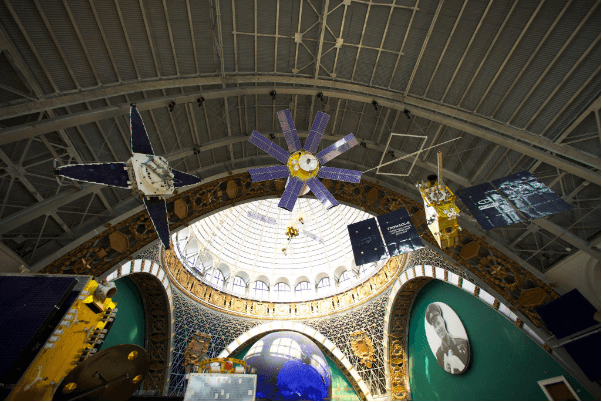
The next significant step was the creation of navigation satellite systems. In 1973, USA started developing the GPS system, the first satellite was launched in 1978. In the USSR, the GLONASS system was developed in parallel, and it started operating in 1982.
Modern Age of Satellite Technology
By the beginning of the 21st century, satellite technology has become an integral part of the global infrastructure. The growth dynamics of the number of active satellites in orbit is exponential: in 1957, only one satellite was launched, and by 2000, their number reached approximately 700, by 2010 — about 1000, by 2020 — more than 3000, and today the number of working satellites has exceeded 9000!
Satellite technology has been revolutionized by the miniaturization of electronics and the simplification of launch. Of particular importance was the emergence of CubeSat format — standardized small satellites in the shape of a cube with a 10 cm edge (weight about 1–1.5 kg), which can be combined into larger structures. This technology, developed in the early 2000s, has significantly reduced the cost of launching devices into orbit. Today, even small companies and universities can create and launch their own satellites.
Global satellite internet projects have made a significant contribution to increasing the number of satellites. American Starlink (SpaceX) has already launched several thousand devices into orbit and plans to increase the constellation to 12,000 units. British OneWeb is deploying its network. China is also actively developing its mega-constellations — Guowang (national satellite network) and commercial Galaxy Space projects are aimed at creating orbital constellations of thousands units. These large-scale projects radically change the situation in near-Earth space and create new challenges.
The Problem of Space Debris and the Future of Orbital Vehicles
The other side of active space exploration is the problem of space debris. According to the European Space Agency, as of 2023, there were about 34,710 objects larger than 10 cm in orbit, about 1,000,000 objects ranging in size from 1 to 10 cm and about 130,000,000 fragments ranging in size from 1 mm to 1 cm. Their total mass exceeds 11,000 tons.
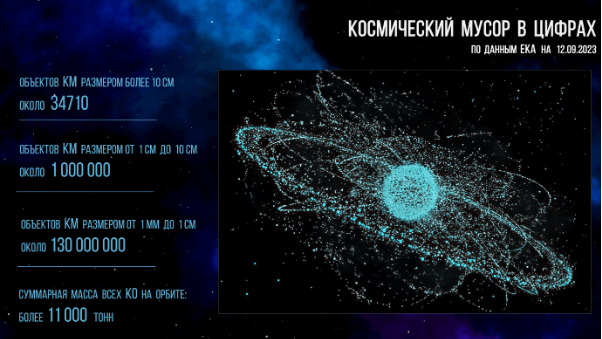
Space Debris in Numbers According to ESA, 12.09.2023
Objects larger than 10 cm - about 34,710
Objects ranging from 1 to 10 cm - about 1,000,000
Object ranging from 1 mm to 1 cm - about 130,000,000
Total mass of space debris in orbit: over 11,000 tons
According to the reports at the international conference on space debris held in Saudi Arabia in February 2024, the number of satellite collisions and breakups that lead to a cascade of new debris will increase even if we stop all space launches.
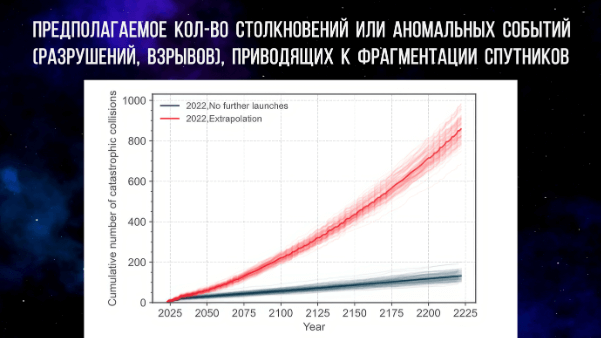
Estimated number of collisions or anomalies (disintegrations, explosions) leading to satellites’ disruption
Solving this problem requires international cooperation similar to that demonstrated in manned space programs. It is necessary not only to develop technologies to clear orbit of existing debris, but also to build satellites with their subsequent disposal in mind.
Interesting Facts About the First Satellites
The famous “beep-beep” signal of the first satellite purposedly included different durations so that it could not be confused with another source. The name “Sputnik” entered many languages of the world without translation, becoming a symbol of Soviet technological achievements.
Legacy and Significance of Satellites Today
The launch of the first artificial satellite opened a new era in human history: human activity went beyond the boundaries of our planet. Today, satellite technology has become an integral part of our lives, providing global communications, accurate navigation, weather forecasts, and Earth monitoring.
Space, like the world's oceans, requires a responsible attitude. Humanity must not only develop satellite technologies but also take care of the cleanliness of near-Earth space. The creation of devices for cleaning orbit from space debris is becoming one of the priority tasks in the space industry. Our behavior in space speaks volumes about our maturity as a civilization. Do we want future generations, and perhaps other civilizations, to think that we didn't care about our environment at all?
Pilot-Cosmonaut, Hero of Russia
Alexander Misurkin
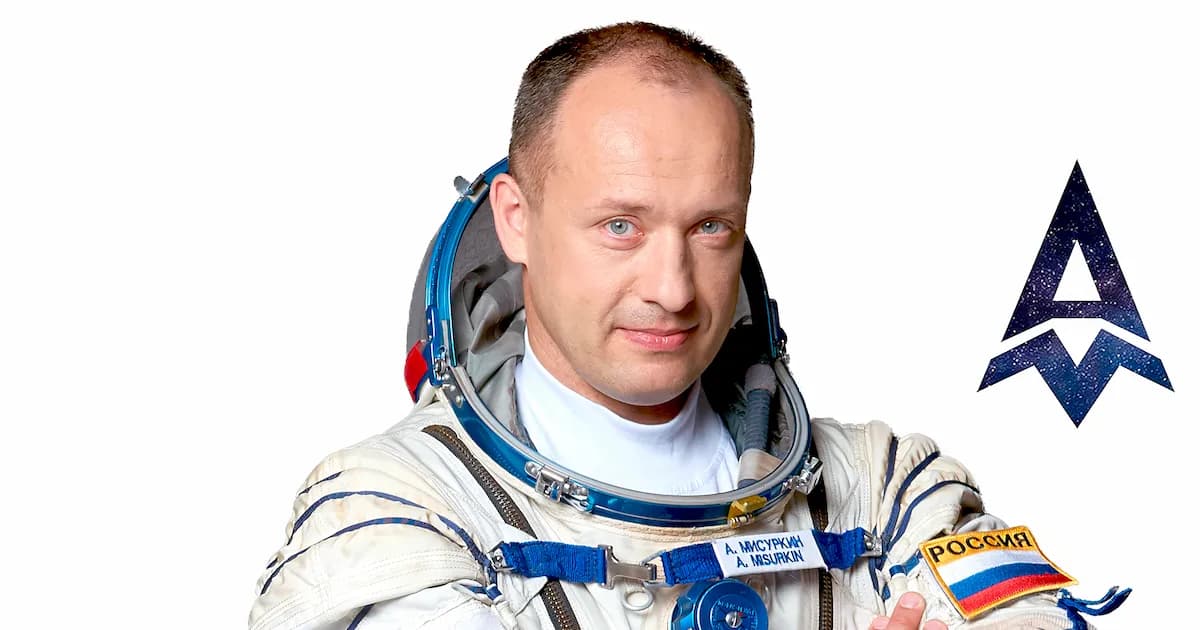
Hello! I'm cosmonaut Alexander Misurkin. My AI assistants Luke Vestin and "19-57" will answer your questions about space exploration and my experience.
To chat with Luke – simply type your question in the text field. If you're looking for space-related information from online sources, type "19-57, find information about ..." (it may take a moment – our robot is very thorough when searching the web).
Enjoy the conversation!