General Space Training: Main Stages and Disciplines
14.04.2025We continue to talk about the stages of cosmonauts training within the framework of the project “Space Calling”. Today we will find out what general space training is — the fundamental first step on the way to flights.
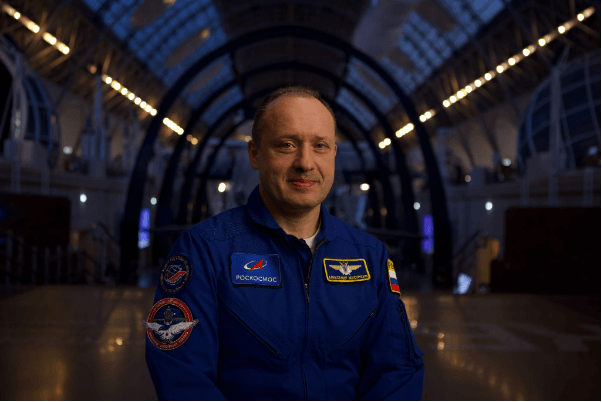
General Space Training: Definition and Goals
General Space Training (GST) is the fundamental, first stage of training for cosmonauts after enrollment in the corps. This is a mandatory program for all cosmonaut candidates, regardless of their previous experience and specialization.
The main objectives of the GST include the formation of basic knowledge and skills necessary for space flights, determining the professional suitability of candidates for further training and adaptation to working conditions in the space industry. Successful completion of the GST is a prerequisite for obtaining the qualification of Tester Cosmonaut and admission to specialized training for specific space missions.
Who Undergoes GST and When
General space training is mandatory for all candidates who successfully pass the selection and are enrolled in the Roscosmos corps. This is a single corps where future cosmonauts are recruited regardless of their initial professional orientation.
Sometimes foreign specialists may join the GST program as part of international cooperation, as was the case in the 2003 recruitment when two representatives from Kazakhstan underwent joint training with cosmonaut candidates from Roscosmos.
Statistics show that about 80% of candidates successfully complete the program. It starts one to two months after enrollment in the unit — this period is necessary for paperwork and solving organizational issues.
Requirements for Candidates
Candidates beginning general space training have already passed a rigorous selection process, but the requirements for them remain the same during the GST process.
Candidates must maintain excellent health and undergo regular medical examinations throughout training. Four times a year, cosmonauts undergo medical examinations of varying depth, which include tests of the vestibular apparatus and other specialized checks.
Physical fitness is of particular importance — it is necessary to maintain and improve physical performance, pass standards for running, swimming, and strength exercises.
Intellectual and educational requirements include the ability to absorb large volumes of technical information, readiness for intensive training, and proficiency in English at least at an intermediate level (for working with international documentation and communicating with foreign specialists).
Psychological requirements include stress resistance, ability to work in a team, discipline and responsibility. Failure to meet them may result in expulsion.
What Does GST Program Consist of?
The program is a comprehensive training system based on many years of experience in training cosmonauts. It is constantly being improved taking into account the development of space technology and requirements for crews.
GST covers various aspects: technical, scientific, medical, psychological and physical. The training is balanced between theoretical classes and practical training. The total training volume is more than 2500 hours and takes 1.8 to 2 years.
The working day is scheduled by the hour: as a rule, 5 days a week, 8 hours daily, of which at least 4 hours are allocated for independent training and at least 6 hours a week for physical training.
Fundamentals of Cosmonautics and Technology
Technical and theoretical training includes studying the fundamentals of astronomy, astrophysics, space ballistics, navigation and space communications. Candidates become familiar with the design and onboard systems of the Soyuz MS spacecraft, the structure of the International Space Station, namely the Russian segment.
At this stage, the principles of space technology construction are studied, without going into great detail. This is the foundation on which further training will be built at the following stages.
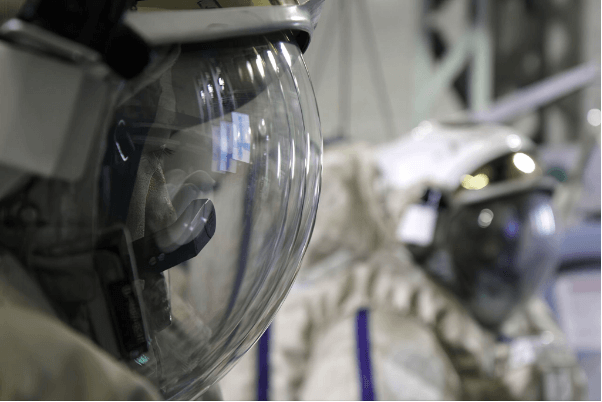
Psychological and Physical Training
Psychological training program includes training on developing stress resistance, exercises to strengthen teamwork, relaxation and self-control techniques. One of the important elements is testing in a soundproof chamber, where candidates undergo tests and training in conditions emulating stressful situations of space flight (isolation, limited space, unforeseen situations).
Physical training is aimed at the harmonious development of all physical qualities. Both in the selection process and in the process of further training, future cosmonauts strive to harmoniously develop endurance, strength, speed, agility, flexibility. To assess them, about 30 exercises are used, which allow for a comprehensive determination of the level of training. By the end of the GST, the total score must be no lower than 7 on a 10-point scale, and the standards are individual and depend on the age and gender of the candidate.
As one of my colleagues joked in a conversation with someone interested in the features of our physical training system: “We have great instructors, a magnificent pool and stadium. There is only one downside.” — “What is it?” — “You can't refuse to go there.”
Medical and Biological Training
As part of medical and biological training, candidates learn about the impact of space flight on the human body and study the basics of space medicine. Particular attention is paid to preparation for diving operations — candidates undergo special medical training, study the dangers that may arise underwater during decompression sickness, safety measures, signs of diseases and methods of first aid when they occur.
Parachute, Flight and Diving Training
Special parachute training for cosmonauts (SPTC) is a unique element of the Russian program. In the 1970s, the SPTC was transformed from a technical type of training to a psychological one, since after flights on the Vostoks, the crews no longer ejected from the descent vehicle and landed by parachute.
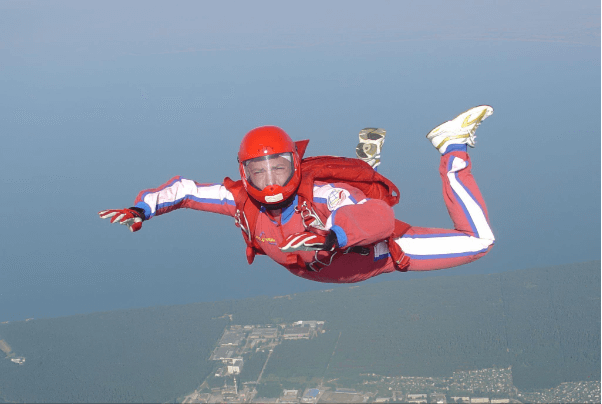
The task of the SPTC is to train and develop skills for maintaining performance under acute stress. First, we learn to control the position of our body in free fall to switch from regular parachute to a sports canopy like the Arbalet. Then the second stage begins, when future cosmonauts continue to improve control of their body in free fall, practice complex movements in space, solve mathematical and logical problems, dictating solutions into a voice recorder. In such training, not only we learn to control acute stress, but also get to know better those who “fall” from a height of 4000 meters next to us.
As for flight training, for candidates with no flight education it includes familiarization flights and basic piloting. Pilots, when possible, renew their skills. In my opinion, this is the best tool for developing psychological composure, responsibility and readiness to act when things don't go according to plan. Especially when you are flying without an instructor, and there is your colleague in the back cabin without a flight education, and you understand both the degree of trust in you and the level of responsibility. These are very subtle matters at the level of sensations, but they are the ones that help develop self-confidence and responsibility.
Diving training is carried out so that candidates can subsequently work underwater in the Orlan diving suit, which is adapted for this purpose. Before a person is allowed to do such work, he/she must undergo a diving training course to become familiar with the environment, learn how to use the equipment, and be aware of safety precautions and potential risks. First, we learn this at the GST, then we pass tests, and then we take part as divers in the support group when our senior comrades practice their future spacewalks in Orlan spacesuits.
During the GST, we also trained in winter forest and marshy survival and sea survival. The skills we practice are critical in the event of an emergency landing of the descent module in remote areas.
How Long Does the GST Last and How Are the Results Assessed
The duration of the GST is about two years (from 18 to 24 months) depending on the composition of the group and the specifics of the recruitment. Training takes place 5 days a week for 8 hours daily.
While studying the subjects, candidates take tests and exams. The assessment system is strict: a grade of 4.0 or higher (or “pass”) means successful completion and admission to the next stage. If the candidate receives a grade of 3.0 to 4.0, he/she is admitted to the State Exam, but a retake is not provided. If he/she receives a grade below 3.0 (“fail”), he/she is not admitted to the State Exam but has the right to retake no more than two subjects and no more than once in each, no later than one month before the State Exam.
After the completion of the entire GST program, a State Exam is held before the Interdepartmental Commission, which includes representatives of Roscosmos, the Cosmonaut Training Center, experienced cosmonauts and industry specialists. About 90% of candidates who reach this stage successfully pass the exam.
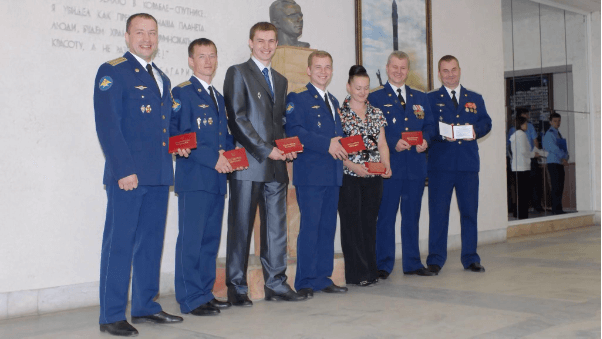
Recruitment of 2006 after passing the State Exam and receiving diplomas in 2009
Based on the results of the State Exam, the qualification of “Tester Cosmonaut” is awarded and the corresponding certificate is issued. Fun fact: I received a test cosmonaut certificate number 203, and I was the 116th to fly into space. This means that approximately 40% of those who received such certificates before me never went into space.
After GST
After successful completion of GST, the cosmonaut is promoted from candidate to test cosmonaut within the detachment. A new stage begins, namely training in a specialization group. It includes an in-depth study of specific spacecraft and stations, systems and equipment, as well as practicing actions in various situations, including abnormal ones. At this stage, a lot of attention is also paid to learning English, since the official language on the ISS is English and to be assigned to the crew, a proficiency level of at least Advanced Low is required.
The average waiting time for the first flight after the end of GST is from three to seven years. During this period, astronauts maintain and improve their skills, continue their training, and prepare for possible assignment to the crew.
The Importance of the GST for Future Flights
While preparing for a repeat flight, the USSR pilot-cosmonaut Vladimir Afanasyevich Lyakhov said a phrase that became widely known among cosmonauts and astronauts: “Everything will be different.” Whatever you prepare for, the situation will develop differently in flight. And this is true — my experience confirms it.
But the broad fundamental training that GST provides allows one to correctly interpret what is happening in flight, even if the situation differs from training. General space training is not just a set of knowledge and skills, but the formation of a special way of thinking and approach to solving problems that cosmonauts will face in the future.
To learn more about how cosmonaut training is carried out, watch the second episode of the documentary project "Space Calling".
All Russian cosmonauts went through this stage, and for each of us it became the foundation on which our entire future career in cosmonautics was built.
Pilot-Cosmonaut, Hero of Russia
Alexander Misurkin
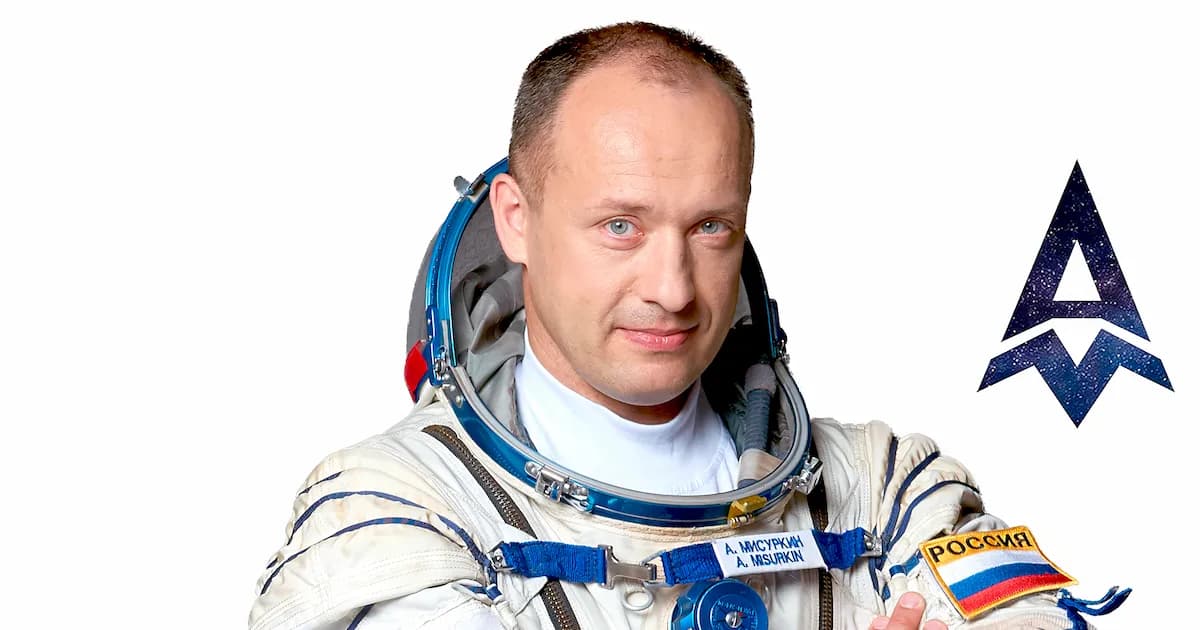
Hello! I'm cosmonaut Alexander Misurkin. My AI assistants Luke Vestin and "19-57" will answer your questions about space exploration and my experience.
To chat with Luke – simply type your question in the text field. If you're looking for space-related information from online sources, type "19-57, find information about ..." (it may take a moment – our robot is very thorough when searching the web).
Enjoy the conversation!