He Walked Toward His Flight for Seventeen Years
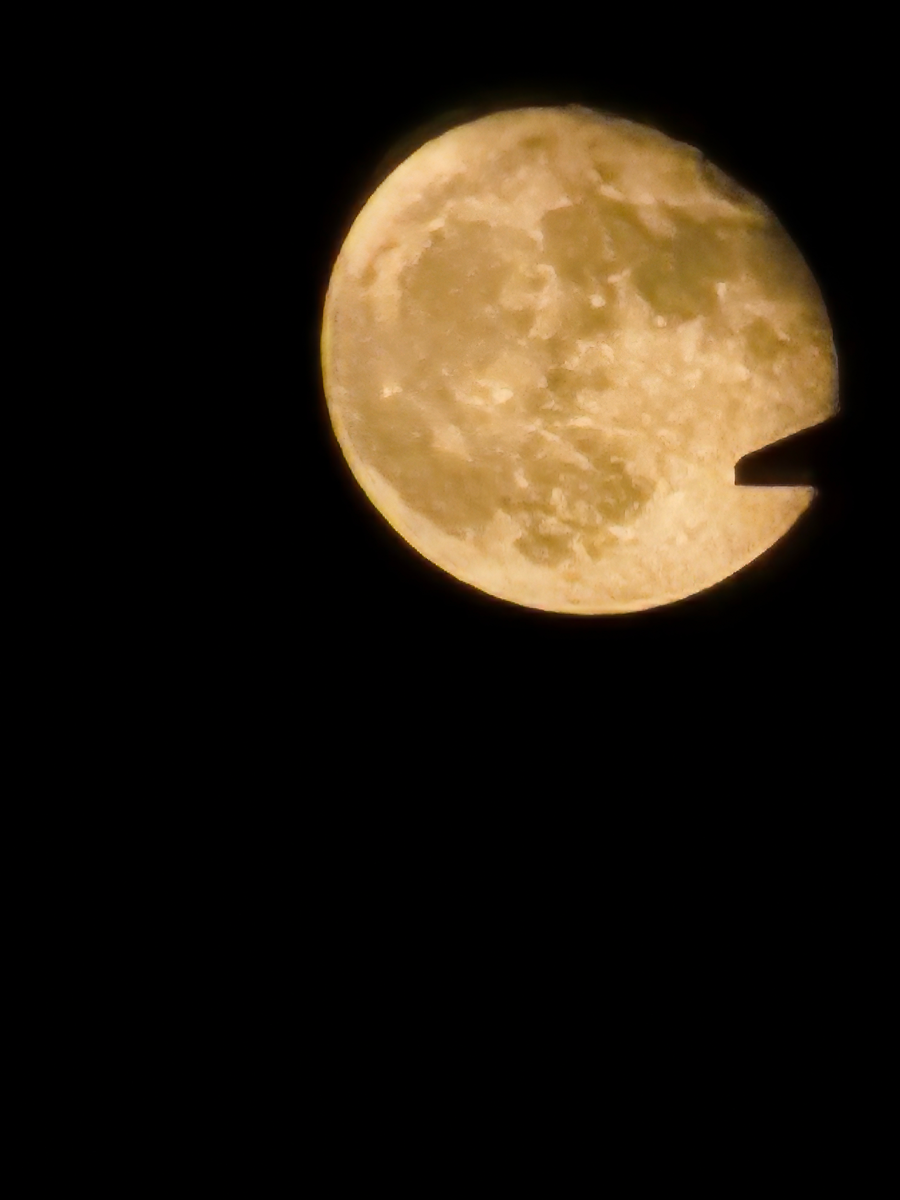
06.04.2026Last night I was walking the dog and watching a beautiful full moon. A thought caught hold of me and wouldn't let go: right now, somewhere between Earth and the Moon, three men and a woman are seeing our planet from a distance only 24 people had ever seen it from before — and the last time was over half a century ago. Now there are 28.
What are they thinking right now?
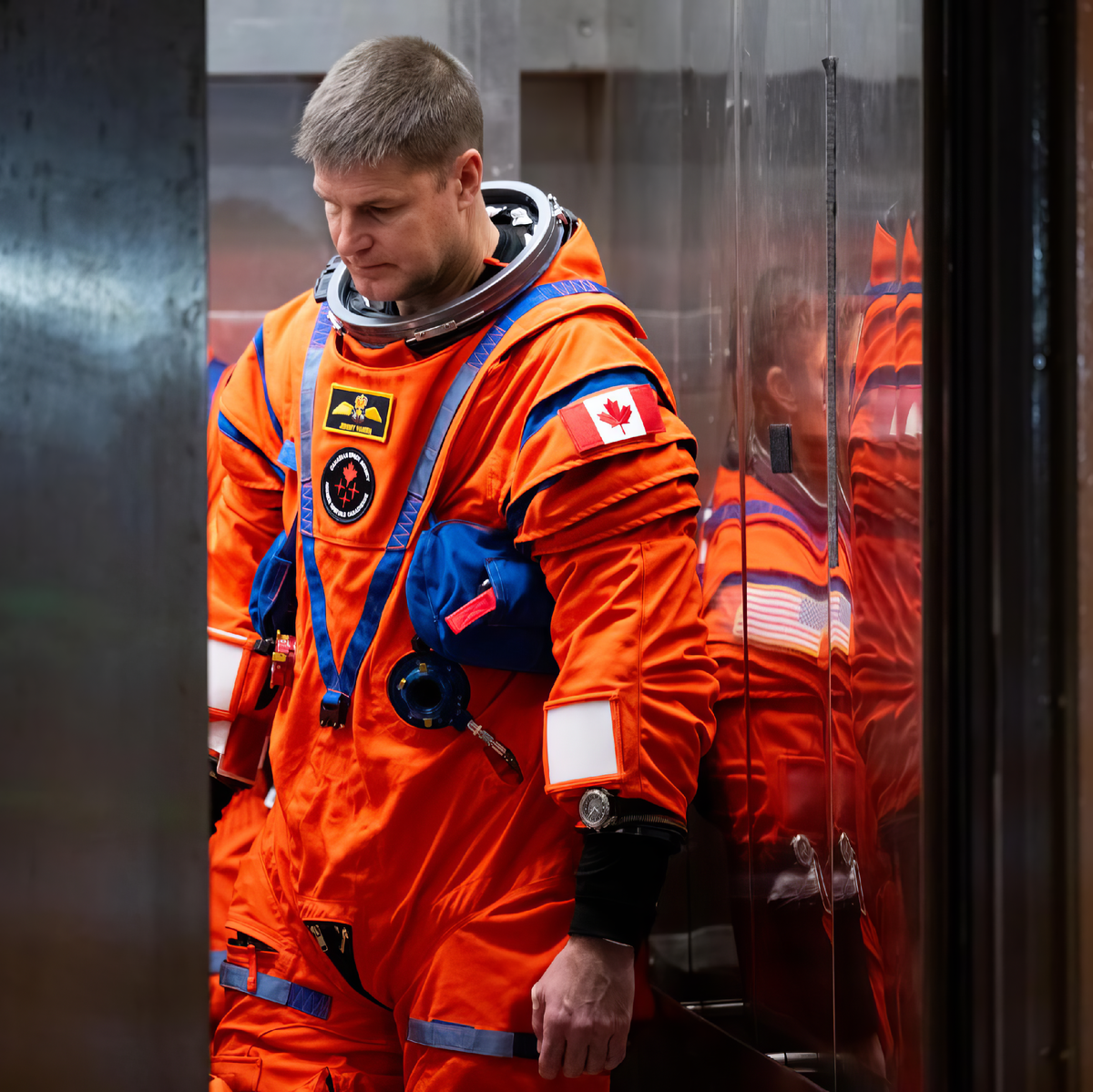
But I'm even more curious about what one of them is thinking — Jeremy Hansen.
The guy by the elevator
In 2009, I arrived for my first work trip to the Johnson Space Center in Houston, as a representative of the Cosmonaut Training Center. I coordinated communication between the Astronaut Office and our Center, helped colleagues who came in for training, took part in working meetings. There wasn't a great deal of substantive work, but the immersion in the international context of the ISS program was enormous. A chance to grow closer to colleagues, sharpen my English, understand from the inside how training is structured at NASA.
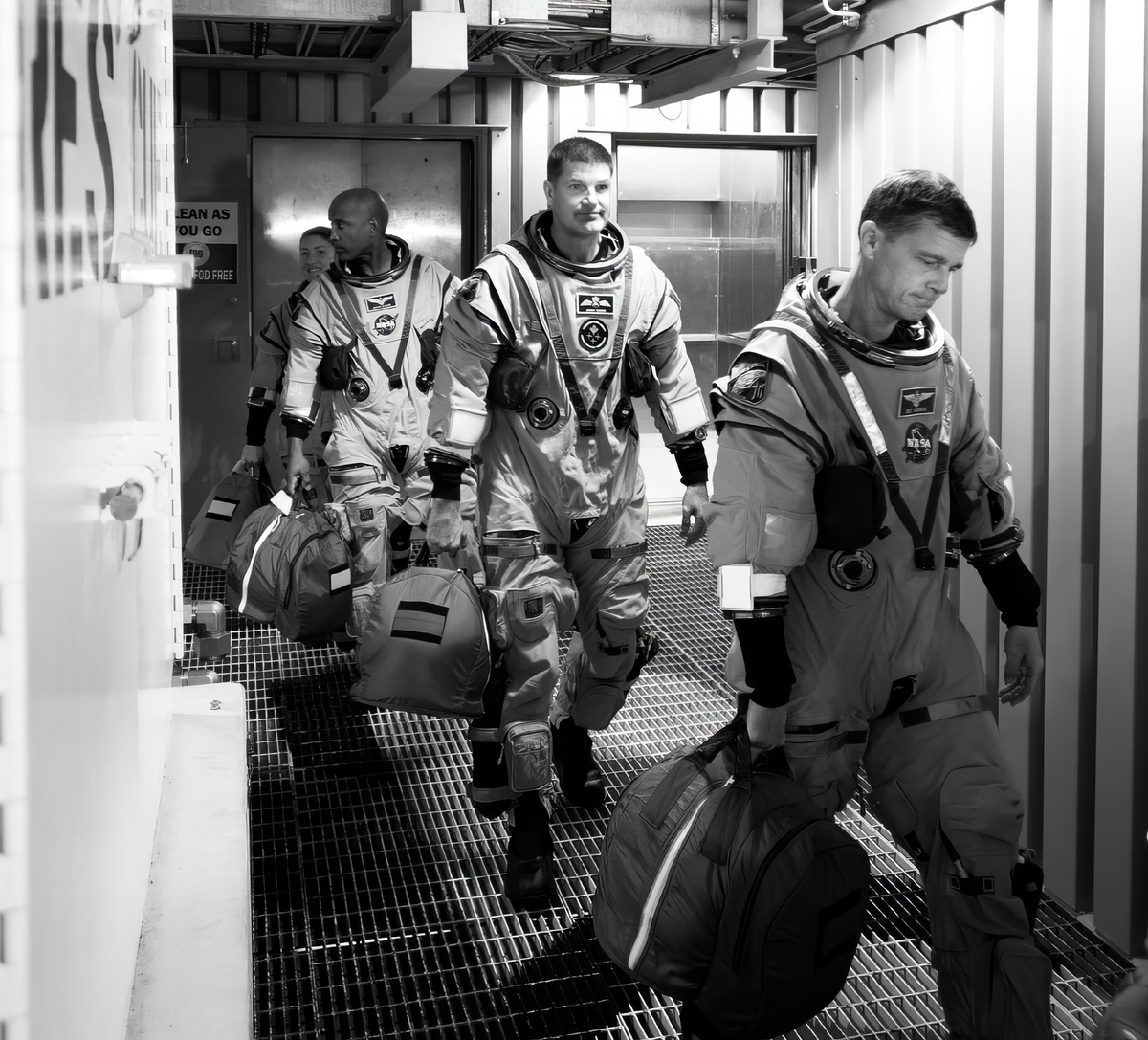
After my first attendance at an Astronaut Office meeting — where I introduced myself — three of us stepped into an elevator: Reid Wiseman, Jeremy Hansen, and me. Reid said I had told a great joke and made everyone laugh. That, really, is the only personal exchange I've had with Jeremy — we don't know each other well. Just three young pilots at the start of the road, with waiting ahead. Each for his own.
Seventeen years
In the time that has passed since that meeting, I managed to fly to space three times, complete my career as a cosmonaut, and build a new one — as a speaker. David Saint-Jacques — Jeremy's partner from the Canadian 2009 selection — flew to the ISS in 2018. Reid Wiseman flew in 2014. Many of those recruited to NASA and other agencies after Jeremy had long since been to orbit. And he kept training, taking exams, and waiting.
Not because he wasn't ready enough. The system that balances the contributions of partner states in the ISS program is structured so that a seat in the crew for a Canadian astronaut comes around rarely. Jeremy's turn simply wasn't reached. Year after year.
I got curious: in the history of manned spaceflight, has any professional ever waited longer for their first flight? My colleagues and I are doing extensive preparatory work — we're building a knowledge base on manned spaceflight for an AI assistant that will help anyone who wants to find reliable information. As part of this work, we systematized data on every cosmonaut and astronaut in the world — over 560 professionals, from Gagarin to the present. I dug into this database and compared the date of starting training with the date of the first launch.
The result: in all of history, only five professionals waited longer than Jeremy. The absolute record-holder is Chinese taikonaut Deng Qingming: nearly 25 years from joining the corps to flying to the Tiangong station in 2022.
Jeremy is sixth. About 17 years of waiting.
But his case is special. Because the wait did not end with a flight to low Earth orbit. Not with an expedition to a space station. But with a flight to the Moon! The first manned lunar flight in more than half a century.
Seventeen years — of training, taking exams, passing medical commissions, maintaining qualification. Watching those who came after you fly off. Understanding that very little depends personally on you. And through all of it — not stepping off the path. What gave him the strength?
What gives the strength to believe
I don't know what helped Jeremy through all those years. I won't speculate for him. But I know what helped me — at the moment I myself stood at a fork in the road.
From the decision of a fourteen-year-old boy from Oryol to the first space flight — twenty-one years. Most of that path came together for me surprisingly quickly. A gold medal at graduation from flight school gave me the right to choose my service location — I chose the place where I could fly more (I stayed on as a flight instructor at the academy). I earned First Class as one of the first in my cohort. I went through cosmonaut training rapidly. But there was one moment — not of weakness, more of a fork — when I seriously considered turning onto another road.
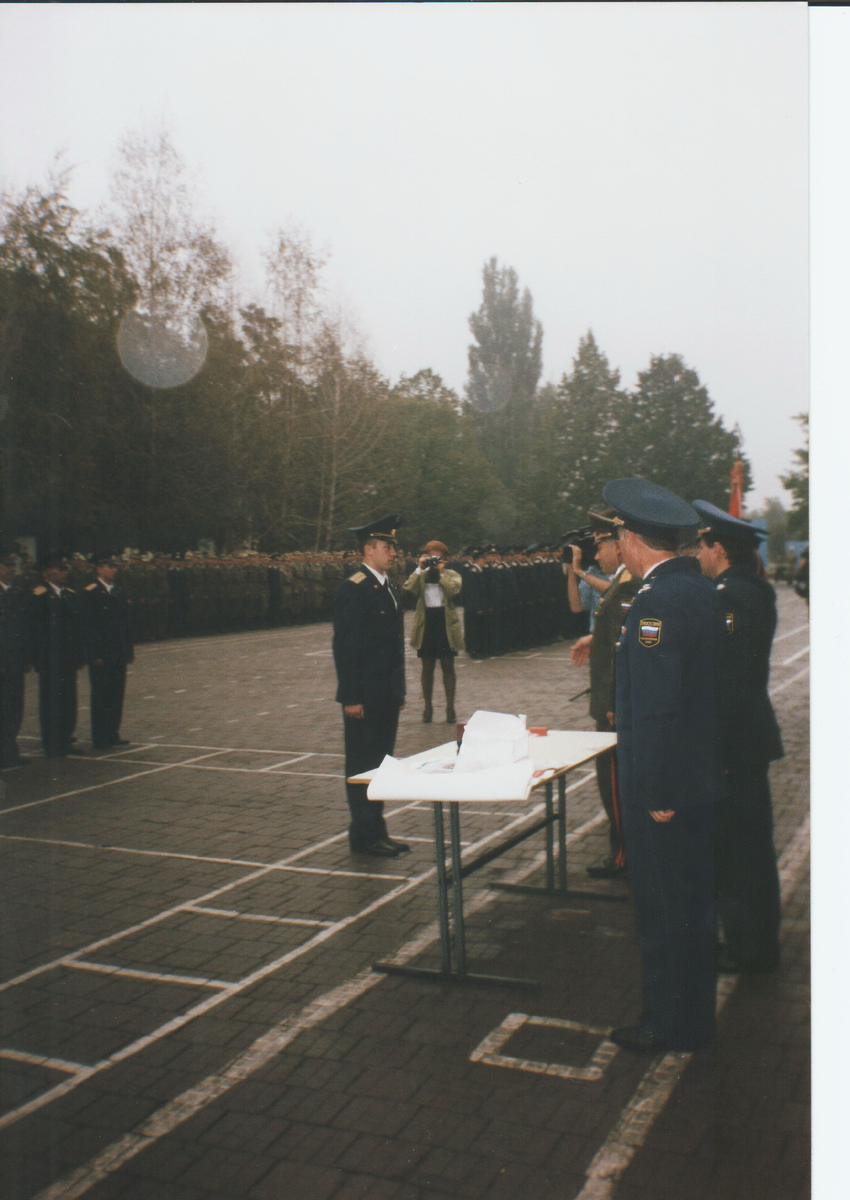
The end of the nineties. I was a cadet at flight school, close to graduation. And the country was in crisis. In active aviation units, there were almost no flights: not enough kerosene, not enough spare parts, not enough functioning aircraft. I understood that after graduation, much flight practice would not be waiting for me — and for me that was the most important thing. There was an armed conflict in the North Caucasus. I saw people who, here and now, were doing concrete, tangible work for the Motherland. And the question rose in me again — the same one I had at the end of school, when I was choosing between flight school, the Bauman Technical University, and the Ryazan Airborne School: maybe my path lies not in aviation, but where I can be useful right now?
During this period I happened to be at the Trinity Lavra of St. Sergius. I learned that Archimandrite Kirill received visitors there — one of the most revered elders of the Russian Orthodox Church in our time, a man known to many as a hero of Stalingrad (one of the decisive battles of the Second World War). I had an inner question I couldn't resolve on my own: stay on the chosen path, or turn off it? I decided to go to him.
I arrived early in the morning — the line was already enormous. A woman saw me, took me by the hand, and led me past the entire line into the cell house. I stood on the landing and waited. Father Kirill came out. I began to tell him: a young pilot, unsure whether to remain in aviation… He listened. Gave me some hard candy. Blessed me.
And after some time, a letter came from him: "Stay where you are. And pray to the Mother of God."
That letter dissolved my inner question. It gave me what I was missing in that moment — a foundation for believing that I was on the right path. Permission to myself to stay and go on.
And I stayed.
A few years later, I flew. And today I speak about these principles from the stage — in programs for teams and leaders solving their earthly tasks under conditions of uncertainty.
Do it a thousand times, know why, and believe
My badminton coach — Sergey Ivlev, an International Master of Sport — once trained under Nikolai Zuev, sixteen-time champion of Russia, silver medalist of the European Championship, two-time Olympian, and coach of the Russian national team. Nikolai Vladimirovich kept repeating one and the same thought to him: we have to do an exercise a thousand times, we have to understand why we are doing it, and we have to believe that it will help.
Do it a thousand times. Know why. And believe.
For seventeen years Jeremy did the same thing. Trained. Took exams. Passed medical commissions. He understood why. But knowing the "why" is not enough. You can understand a goal and yet stop believing it is reachable. When logic tells you the chances keep shrinking — that is exactly when faith, in spite of everything, becomes what separates those who make it through from those who step off the path.
I'm writing this and remembering. When I was still a schoolboy, my grandfather Alyosha — the main man in my upbringing — once said to me: "Whatever happens, always go to the end. And you'll come through!" That was about faith in your own strength.
What gives the strength to believe? For each person, something different. For some — a dream. For some — faith in a higher meaning. For some — a letter from a monastery. But without that anchor, whatever it may be, it's impossible to walk a path where the result isn't visible for years.
The full moon
I stand in the yard and look at the Moon. Somewhere out there, in the Orion capsule, Jeremy Hansen — the guy I remembered from an elevator in Houston seventeen years ago — is flying toward it. His path turned out to be one of the longest in the history of manned spaceflight. And the "prize" — something he himself, perhaps, could never have imagined as he stood next to me in that elevator.
Do it a thousand times. Know why. And believe!
A letter from Archimandrite Kirill helped me. Jeremy had something of his own. And what gave you strength — in those moments when the result was far away and the doubts close at hand? Share in the comments.
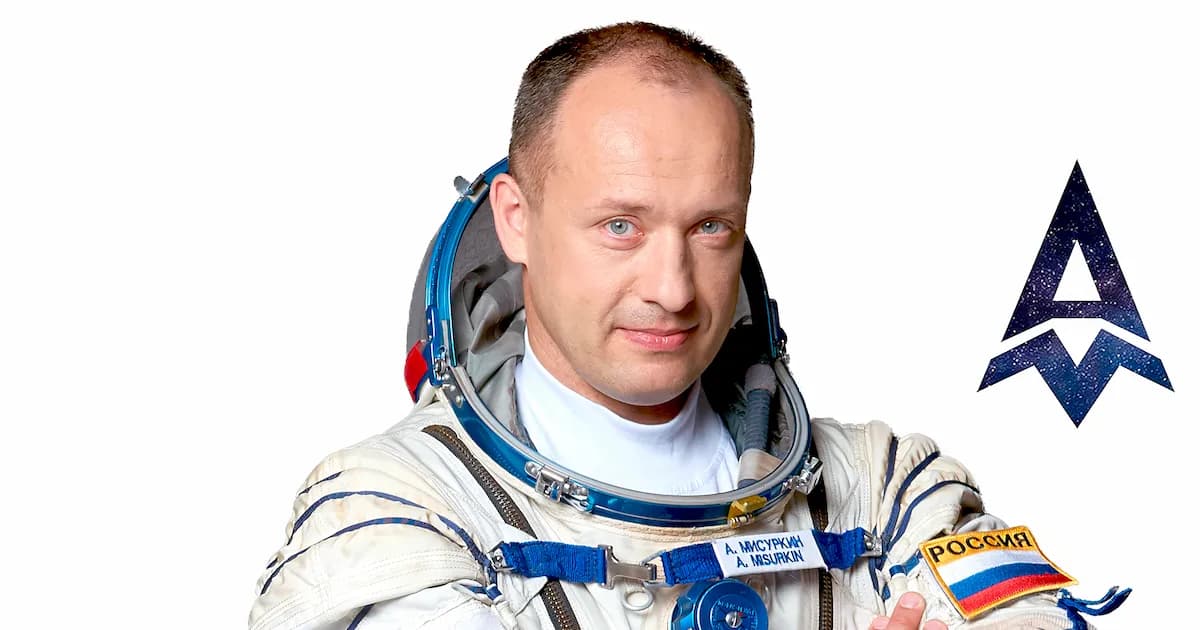
Hello! I'm cosmonaut Alexander Misurkin. My AI assistants Luke Vestin and "19-57" will answer your questions about space exploration and my experience.
To chat with Luke – simply type your question in the text field. If you're looking for space-related information from online sources, type "19-57, find information about ..." (it may take a moment – our robot is very thorough when searching the web).
Enjoy the conversation!