Interplanetary Travel: Prospects, Technologies, Plans and Timelines
02.05.2025Space Beyond Orbit: the Scale of the Task
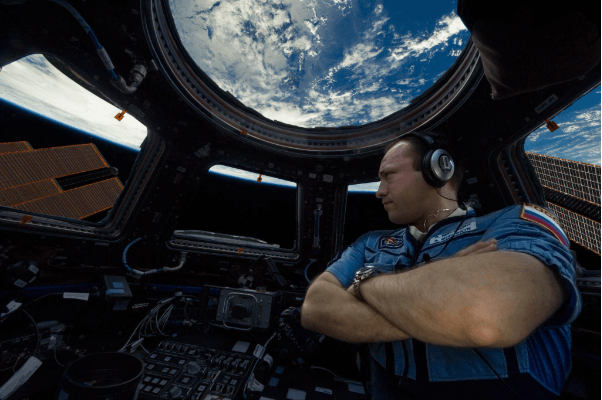
Humanity has long sought to go beyond its “cradle”, planet Earth. As part of the project “Space Calling” I want to consider how close we are to interplanetary travel and what else is needed to overcome cosmic distances.
People have not yet ventured beyond Earth orbit since the Apollo program (the last manned Lunar mission took place in 1972). Although only twelve years passed from the first satellite launch (1957) to the moon landing, there have been no manned interplanetary flights in the subsequent half-century or so.
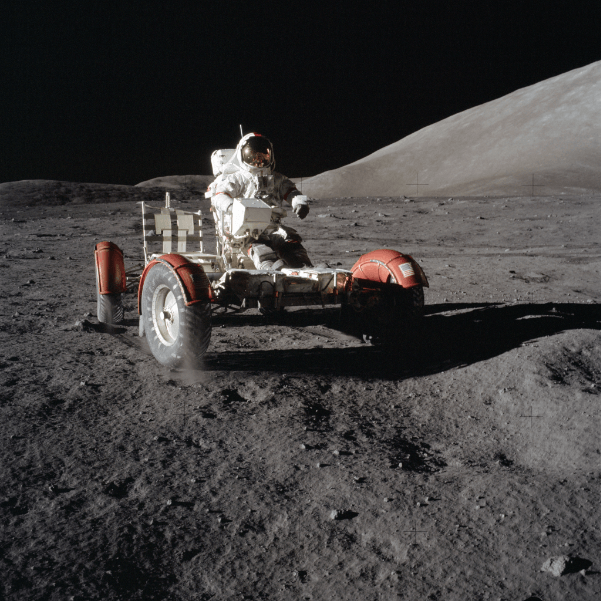
Astronaut Eugene Cernan during a test drive (Apollo 17, 1972)
To give you an idea of the scale of the problem: the minimum distance to Mars is about 55 million kilometers, and the maximum is more than 400 million kilometers. Even with modern technology, the journey will take at least 6 to 8 months one way. On this route, the crew will face serious challenges: radiation, prolonged weightlessness, isolation from Earth.
Today we are on the threshold of a new stage of the space era, when fundamental scientific research and accumulated technologies are beginning to form a real basis for future interplanetary missions.
Current Achievements in Space Exploration
Automated Interplanetary Missions
Automated spacecraft have been successfully exploring the Solar System for over sixty years. To date, automated probes have visited all the planets, many satellites and small bodies, and Voyager 1 and 2 have even entered interstellar space.
Among the most significant modern missions, the following ones can be highlighted.
NASA's Perseverance and Curiosity rovers exploring the surface of Mars. Perseverance, launched in 2020, has already traveled more than 20 kilometers across the Martian surface, conducting geological studies and collecting samples for future delivery to Earth.
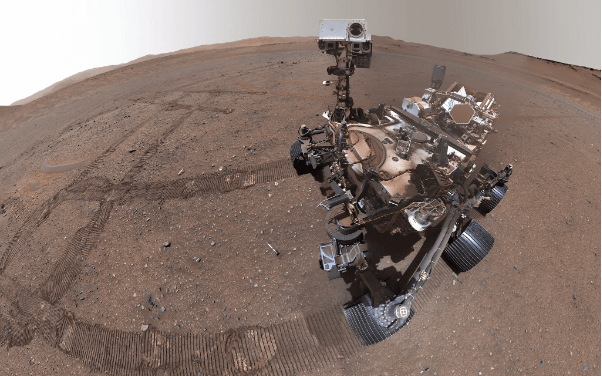
Perseverance rover
Mars Helicopter Ingenuity is the first aircraft to fly in the atmosphere of another planet.
NASA's Juno probe has been orbiting Jupiter since 2016, studying the planet's magnetic field, atmosphere, and interior structure.
NASA's DART mission successfully demonstrated the first kinetic asteroid reorbital technology in 2022. This is a major step in planetary defense.
NASA's Parker Solar Probe, which approaches the Sun at a minimal distance (about 6.9 million kilometers), studying solar corona and solar wind.
These missions not only expand our scientific knowledge but also help develop technologies needed for future manned expeditions: landing on other planets, functioning under extreme conditions, autonomous navigation and much more.
Manned Flights and Their Limitations
Unlike robotic missions, manned spaceflight is currently limited to low Earth orbit (altitude of about 400 km). Over the past half century, no human has left the Earth's magnetosphere that provides protection from cosmic radiation.
The International Space Station (ISS) is the largest international project in space. It has been continuously inhabited by crews since 2000. During this time, about 250 astronauts and cosmonauts from 20 countries have visited it. The record for the longest continuous stay in space was set at the Mir station and belongs to Russian cosmonaut Valery Polyakov: 437 days.
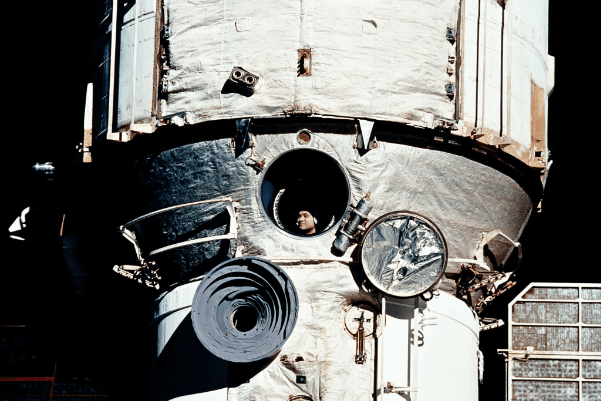
Cosmonaut Valery Polyakov at the Mir station
Today, a significant change is taking place in the space industry because private astronautics is actively developing. SpaceX, Blue Origin and Virgin Galactic are already carrying out commercial orbital and suborbital flights, and Axiom Space is organizing private expeditions to the ISS.
An important step in returning humans beyond near-Earth orbit will be the Artemis program, within the framework of which NASA, together with international partners, plans to return people to the Moon. According to current plans, Artemis II mission with the Moon flyby is scheduled for the spring of 2026, and the landing of astronauts on lunar surface within Artemis III is planned for mid-2027.
However, even with such progress, manned interplanetary flights face serious limitations: high cost, limited efficiency of existing rocket engines, lack of reliable radiation protection systems for long-distance flights, and the need for closed life support systems for multi-year missions.
Technological Barriers to Interplanetary Travel
There are three key technological challenges that must be addressed to make interplanetary possible.
Speed and Range Issues
The fundamental limitation of modern space technology is the insufficient energy of rocket engines combined with enormous distances that must be covered.
Modern chemical rocket engines require gigantic amounts of fuel to accelerate a spacecraft. Consider this: to simply launch a craft into near-Earth orbit (at a speed of about 8 km/s), fuel should be up to 90–95% of the modern launch vehicle’s mass.
Interplanetary flights require even higher speeds. To reach Mars in acceptable time, the ship must accelerate to at least 11–12 km/s. The key problem is that, according to the Tsiolkovsky equation, a linear increase in speed requires an exponential increase in fuel mass. Due to these limitations, engineers are forced to choose between two unpleasant alternatives.
- Use energy-efficient but very long flight trajectories (6 to 8 months to Mars).
- Take gigantic fuel reserves, which makes the cost of the mission stratospheric.
Existing chemical engines have exhausted their potential for deep space missions. Even the most powerful modern systems do not solve the fundamental problem of low energy density of chemical fuel.
Another serious problem is braking upon arrival at the target. On Earth, aerodynamic braking in dense layers of the atmosphere is actively used to reduce the speed of descent vehicles. However, the atmosphere of Mars is approximately 60 to 70 times less dense than the Earth's, which significantly complicates braking. Moreover, for a Mars mission it will be necessary to land not a compact descent vehicle weighing 2.5–3 tons (as we do on Earth), but an entire rocket capable of delivering the crew back (approximately 100 tons). This complicates the task many times over.
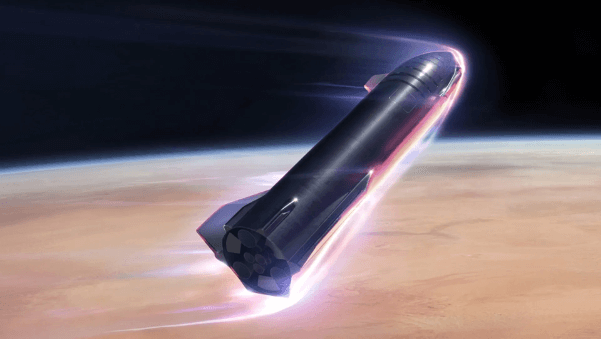
An artist's impression of the Starship entering Mars' atmosphere
Radiation Protection and Life Support
While in low Earth orbit, astronauts receive some protection from cosmic radiation due to the Earth's magnetic field. However, it does not exist in interplanetary flights.
Cosmic radiation consists of two main components: galactic cosmic rays (GCRs), the constant radiation from deep space, and solar energetic particles (SEPs), the intense but short-lived bursts that occur during solar flares.
At the ISS, cosmonauts receive a radiation dose of about 50–130 mSv over a six-month expedition, protected by the Earth's magnetosphere. In a flight to Mars, without this protection, the dose could increase to 600–1000 mSv over a similar period. In comparison, the annual limit for nuclear industry workers on Earth is 50 mSv, and maximum permissible dose for a cosmonaut’s career is about 1000 mSv. Solar flares are especially dangerous, since they can deliver a dose of several hundred millisieverts in a few hours.
Existing shielding concepts are as follows:
- Combined shields made of different materials: water and polymers (rich in hydrogen) are efficient against neutrons, aluminum protects against charged particles, and denser materials are needed for gamma radiation.
- Magnetic shields (an artificial magnetic field around the ship to deflect charged particles).
- Special protective shelters on board for periods of solar activity with enhanced shielding.
Developing efficient yet lightweight radiation protection remains one of the most challenging engineering challenges in cosmonautics.
Autonomy of Systems and Artificial Intelligence
The third fundamental problem that is rarely talked about when discussing interplanetary flights is communication latency. In orbital flights, communication with the Mission Control Center (MCC) is almost instant, which allows for a prompt response to any emergency. When flying to Mars, the one-way signal delay will be 3 to 22 minutes, depending on the relative positions of the planets. This means that the time from sending a request to the Mission Control Center to receiving a response can be up to 45 minutes! In case of an emergency, such a long delay can be fatal.
The solution should be highly autonomous systems with elements of artificial intelligence, capable of independently making decisions in critical situations, effectively replacing functions of the mission control center on the ship.
Promising Technologies for Interplanetary Flights
Nuclear and Thermonuclear Propulsion Systems
The most promising direction for the implementation of interplanetary flights in the foreseeable future seems to be the development of nuclear propulsion systems. They can fall into two main types.
- Nuclear rocket engines (NRE), in which the working fluid (usually hydrogen) is heated in a nuclear reactor and ejected through a nozzle, thus creating thrust. Such engines can provide a specific impulse of up to 800–1000 seconds, which is twice as high as the best chemical engines. This will significantly reduce the amount of the required fuel and the flight time.
- Nuclear electric rocket engines (NERE), where a nuclear reactor generates electrical energy that is used to operate electric rocket engines (ion or plasma). Systems of that kind can achieve a specific impulse of 5,000–10,000 s, but have a limitation on the thrust they can produce.
Nuclear propulsion systems will solve the problem of power supply for the ship, reduce the flight time to Mars to 3–4 months, and significantly increase the mass of the payload.
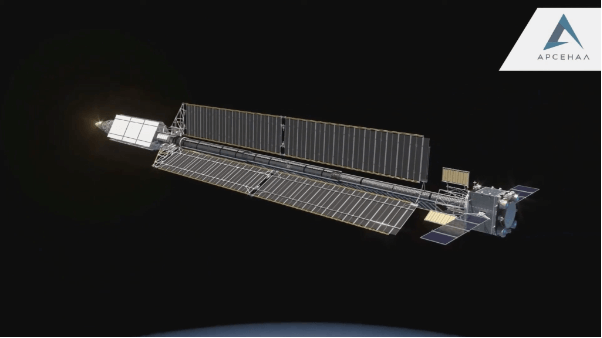
Artist's impression of Roscosmos' nuclear tug Zeus
However, in my view, the truly effective solution will be thermonuclear propulsion systems. Thermonuclear reactions release approximately four times as much energy per unit of fuel mass than uranium fission, with significantly less radiation pollution.
Although no operating fusion power plant exists today, positive energy balance (where energy production exceeds the cost of maintaining the reaction) has been achieved in several experiments. Moreover, a number of companies have already signed contracts for the commercial supply of electricity generated by nuclear fusion by the end of the 2020s.
Thermonuclear energy offers revolutionary possibilities in three key areas of interplanetary travel.
- Propulsion systems: a thermonuclear reactor can provide a specific impulse of up to 100,000–1,000,000 s (300–3000 times higher than chemical engines). This will reduce the flight time to Mars from 6–8 months to 1–2 months with the same ship mass.
- Power supply for defense systems: high-energy installations will make it possible to create a full-fledged active magnetic shield around the ship, deflecting charged particles of cosmic radiation according to the principle of the Earth's magnetosphere.
- Life support systems: excess energy will allow the creation of completely closed ecosystems with the regeneration of air, water and even food production without saving energy resources.
Prospects for the Creation of Space Fusion Devices
Modern experimental fusion devices such as ITER (weighing about 23,000 tons) or NIF are extremely massive. However, the space environment provides unique conditions that may radically simplify their design.
- Natural vacuum eliminates the need for massive vacuum chambers and pumping systems.
- Space cold (–270°C in the shade) is ideal for superconducting magnets without complex cooling systems.
- Zero gravity makes it much easier to contain plasma, eliminating the need to compensate for gravitational effects.
- Unlimited heat removal — space is an ideal environment for radiating excess heat.
The economic outlook for building large space installations is also changing dramatically. According to SpaceX forecasts, with the advent of the fully reusable Starship rocket, the cost of launching 1 kg of cargo into orbit could drop to $100. By comparison: using shuttles and disposable rockets, this cost was $20,000–$40,000.
Such a revolutionary reduction in launch costs (200–400 times) combined with a record payload capacity of up to 100 tons of payload to low Earth orbit gives the possibility of creating large energy complexes in space, specially designed according to space conditions.
And yet, I believe that interplanetary flights will be developing in stages: the first expeditions will probably use chemical engines with elements of nuclear energy, then full-fledged nuclear propulsion systems will be created, and later, thermonuclear systems that will make regular interplanetary communication a reality.
Alternative Concepts of Movement in Space
In addition to rocket technologies, there are also alternative concepts of space engines. One of the most developed is the solar sail.
The principle of a solar sail is based on using the pressure of sunlight to accelerate a spacecraft. Although this pressure is extremely small (about 9 μN (micronewtons) per square meter near Earth), the lack of need for fuel makes this technology potentially attractive for long-term missions.
The Japanese IKAROS in 2010 and the American LightSail-2 in 2019–2022 successfully demonstrated the viability of this technology. Theoretically, with a very large sail area and long acceleration, such a system could provide significant speeds for interplanetary flights.
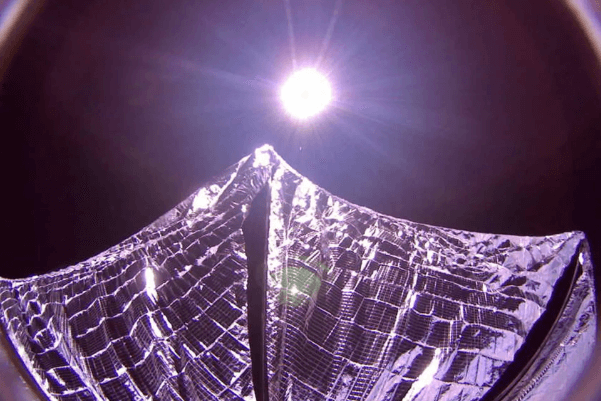
The deployed solar sail LightSail-2
An extension of this idea is the concept of a laser sail, which uses a focused beam of a powerful laser instead of sunlight. The Breakthrough Starshot project proposes using this principle to reach nearby star systems.
As for warp drives and other exotic concepts that theoretically consider the possibility of superluminal travel through the curvature of space-time, they still remain in the realm of theoretical physics. Although some works, such as that of physicist Miguel Alcubierre, suggests mathematical models of such engines, the practical implementation of these ideas, if it is possible, is a matter of the very distant future.
Biological and Psychological Aspects of Long-Term Space Missions
The Effect of Weightlessness on the Body
Adaptation of the human body to long-term stay in space is another important aspect of interplanetary travel. Weightlessness has a complex effect on all body systems, and, as experience with long-term orbital flights shows, without special preventive measures these changes can be significant.
The main physiological changes include loss of bone and muscle mass, redistribution of fluids in the body, and changes in the cardiovascular system. I lost about 5% of my calcium during the six months of spaceflight, which was less than the average due to careful adherence to the prevention program.
Fun fact: I was able to do 17 pull-ups before my second flight, and I did the same number of pull-ups after returning to Earth. This goes to show that with quality exercise in orbit, you can effectively counteract the negative effects of weightlessness.
The current prevention program includes daily two-hour physical training using special exercise machines, load suits, and pharmacological support. Interplanetary flights will likely require the development of more advanced methods, including the ability to create artificial gravity by rotating spacecraft modules.
Psychological Challenges of Isolation
Long-term isolation of a small group of people in a closed space is a serious psychological challenge. In an interplanetary flight, the crew will live in the confined space of the ship for months or even years, without the chance of rapid evacuation in case of a crisis.
Successful completion of such missions requires careful selection of the crew for psychological compatibility and stress resistance. Cosmonauts must have skills in autonomous work, effective interaction in a team, and resistance to monotony.
Among the promising areas of psychological support in long-distance space flights, virtual reality systems are being considered, capable of creating the illusion of a diverse environment and a “psychological exit” from the limited space of the ship.
Prospects for Interplanetary Travel
Nearest Stages of Exploration of the Moon and Mars
The realistic scenario for the development of manned space exploration assumes a step-by-step approach to interplanetary travel. In the next decade, the key task will be the return of man to the Moon and the creation of a permanent lunar base.
Artemis program, implemented by NASA in collaboration with international partners, includes a crewed lunar flyby (Artemis II, 2026), a landing at the lunar south pole (Artemis III, 2027), and the subsequent establishment of permanent infrastructure, including the Gateway orbital station and a lunar base.
The lunar program is very important not only as an independent goal, but also as a testing ground for technologies required for Martian missions: life support systems, radiation protection, use of local resources, and long-term operation under low gravity.
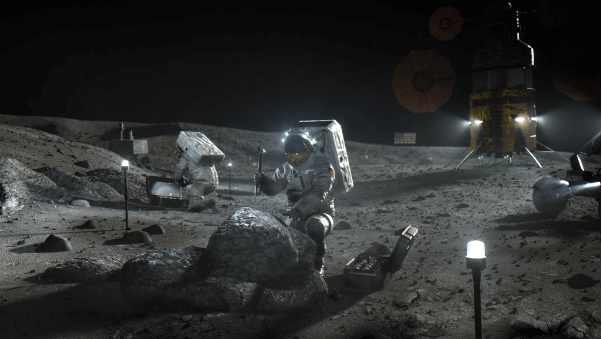
An artist's impression of astronauts on the moon during the Artemis mission
As for Mars, I agree with the experts who say that the first manned expeditions may not take place before the 2030s. At the same time, the use of chemical engines for such missions will be ineffective. Truly sustainable interplanetary communication will only be possible with the introduction of nuclear, and in the future, thermonuclear propulsion systems.
Long-Term Forecasts
In the long run (the second half of the 21st century), we can expect the creation of permanent bases on Mars and the expansion of human presence in the Solar System.
Of particular interest are missions to the moons of Jupiter and Saturn, especially those with subsurface oceans of liquid water (Europa, Enceladus). Unmanned missions, such as Europa Clipper (launched October 14, 2024) and Dragonfly (launch scheduled for 2028), are preparing the scientific ground for potential manned expeditions in the more distant future.
The most important aspect of long-term plans for space exploration is the formation of a full-fledged space economy. Using the resources from other planets and small bodies of the Solar System can create an economic basis for a sustainable human presence beyond Earth. This will allow us to move from an expeditionary format to real space colonization and the gradual transformation of humanity into a multi-planet species.
The speed of development may increase by orders of magnitude if the international community moves from disparate, competing projects to systemic cooperation for the benefit of the entire civilization. When we begin to explore space together, as a humanity, in the logic of mutual benefit (win-win strategy), those technological challenges that today seem insurmountable will be solved much faster.
Interplanetary travel is not only the next technological frontier, but also an opportunity for a qualitative transformation of our civilization, its resource base and self-awareness. And we are on the threshold of this new, amazing stage in human history.
Pilot-Cosmonaut, Hero of Russia
Alexander Misurkin
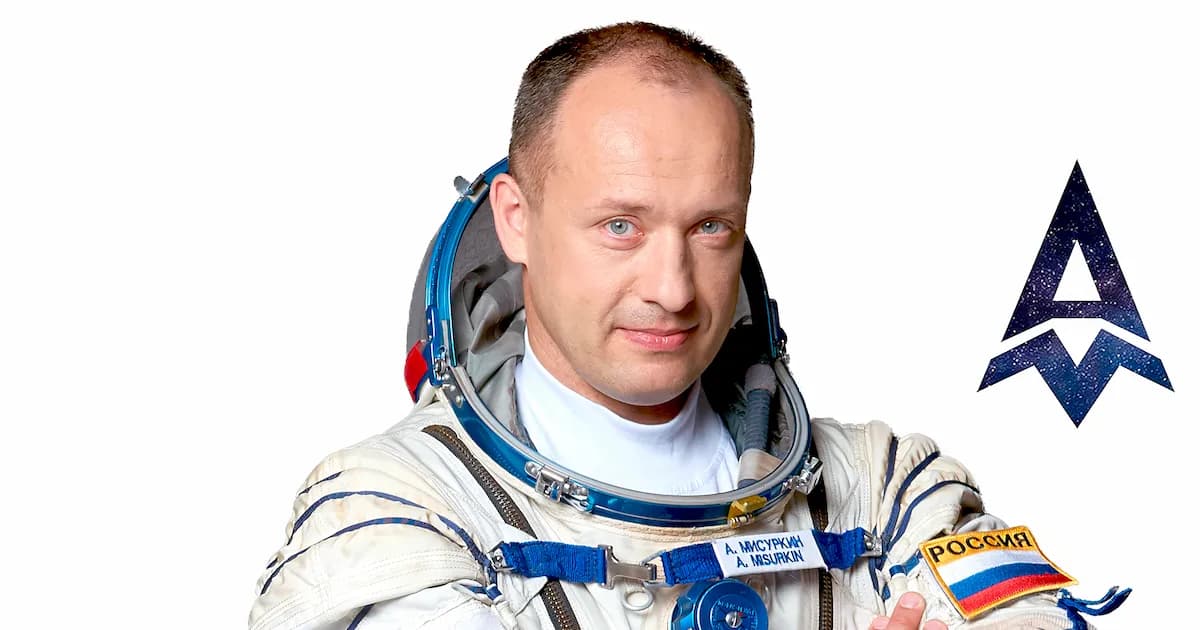
Hello! I'm cosmonaut Alexander Misurkin. My AI assistants Luke Vestin and "19-57" will answer your questions about space exploration and my experience.
To chat with Luke – simply type your question in the text field. If you're looking for space-related information from online sources, type "19-57, find information about ..." (it may take a moment – our robot is very thorough when searching the web).
Enjoy the conversation!