Launch Vehicle Preparation and Launch: Key Stages and Technologies
28.04.2025As part of the “Space Calling” project, we continue a series of publications about cosmonautics. Today, I will tell you how a modern launch vehicle is prepared for launch, and then launched.
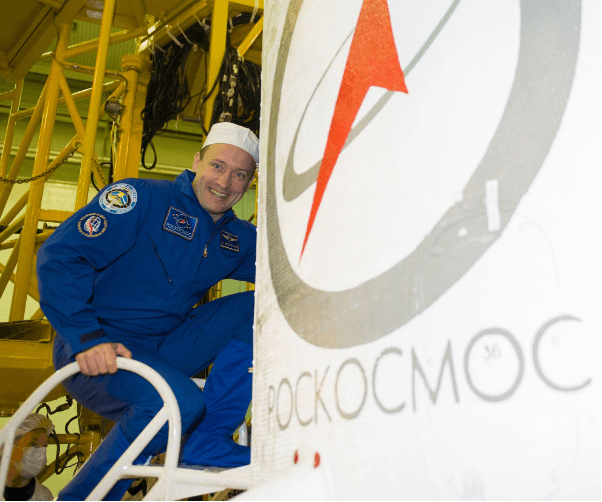
From Drawing to Launch: Difficult Journey of a Launch Vehicle
Despite the apparent risk of space launches, their reliability has reached impressive levels today. The share of successful launches of Russian Soyuz rockets exceeds 97%, and it is even higher for the latest Soyuz 2 modifications. The American Falcon 9 has similar indicators (about 98% of successful launches). This is the result of careful planning and multi-level control at each stage of preparation.
The preparation cycle time varies significantly depending on the type of rocket and the complexity of the mission. For the time-tested Russian Soyuz launch vehicles, the standard cycle is about 2 to 3 weeks from delivery to the cosmodrome to launch. For heavy rockets like Angara A5 or the American SLS, it can take several months.
The modern trend is automation of preparation processes and minimization of the number of personnel at the launch complex, which increases safety and economic efficiency. However, it is impossible to completely exclude a person from this process; the final decisions are always up to the specialists.
Stages of Launch Vehicle Preparation
The journey of a launch vehicle from the drawing to the launch includes several successive steps, each with its own strict quality control and testing procedures. Let's consider the main ones.
Rocket Production and Assembly
The creation of a modern rocket is a complex technological process distributed among several specialized enterprises. For Russian Soyuz rockets, the first and second stage RD-107/108 engines are manufactured in Samara at the UEC-Kuznetsov enterprise, and the stages are assembled by the Progress Rocket and Space Center. The third stage with the RD-0110 engine is manufactured by the Voronezh Design Bureau of Chemical Art.
Each rocket component undergoes multi-stage quality control. For engines, this includes:
- X-ray inspection of welds;
- pressure testing for leaks;
- fire bench tests.
When assembling a rocket, special attention is paid to the integration of electronics and control systems. Modern rockets are equipped with thousands of sensors and dozens of computers that form a single system. For example, Soyuz-2 has more than 5,000 different sensors that control all aspects of the flight.
After final assembly, the rocket undergoes comprehensive electrical testing. All systems are tested as a whole, simulating operation during flight, but without turning on the engines.
Transportation to the Spaceport
Transportation is one of the critical stages, requiring special attention to the safety of high-precision equipment. Methods of delivering rockets to the spaceport vary significantly depending on the country and type of carrier.
Special trains are used for Soyuz launch vehicles. Strict climatic requirements are observed during transportation: the temperature must be maintained in the range of +5...+35°C, humidity shouldn’t exceed 80%. Special sensors continuously monitor these parameters, and the carriages are equipped with climate control systems.
It is interesting to compare this process with the transportation of American rockets. Falcon 9 stages are delivered to the cosmodrome on specialized trailers along land roads, which is possible due to the relatively small diameter of the rocket (3.7 m). For larger rockets, such as SLS with a diameter of up to 8.4 m, water transport is used: special barges delivering components to the cosmodrome.
Upon arrival at the cosmodrome, Soyuz family rockets are first delivered to the assembly and test building (ATB). Additional checks, stage assembly, and integration with the spacecraft and payload fairing are carried out there. After the work in the ATB is completed, the rocket is moved to the transport and installation unit — a special device that not only delivers the rocket to the launch complex, but also lifts it into a vertical position. This process requires pinpoint precision, despite the multi-ton weight of the structure.
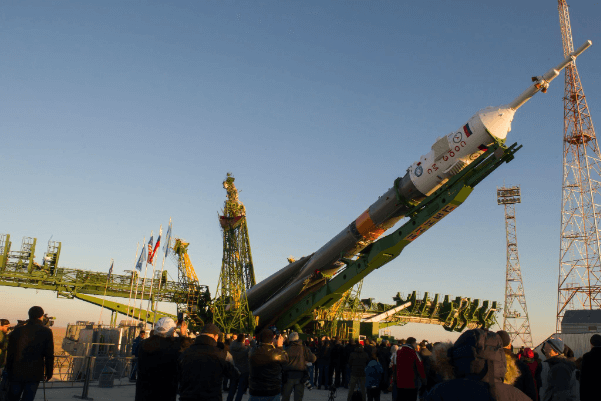
Pre-Launch Checks and Fueling
For Soyuz rockets, the standard work cycle at the launch complex is three days. The enlarged technology for preparing the launch vehicle at the launch complex consists of the following stages:
- installation of the launch vehicle in the launch system;
- rotation of the launch system to the launch azimuth;
- assembly of circuits, connection of pneumatic and hydro communications to the launch vehicle and spacecraft;
- conducting autonomous and comprehensive tests of the launch vehicle's on-board systems;
- pre-launch preparation;
- preparation and fueling of the launch vehicle;
- undocking of the pneumatic and hydrocommunications from the spacecraft;
- loading of the installation information;
- landing of the crew;
- gaining launch readiness;
- launch of the vehicle.
The fueling process varies depending on the type of propellant used. For cryogenic rockets (such as those using liquid oxygen and kerosene, like Soyuz), fueling begins relatively close to liftoff due to the evaporation of the cryogenic liquids. For Soyuz, fueling begins about five hours before liftoff.
For rockets using high-boiling components (for example, UDMH and nitrogen tetroxide in Proton), fueling can be done in advance, a day before launch, since these components are stable at normal temperatures.
Weather conditions play a critical role in the decision to roll out the launch vehicle and install it on the launch pad. Each type of launch vehicle has its own meteorological limitations.
Soyuz launch vehicle ensures launch into a given orbit and normal operation of all systems with given characteristics at any time of year, day or night, in any meteorological conditions, with limited visibility up to 30 m, at an ambient air temperature from –40 to +50 °C, except for thunderstorms.
Cosmodrome Infrastructure and its Role in Launch
A cosmodrome is not just a launch pad, but an elaborate technical complex that unites dozens of specialized facilities. The largest Russian cosmodromes are impressive in their scale: Baikonur occupies an area of about 6,717 km², Plesetsk — about 1,762 km², and the newest Vostochny Cosmodrome is planned for an area of about 700 km².
The choice of location for a cosmodrome is determined by many factors. It is important to have sparsely populated areas along the launch route for the safe fall of the separated parts of the rocket. Climate conditions, transport accessibility and geopolitical factors are also taken into account.
Launch Complexes and their Features
The launch complex is the heart of the cosmodrome. It includes special structures for pre-launch preparation and the actual launch of the vehicle. In Russian cosmonautics, two main types of launch complexes have been developed.
- Stationary open-type complexes — used for Soyuz rockets. A distinctive feature is special service trusses that are removed from the rocket immediately before launch. This design was developed for the R-7 — the first intercontinental ballistic missile, which became the basis for the entire Soyuz family.
- Closed launch complexes with a mobile service tower — used for Proton-M and Angara rockets. The tower covers the entire rocket, providing access to various rocket systems at all levels.
The launch pad is equipped with special systems necessary for launch:
- gas ducts for removing hot gases from the engines;
- water spray systems for suppressing acoustic loads and protecting structures from high temperatures;
- cable-fueling masts for supplying fuel, electrical power and telemetry;
- rocket holding systems that release the rocket only after the engines reach the main thrust stage.
A unique feature of the Soyuz launch complexes is the presence of a special pit about 45 m deep under the launch pad. It serves to remove gases from the operating engines and reduce the acoustic impact on the rocket.
At the Vostochny Cosmodrome, a modernized launch complex has been built for Soyuz 2, where the latest technologies have been used, including an automated rocket installation system and a mobile service tower that protects the rocket from adverse weather conditions until launch.
Safety Systems
Safety is number one priority during missile launches. The multi-level safety system includes the following elements.
- Launch abort systems — capable of stopping the launch even after the ignition command if the rocket parameters or environmental conditions go beyond acceptable limits.
- Crew rescue systems (CES) — for manned spacecraft. The Soyuz CES is capable of separating the spacecraft from the launch vehicle and taking it to a safe distance in the event of an accident. The efficiency of this system was confirmed during the Soyuz MS-10 accident in 2018, when the crew was successfully rescued.
- Fire extinguishing systems at the launch complex — include automatic water and foam supply systems, as well as mobile fire extinguishing equipment.
- Protective structures — bunkers, shelters and other structures that protect personnel and equipment in the event of an accident.
- Fuel component spill neutralization systems — especially important for rockets using toxic high-boiling components.
Personnel access to the launch complex is strictly regulated. For example, when fueling a Soyuz rocket, the entire launch pad is evacuated, leaving only the fueling team specialists in protective suits. A restricted area is established within a radius of 5 km from the launch pad, outsiders are not allowed.
Specialized search and rescue services are also worth mentioning. They are on duty during the launch and are ready to respond quickly in an emergency. The search and rescue group for manned launches includes helicopters and ground equipment distributed along the entire launch route.
The Process of Launching a Launch Vehicle
The launch of a launch vehicle is the culmination of months of preparation, requiring absolute precision and coordination. Modern rockets are controlled by onboard computers that monitor thousands of parameters and are capable of making autonomous decisions when deviations from the norm occur.
Last Minutes Before Launch
In the last hours before launch, activity at the launch complex reaches its peak. Let's look at a typical chronology of pre-launch operations for the Soyuz 2 launch vehicle with a manned spacecraft.
T-8 hours: start of final checks of all rocket and spacecraft systems.
T-5 hours: start of launch vehicle fueling with kerosene.
T-4 hours: start of liquid oxygen and nitrogen fueling.
T-2 hours 40 minutes: crew arrives at the launch pad.
T-2 hours 30 minutes: crew boarding the ship.
T-2 hours: closing the ship hatches, checking for leaks.
T-45 minutes: arming the emergency rescue system.
T-15 minutes: switching to onboard power.
T-10 minutes: beginning the automatic pre-launch sequence.
T-6 minutes: key to start (transition to automatic launch sequence).
T-2 minutes 30 seconds: key to drain (stop feeding oxygen tanks).
T-1 minute: pressurize tanks (increase pressure in fuel tanks).
T-40 seconds: engage automatic engine start.
T-15 seconds: ignite first stage engines.
T-7 seconds: engines reach intermediate thrust stage.
T-3 seconds: engines reach main thrust stage.
T-0: “Lift!” command and release of launch grips.
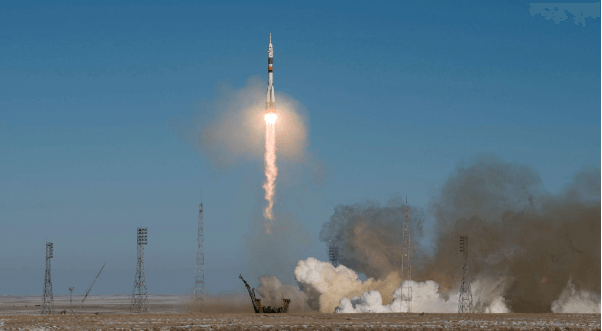
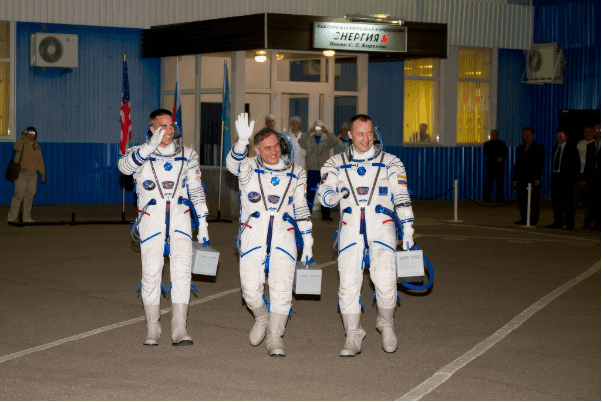
For the American Falcon 9 rocket, the procedure is different: kerosene filling begins 70 minutes before launch, liquid oxygen — 45 minutes, and the refill system continues to operate almost until the moment of launch.
The launch window — the time interval when a launch is possible — depends on the type of mission. For a launch to geostationary orbit or the ISS, it may be as little as a few seconds. If the launch does not take place within the allotted time, it is postponed to a backup date.
Rocket Stages Operation Order
After lifting off from the launch pad, the launch vehicle's flight begins, which takes place in several stages corresponding to the operation of individual stages.
The multi-stage design of rockets is one of the most important engineering solutions in cosmonautics. Separation of spent stages allows to significantly reduce the mass of the structure at subsequent stages of flight, which significantly increases energy efficiency.
Let us consider an approximate flight cyclogram of the Soyuz 2.1a launch vehicle when launching a spacecraft into orbit.
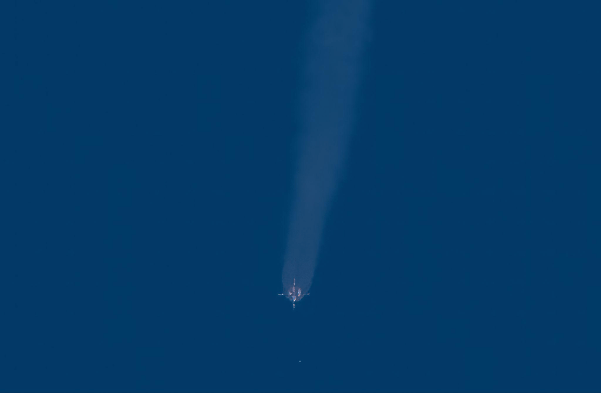
T+118 seconds: separation of the first stage side units (4 side units with RD-107 engines).
T+153 seconds: jettison of the payload fairing (at an altitude of about 80 km, when aerodynamic drag becomes insignificant).
T+290 seconds: separation of the second stage central block (with the RD-108 engine).
T+525 seconds: shutdown of the third stage engine.
T+530 seconds: separation of the spacecraft.
A special feature of modern SpaceX rockets is the returnable first stage. After separation from the second stage, it performs a series of maneuvers.
- Engines turn in the direction of flight.
- Short engine burn for braking and entry into the atmosphere.
- Aerodynamic braking using lattice rudders.
- Final burn of the central engine for a soft landing.
Examples of Successful Launches and Analysis of Experience
Let's consider some illustrative examples of successful launches of launch vehicles, demonstrating various aspects of preparation and execution of launches.
The launch of the Luna 25 scientific mission (August 11, 2023) on Soyuz 2.1b launch vehicle was the first Russian lunar mission since 1976. During preparation, it was necessary to take into account the specifics of launching into a selenocentric orbit, which requires accurate calculation of the launch window. Particular attention was paid to setting up the Fregat booster block, which ensured the station’s transition to a flight trajectory to the Moon.
The launch of the Crew Dragon Demo-2 (May 30, 2020) was the first manned flight by the private company SpaceX. Preparations included more than 700 checks and tests, and extensive ground infrastructure ensured the safety of the astronauts. This mission demonstrated that private companies are capable of achieving the high standards of reliability required for manned flights.
The launch of James Webb telescope (December 25, 2021) on an Ariane 5 rocket presented a unique challenge due to the extreme fragility and high cost of the telescope (around $10 billion). Preparations lasted more than 10 years, and special shock-absorbing systems were developed for the telescope to protect it from vibrations during launch.
Analyzing that experience, we can identify key factors for success in preparing rocket launches.
- Multiple testing of all systems on Earth before launch.
- Flexible approach to organizing pre-launch work, ability to adapt to the specifics of the mission.
- Standardization of procedures, allowing to minimize the human factor.
- International cooperation, combining the experience and technologies of different countries.
Prospects and Innovations in Preparing Rocket Launches
With the ever-increasing commercialization of the space industry, the trend towards reusability, reducing the duration of the re-launch preparation cycle and making this process cheaper will increase. Also, after the full development of Starship flight tests, we will probably come to interplanetary communication using rockets.
Among the key areas of technologies’ development for the preparation and launch of rockets, the following can be highlighted.
- Automation and robotization of pre-launch operations. Modern trends suggest minimizing human participation in dangerous operations. For example, Russian Vostochny Cosmodrome was initially designed with a high degree of automation, allowing for a significant reduction in the number of personnel at the launch complex during refueling and pre-launch operations.
- Rapid reuse technologies. SpaceX is already demonstrating the ability to re-launch the Falcon 9 first stage 3 to 4 weeks after landing. In the future, this period may be reduced to a few days or even hours, which will require revolutionary changes in preparation procedures.
- Unification of spacecraft and launch vehicles. Standardization of interfaces and components allows to reduce the time of integration of the payload with the launch vehicle. Russian space industry is moving in this direction, developing unified space platforms.
- Environmentally friendly fuel components. The transition from toxic components (UDMH) to environmentally friendly ones (oxygen-kerosene, oxygen-methane) not only lowers the impact on the environment, but also simplifies ground operations, reducing preparation time.
- Integrated Rocket Health Monitoring Systems (HMS) allow real-time monitoring of the health of all key rocket components and predict potential problems before they occur.
In the long run, with the development of super-heavy systems like Starship, we may witness a new stage in space exploration: regular interplanetary communication. This will require the creation of a fundamentally new infrastructure not only on Earth, but also on other celestial bodies, primarily on the Moon and Mars.
Pilot-Cosmonaut, Hero of Russia
Alexander Misurkin
Hello! I'm cosmonaut Alexander Misurkin. My AI assistants Luke Vestin and "19-57" will answer your questions about space exploration and my experience.
To chat with Luke – simply type your question in the text field. If you're looking for space-related information from online sources, type "19-57, find information about ..." (it may take a moment – our robot is very thorough when searching the web).
Enjoy the conversation!