Life and Work at the ISS: Food, Hygiene, Sports and Leisure in Zero Gravity
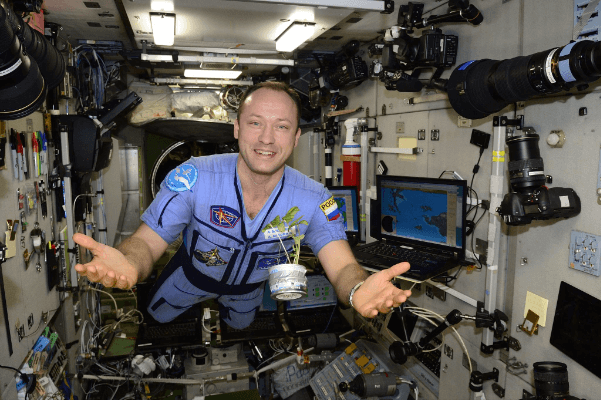
22.04.2025As part of the “Space Calling” project, we continue a series of publications about cosmonautics. Today, I will talk about everyday life at the orbital station, based on my personal experience. How is cosmonaut's daily routine structured, how are nutrition, hygiene, sleep and leisure organized? You will learn about all aspects of everyday life at the ISS if you read further.
Cosmonaut's Daily Schedule in Orbit
Life at the ISS is going according a rigorous routine and discipline, mandatory for the effective functioning of the orbital station. The station makes one revolution around the Earth in about 90 minutes, so during a standard Earth day (24 hours) we observe up to sixteen sunrises and sunsets. However, our daily routine is built on a regular 24-hour cycle. And we count time at the station according to Greenwich Mean Time — this way all Mission Control Centers are equally convenient (or inconvenient) to coordinate our work.
A typical day of a cosmonaut starts when he or she wakes up at 6:00 AM and continues until lights out at 9:30 PM. After the morning toilet, we have our first conference with the Mission Control Centers: Houston, Moscow, and others. During this morning meeting, we finalize the day's tasks. This is followed by an intensive workday, including scientific experiments, station maintenance, and other scheduled operations.
Mandatory elements of the routine are physical exercises, for which two hours daily are allocated. Without regular training, our muscles and bones quickly weaken in zero gravity, so sports become not just a part of life, but an essential requirement for maintaining health.
In the evening, before dinner, there is another conference with the Mission Control Centers, where we sum up the results of the day. By this time, we are sent a detailed plan for the next day, all the specified tasks and an action plan in case of an urgent return to Earth. After dinner, we have about two hours of free time, then lights are out.
Since we don't have a normal day/night cycle in orbit, window shades help maintain a normal sleep/wake cycle. The schedule may be adjusted depending on planned operations, ship dockings, or spacewalks, but the basic structure of the day remains the same.
How to Eat at the ISS
Meals in space are organized taking into account the special conditions of weightlessness and long shelf life of products. In Russian space kitchen, all dishes make up a 16-day ration. This means that no product name is repeated over the course of sixteen days, which ensures a variety of food.
If the crew is going on a long expedition, then food tasting is carried out during the preparation process. Each cosmonaut tries all the dishes and rates them according to his/her preferences. Then about 60% of their food rations are formed standardly and 40% in accordance with their personal tastes. We call such containers bonus. Some of them are sent to us from the space kitchens of our ISS partners. Overall, the diet is quite varied, although at some point you inevitably start to get tired of space food.
At the ISS, we eat three times a day. Food supplies are regularly replenished with the arrival of cargo ships. Fresh fruits and vegetables delivered from Earth are especially valuable, but unfortunately, they do not last long and become a rarity within a couple of weeks after the arrival of the “cargo”.
Types of Space Food
Many people still think that people in space eat exclusively from tubes. Of course, we have tubes — how could we do without them. But today they deliver only honey, mustard, horseradish and sauces to us.
The packaging form factor and the method of preparing products for space flight are selected based on the conditions of long-term storage at room temperature in a closed compartment. Therefore, most of our products today are presented in two versions: canned food in regular tin cans and freeze-dried food in plastic bags.
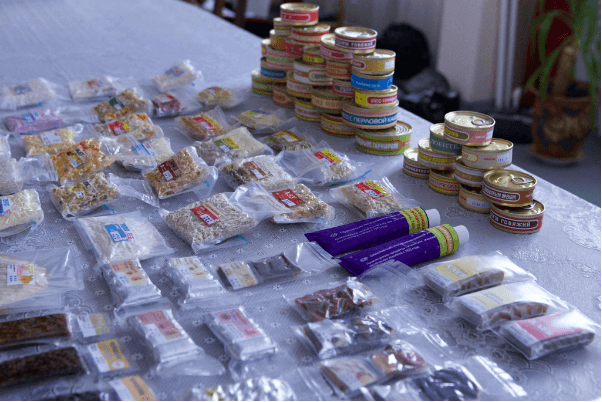
We heat up the tins in a special device. You pour hot water over the freeze-dried potatoes with mushrooms or borscht, let it recover — and you have a full-fledged dish in ten minutes.
When I realized that I was starting to get bored with food, I had to figure out how to maintain my interest in it. And at the end of the flight, during the last lunch before departure, I ate my favorite cottage cheese with sea buckthorn and asked myself: “Do you still find it tasty?” And I was happy that yes, it was tasty, and I was already starting to miss this place.
Do you know why our spoons have such long handles? If you thought it was to avoid getting dirty when eating from a bag, that's also the right answer. But the main thing is that you can reach your neighbor's food and try what he/she has for lunch today.
How Food is Heated and Stored
To heat food at the station, a special device is used that works on the principle of an electric heater. Cans are placed in it and brought to the desired temperature. For freeze-dried products, we use hot water, which restores them to their original consistency.
When developing the design of our space table, special technical solutions were used to be able to fix cans and food bags on the surface. I don’t know who was the first to discover the ideal and simple solution for the ISS, but a big thank you to him! Today we stick regular grey tape with the sticky side up to the table and attach everything we need to it. Once a week, during general cleaning, we replace the old tapes with new ones. Very convenient and quite reliable.
The food at the station is stored in special containers, which are labeled and systematized so that each crew member can easily find their rations. To open the packages, we use scissors, which allow us to carefully open the food packages without scattering the contents.
Hygiene in Zero Gravity
In zero gravity conditions, maintaining body cleanliness becomes both more important and more difficult. The absence of a regular shower and running water requires special approaches to personal hygiene.
This is, of course, not very comfortable and not at all romantic. But such inconveniences are compensated for by the beautiful view from the window!
Cleanliness is especially important at the station, not only for the health of the crew, but also for the functioning of the equipment. Floating particles can clog filters, disrupt air circulation, which may lead to overheating and equipment failure.
Water is a valuable resource at the ISS. It is needed not only for drinking and restoring freeze-dried products — we use it to obtain oxygen for breathing using electrolysis. We reuse water from purified atmospheric moisture condensate after purification for food, and we use water from urine for technical purposes. Such a closed water supply cycle allows us to significantly reduce the amount of water delivered from the Earth.
Body and Hair Care
Since we exercise every day, we wash ourselves every day. For this, we use special wet towels and wipes with antibacterial impregnation. For washing hair, we use a non-foaming shampoo called “Aelita”.
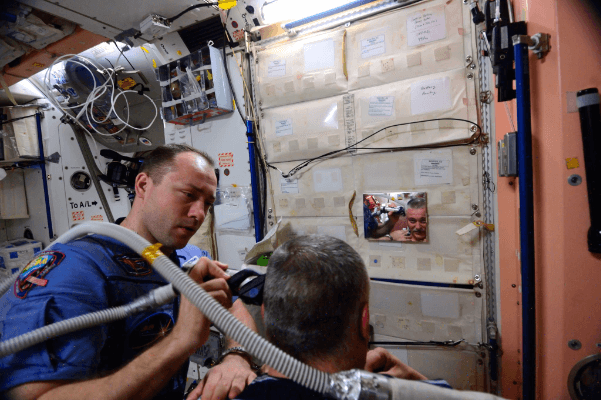
When washing hair, it is required to use a minimum amount of water and make sure that the drops do not scatter around the module. Then the moisture is collected with a towel. For haircuts, use a special machine connected to a vacuum cleaner, which collects the cut hair so that it does not scatter around the station.
How the ISS Toilet Works
The ISS toilet is an engineering solution to cope with the lack of gravity. The principle is that the air flow provides a transport function instead of gravity. The system has separate devices for collecting solid and liquid waste. And the main thing is that when you are in the toilet, some emergency alarm would not go off, forcibly turning off all the fans in the station. That is when the most important emergency immediately occurs.
Using a space toilet requires special training and skills that are practiced on Earth during preparation for the flight.
Physical Exercise in Zero Gravity
Physical training is an obligatory part of life at the orbital station. It is necessary to counteract the influence of harmful factors of space flight, primarily zero gravity. We train for two hours daily, and these classes are included in our work schedule.
Prolonged stay in zero gravity causes serious changes in the body: loss of muscle mass, demineralization of bones, weakening of the cardiovascular system. Without regular training, the consequences of prolonged stay in zero gravity would be catastrophic for crew members. During long expeditions without physical exertion, returning to Earth will be incompatible with life — the body simply will not withstand the abrupt transition to natural gravity. Our training is controlled by a special system, and data on the loads and condition of the body is transmitted to medical specialists on Earth, who analyze it and adjust the program if necessary.
Treadmill
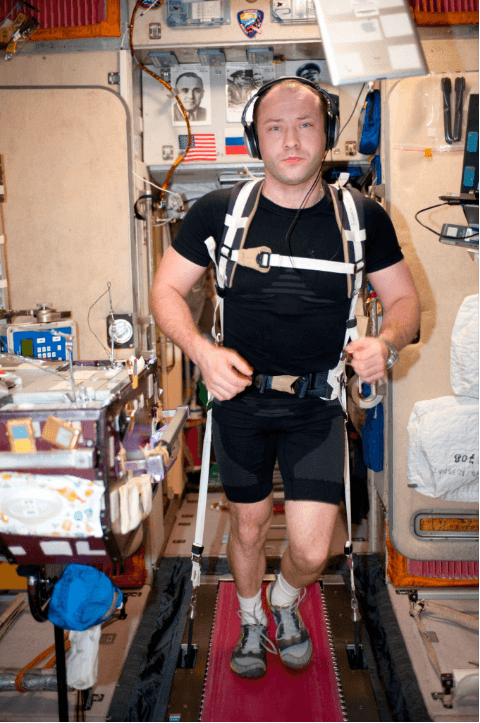
The ISS is equipped with special treadmills BD-2 and T-2, which differ from those on Earth due to the additional traction system. Elastic belts hold the astronaut on the treadmill and create a load that emulates gravity.
Running in zero gravity requires adaptation of movement technique due to the peculiarities of technical implementation added to the simulators. The intensity of training is regulated by the tension of the belts and the choice of training mode.
Running exercises are essential for maintaining endurance and cardiovascular health in zero gravity. They also provide the shock load that a person experiences when walking on Earth, which helps preserve calcium in bone tissue.
Exercise Bike
The exercise bike on the ISS is also equipped with a system for fixing the crew member's body and a special platform for the feet. It allows you to adjust the load and perform both long aerobic workouts and high-intensity interval training.
During training on a bicycle ergometer, as well as on a treadmill, we often combine physical activity with watching movies or listening to music, which makes the workout more enjoyable.
Strength Training
A special exercise machine called ARED (Advanced Resistive Exercise Device) is used for strength training at the ISS. It uses vacuum cylinders to create resistance that emulates weight lifting on Earth.
The strength training program includes basic exercises: squats, deadlifts, bench presses and others, aimed at loading all major muscle groups. It is individual for each crew member and is developed according to their physical condition and body characteristics.
How to Sleep and Rest in Space
According to the schedule, 8.5 hours are allocated for sleep, which allows for full rest and recovery.
The station never goes completely “asleep” — life support systems and scientific equipment are always running, creating a constant background noise that you have to get used to.
Sleeping Modules
Each crew member has a personal cabin, about the size of a telephone booth, containing a sleeping bag attached to the wall and a light for reading.
Cabin ventilation plays a key role: if it is switched off, you can suffocate in a “bubble” of exhaled carbon dioxide while sleeping. After all, there is no convection in space due to weightlessness — heavier carbon dioxide does not settle down, like it does on Earth.
In zero gravity, the sleeping position of the body does not matter. Crew members may rest in any position. During sleep, we often use headphones to protect ourselves from the constant noise of the station's systems.
Communication with Earth
An important part of the psychological support for crew members is regular communication with family and friends. At the ISS, it is possible to hold weekly private video conferences with family, use e-mail, and call Earth via IP connection.
Psychological support from specialists on Earth is also very important. Regular communication sessions allow to discuss not only work issues, but also personal ones.
When cargo ships arrive, crew members may receive small packages containing personal items, letters and surprises from family, creating an additional emotional connection to home.
What Do ISS Inhabitants Do in Their Free Time
Officially, crew members have free time in the evening after work and on weekends (usually Saturday and Sunday). However, many of us often use it for additional work or experiments.
Leisure activities have not only an entertaining but also a psychological function, helping to cope with the stress of isolation. One of the most popular activities is observing the Earth through the portholes. This spectacle never gets boring.
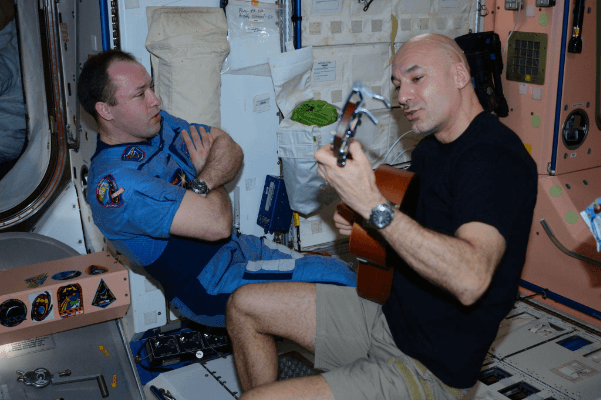
Movies, Music, Books
The ISS has a digital library of movies, music, and e-books accessible via onboard computers and tablets. Crew members may request downloads of new movies or music from Earth during communication sessions.
Hobbies and Creativity
Many of us are keen on photography. During our second flight with Sergei Ryazansky, we shot videos about physical properties and phenomena that can be easily demonstrated in zero gravity.
I also organized a sport event for New Year celebration — we played badminton in doubles in the largest module. And once our colleagues in the American segment cooked pizza, we had to come up with something as well. On the New Year’s eve, Anton Shkaplerov and I prepared Olivier salad... For the first time in my life, I made it myself — and, despite this, everyone really liked the Russian Salad, as it is called in English.
Creative hobbies help to diversify life at the station and provide an opportunity for self-expression even in the limited conditions of the orbital station.
What Is It Like to Live in Space
After you have adapted to weightlessness and you already feel good, you start to enjoy flying in zero gravity. But then you get used to it — and you have to tell yourself: “Come on, enjoy it, it will be over soon.”
Overall, if you are curious and creative, living in space is fun and time flies.
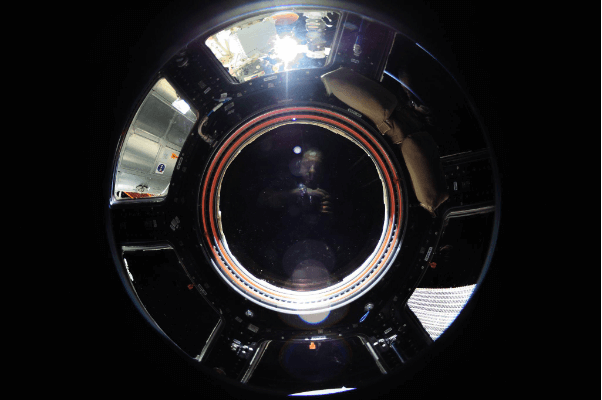
The only thing I was missing, and no technical means could help, was the opportunity to hug my loved ones. Such simple joys that we sometimes don’t even think about, because they are always nearby.
Living in space makes us appreciate in new ways the things we often take for granted on Earth, from the ease of taking a shower to the ability to hug a loved one.
To learn more about how people live and work at the orbital station, watch the fourth episode of the “Space Calling” series.
Pilot-Cosmonaut, Hero of Russia
Alexander Misurkin
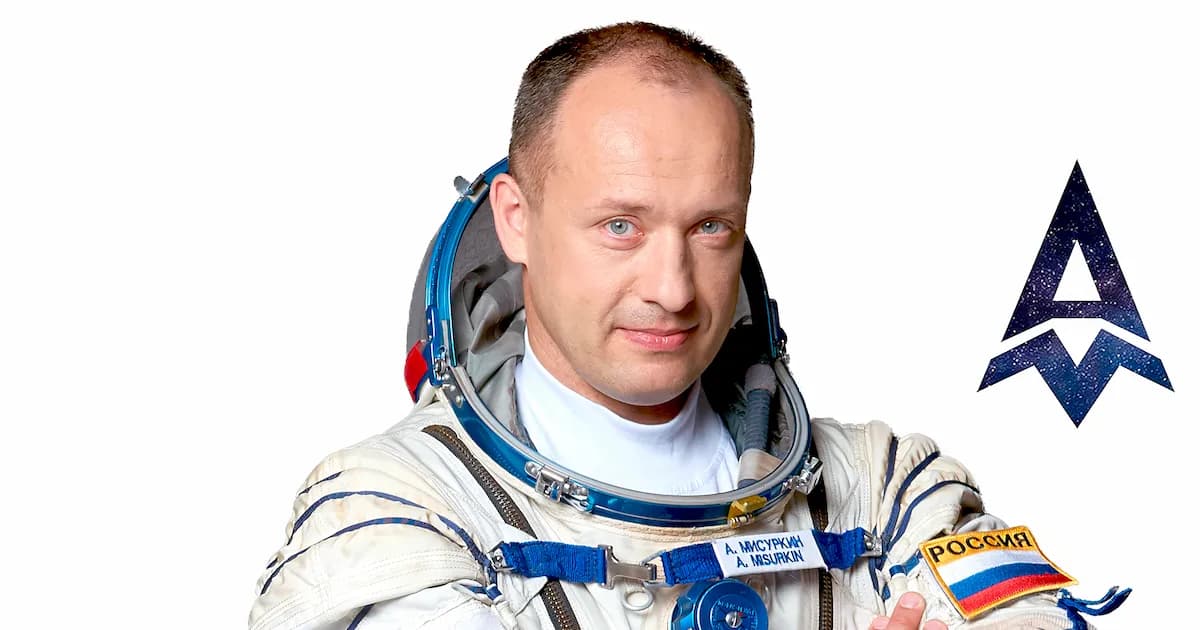
Hello! I'm cosmonaut Alexander Misurkin. My AI assistants Luke Vestin and "19-57" will answer your questions about space exploration and my experience.
To chat with Luke – simply type your question in the text field. If you're looking for space-related information from online sources, type "19-57, find information about ..." (it may take a moment – our robot is very thorough when searching the web).
Enjoy the conversation!