Selection for the cosmonaut corps: personal experience, requirements, stages
10.04.2025As part of the “Space Calling” project, which we prepared specifically for Cosmonautics Day together with Zen, I will be talking for a month about the stages of cosmonaut training and the structure of the space industry from the inside.
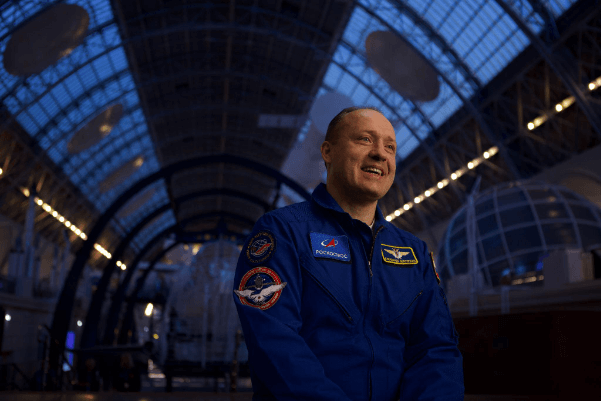
Today I will tell you how the selection process for the cosmonaut team takes place and what those who dream of conquering space need to know.
Who Can Become a Cosmonaut
When I was 14, I decided that I wanted to become a cosmonaut. My teacher Natalya Vladimirovna Afanasyeva made the first plan of action for me. Following this plan eventually helped me to get on the 35th expedition to the ISS in 2013 and become one of the youngest professional cosmonauts and astronauts to have arrived at the station by that time.
But even after becoming a pilot, I still didn't know where exactly they train to become a cosmonaut and what requirements you need to meet to be selected. Now, having gone through all this, I can share my knowledge with those who only dream of the stars.
Citizenship and Age
The first and most basic requirement is to be a citizenship of the Russian Federation. Only Russian citizens can become cosmonaut candidates. Applicants with dual citizenship or a residence permit from another country are not allowed to participate in the competitive selection.
As for age, the upper limit is 35 years as of December 31 of the year in which recruitment is announced.
I turned 29 in 2006 when I was selected. This is the optimal age: I have completed flight school, military service — I have just become a 1st class pilot instructor, and there was enough time ahead for a full-fledged space career.
Education and Profession
To join the cosmonaut corps, a higher education is required. Candidates with specializations or areas of master's degree training in the following areas are accepted.
- Computer science and computing.
- Electronics, radio engineering and communication systems.
- Physical and technical sciences and technologies.
- Aviation, rocket and space technology.
- Mathematics and mechanics.
- Physics and astronomy.
- Chemistry.
- Biological sciences.
In addition, candidates with a degree in General Medicine, particularly those with experience in aerospace, submarine, military or disaster medicine, will be considered.
It is also necessary to have at least three years of work experience in the specialty after receiving a diploma. Priority in the selection is given to specialists from the aviation and rocket and space industries of Russia.
Pilots of state, civil and experimental aviation with a qualification category of at least “3rd class pilot” also have a good chance to be admitted.
Medical Requirements
Medical selection is one of the most stringent stages. Applicants must have excellent health, meeting the criteria for flight personnel.
The main parameters are as follows.
- Height: 150 to 190 cm.
- Height in a sitting position: 80–99 cm.
- Body weight: 50–90 kg.
- Maximum foot length: 29.5 cm.
- Maximum crosswise size of the shoulder area: 52 cm.
- Maximum distance between the corners of the armpits: 45 cm.
- Maximum hip width in a sitting position: 41 cm.
- Chest circumference: 94–112 cm.
These restrictions are not accidental. For example, the maximum chest size is determined by the size of the cuirass of the spacesuit for work in outer space, and height and sitting height are directly related to the ability to fit into the cradle and seat of the ship.
As for vision, slight myopia (up to –0.5 diopters) or hyperopia (up to +2.0) is allowed. Astigmatism is a contra-indication.
Stages of Selection
Selections for the cosmonaut corps are not held regularly, but as needed — once every 3 to 5 years on average. And each selection lasts about a year. It is interesting that until 2012, recruitment was mainly departmental: selection took place among space industry enterprises and military units. Now, however, open recruitment is in effect, where any Russian citizen who meets the requirements can become a cosmonaut.
The best place to track current information is the official website of the Cosmonaut Training Center (www.gctc.ru), which is responsible for the selections. All the details are published there, including necessary documents and deadlines. More information about recruitment for the cosmonaut corps can be found at www.astronaut.ru.
Submitting an Application and Documents Checking
The process begins with submitting an application to the Selection Committee. It is necessary to provide a standard package of documents, including autobiography, copies of educational documents and references from the workplace. At this stage, approximately 30–40% of applicants are eliminated due to non-compliance with formal requirements or an incomplete set of documents.
Medical Commission
The medical stage is the most rigorous and sifting filter. It includes a comprehensive examination of all body systems.
- In-depth medical examination.
- Blood and urine tests.
- Functional tests of the cardiovascular system.
- Vestibular apparatus examination.
- Ophthalmological and dental examination.
- Psychological testing.
In addition, special functional tests are carried out.
- Tests for tolerance to changes in barometric pressure (tests in a pressure chamber).
- Tests for resistance to moderate degrees of hypoxia.
- Centrifuge tests to assess tolerance to overloads.
- Testing vestibular stability using special rotational tests.
- Tests with dosed physical activity to assess the functioning of the cardiovascular system.
The medical commission takes 2 to 3 weeks and is conducted in several stages. Only about 30–40% of candidates admitted to the medical examination pass it.
One of my funny observations from the medical commission was the centrifuge test, at 8g, which increases the body weight eightfold. That may correspond to the peak values during return from orbit. The sensations are unforgettable: the face spontaneously “spreads” into an unnatural smile, and tears are literally squeezed out of the eyes and run to the upper tips of the ears (in the direction of the “chest-back” overload vector). This is how they check whether a person can maintain consciousness and performance under extreme loads.
Psychological Testing
Psychological selection partially overlaps with the medical commission but also includes separate specialized tests. It is aimed at identifying personal qualities necessary for space activities.
- Stress resistance.
- Ability to work in a team.
- Leadership qualities.
- Resistance to monotony and isolation.
- Ability to work in stressful conditions
- Ability to learn and retrain.
Rostislav Borisovich Bogdashevsky, who was involved in psychological selection and support of all cosmonauts before our 2006 recruitment, especially noted the importance of a sense of humor. This is a truly necessary quality that helps cope with the difficulties of space life.
Psychological selection includes personality questionnaires, projective methods, tests of intelligence and cognitive abilities, situational tasks under stress. Particular attention is paid to group tests that simulate work as a closed team in a limited space.
When I was preparing for my second flight as an ISS expedition commander in 2017, psychologists conducted special training sessions with us on teamwork. It turned out that being friends and being a team are completely different things. The skills of building an efficient team, identified at the selection stage, turned out to be crucial in orbit, where not only the implementation of the program, but sometimes even life, depends on mutual understanding.
Fun fact: candidates with tattoos may be rejected during psychological selection. This is a requirement of psychologists: it is believed that the presence of “body painting” may indicate certain personality traits that do not correspond to the profile of a cosmonaut.
Physical Training and Tests
Physical training takes a special place in the selection. During the expedition, cosmonauts will have to do sport exercises for two hours every day. This is not a matter of choice, but a necessity in order to survive and return healthy. Therefore, it is extremely important that the candidate loves to play sports and is physically developed. If a person does not like sports, then in space, physical training will not be a way to relieve emotional stress, but an additional stress factor.
The main standards are as follows.
- 1 km run (3 min 30 sec) or 5 km skiing (24 min 30 sec).
- 800 m swimming freestyle (20 min 10 sec) or breaststroke (22 min 30 sec).
- Pull-ups on the horizontal bar (12 times).
- Angle support on the parallel bars (20 sec).
- Shuttle run 10 by10 m (26.3 sec).
- Standing long jump (2.3 m).
- Trampoline jump with a turn.
- Head-down dive into water from a 3 m springboard.
- Forward bend from a standing position on a bench (16 cm).
- Romberg test (45 sec).
- Long dive (20 m).
- 11-minute test on a treadmill.
- Hand exercise bike ergometry on a stationary bike.
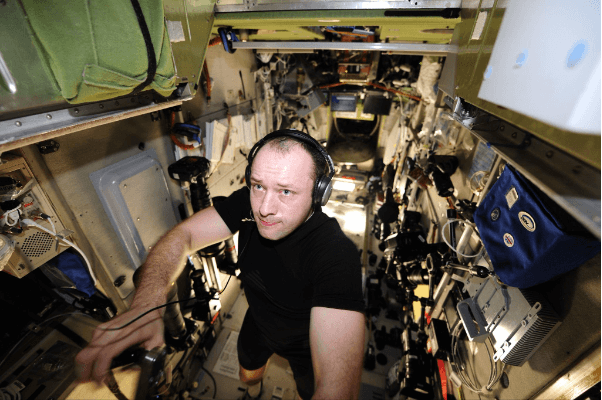
The last test is quite specific. This is how we train and take this test in flight when assessing physical readiness for work in outer space.
During my second and then fourth spacewalks, my colleagues and I set a record for the longest stay in outer space. Without serious physical training, this would have been impossible.
Professional Suitability
Professional suitability test includes the following tests.
- Testing in Russian (dictation).
- Testing in mathematics.
- Testing in physics.
- Testing in a foreign language.
- Testing computer and information technology skills.
- Testing in cultural studies.
- Testing knowledge of the history of World and domestic cosmonautics.
- Testing knowledge of the basics of manned spaceflight.
- Determining abilities to study space technology.
- Analysis of abilities for operator activities.
The day before the test, candidates receive a training manual on one of the onboard systems of a manned spacecraft and must familiarize themselves with it. The next day, at an interview, they present information about the purpose, technical characteristics, and principles of its operation.
Final Selection and Enrollment in the Team
The final decision is made by the Interdepartmental Commission for the selection of cosmonauts and their assignment to the crews of manned ships and stations. The commission reviews the results of all tests, conducts a final interview with each candidate and evaluates their motivation and potential.
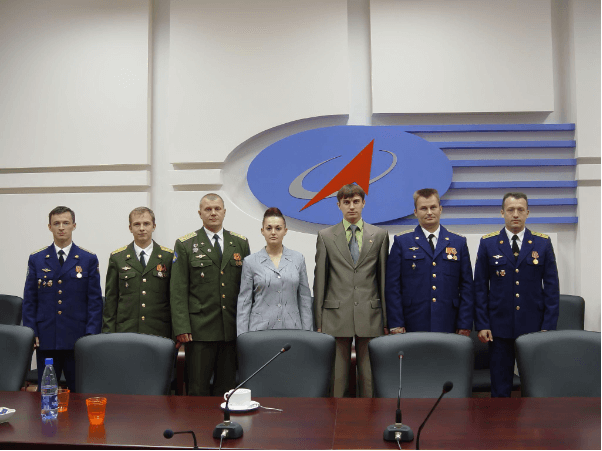
Our recruitment after the decision of the Interdepartmental Commission on our enrollment in the cosmonaut corps. 2006
Only a limited number of candidates are selected based on the current needs of the space program — typically four to eight people out of hundreds of applicants. For example, in the 2018 open call, only eight people were selected out of 420 candidates (less than 2% of the number of applications).
Those who successfully pass all stages of selection receive the status of candidate test cosmonauts and are enrolled in the cosmonaut corps.
The moment when, at the end of the 2006 selection, the credentials committee read us the decision on enrollment was one of the most exciting in my life. But it turned out to be only the beginning of a long journey — years of training lay ahead, a new road opened before us, with its adventures and trials.
Who Definitely Won't Be Accepted
Medical Contra-Indications
Despite some lessening of requirements over the past decades, there are absolute medical contra-indications for space flights.
- Cardiovascular system: hypertension even of the 1st degree, heart defects, arrhythmia, ischemic heart disease.
- Respiratory system: bronchial asthma, chronic obstructive pulmonary disease, history of tuberculosis.
- Endocrine diseases: diabetes mellitus of any type, thyroid disease, metabolic syndrome.
- Musculoskeletal system: osteochondrosis with pronounced manifestations, herniated discs, arthrosis of the joints, 3rd degree flat feet.
- Neurological and mental illnesses: epilepsy, migraine, depression, panic disorder, claustrophobia.
- Digestive organs: peptic ulcer, chronic pancreatitis, Crohn's disease, hepatitis.
- Vision: myopia above –0.5 diopters, hyperopia above +2.0, astigmatism, color blindness, history of retinal surgery.
- Others: chronic infectious diseases, allergic reactions, severe metabolic disorders, history of cancer.
Other Reasons for Refusal
In addition to medical reasons, refusal may be based on the following grounds.
- Education and work experience: lack of relevant higher education, insufficient work experience in the specialty, lack of scientific achievements or engineering skills.
- Psychological profile: insufficient stress resistance, proneness to conflict, problems with teamwork, insufficient motivation.
- Physical fitness: not meeting anthropometric requirements, insufficient physical endurance, poor coordination of movements.
- Legal restrictions: criminal record.
- Other factors: insufficient knowledge of foreign languages, inability to quickly learn new skills, tattoos.
Is It Possible to Become a Cosmonaut
I won't take it upon myself the evaluation of the statistics on how many people out of 10, 100 or 1000 will be able to pass the selection. I can say that both the way to cosmonautics and the profession itself are really difficult. But the same can be said about most professions.
When communicating with a wide range of audiences, from schoolchildren to top managers, I always emphasize: cosmonauts are not superhumans with extraordinary abilities. They are ordinary people with an extraordinary dream and a willingness to work on its implementation every day.
In my speeches, I often quote the wisdom I heard from a psychologist during my space training: “You need to move along your strong line to be as successful as possible.” This was echoed by Japanese billionaire Yusaku Maezawa, with whom we flew in 2021 on the first Soyuz flight to the ISS with two space tourists: “Do what you love, and you will be already half a step away from success.”
I am sharing this so that everyone who reads this article will think: what are his strengths? In what activity can he fulfill his potential and get pleasure out of it? It might be cosmonautics or something completely different. The main thing is to follow your dream, as the fourteen-year-old boy who is now writing these lines once did.
To learn more about the selection process for the cosmonaut corps and my personal way to the stars, watch the first episode of “Space Calling” series.
And if your inner settings, education and physical data indeed correspond to not so extreme requirements, the road to cosmonautics will not seem insurmountable to you. It will definitely be exciting, full of discoveries and challenges. And who knows, maybe you will be the one who could leave a mark in the history of cosmonautics.
Pilot-Cosmonaut, Hero of Russia
Alexander Misurkin
Hello! I'm cosmonaut Alexander Misurkin. My AI assistants Luke Vestin and "19-57" will answer your questions about space exploration and my experience.
To chat with Luke – simply type your question in the text field. If you're looking for space-related information from online sources, type "19-57, find information about ..." (it may take a moment – our robot is very thorough when searching the web).
Enjoy the conversation!