Space Professions: Not Just Cosmonauts. Who Else Does the Industry Need?
26.04.2025We continue the series of publications about cosmonautics within the framework of the project “Space Calling”. Today, I will talk about the diversity of professions in the industry, going far beyond the most famous specialty — cosmonaut. Based on my experience, I want to show that the modern space industry is a complex ecosystem that requires specialists of various profiles.
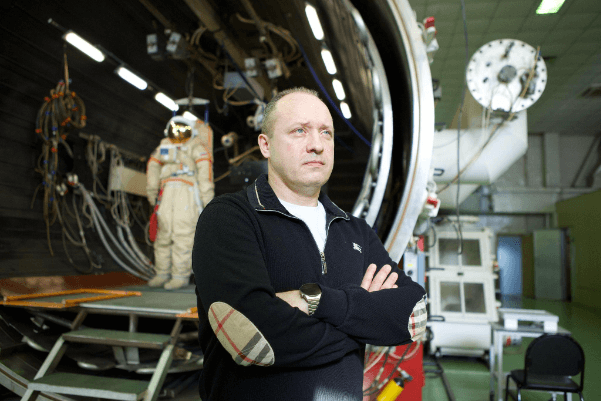
Why Space Isn't Only About Cosmonauts
When we start talking about space, the first image that comes to most people's minds is of a cosmonaut (or astronaut) in a spacesuit floating in orbit. However, our industry is a huge ecosystem, and cosmonauts are just the tip of the iceberg. For each of them there are about ten thousand specialists of various profiles, providing for the entire cycle of space activities.
With the emergence of private companies such as SpaceX, Blue Origin, Sierra Space, the landscape of the space industry has begun to change dramatically. Previously, it was the prerogative of government agencies, but today it is actively commercialized, creating thousands of new jobs. According to industry analysts, the global space economy has grown to $447 billion in 2022 and continues to grow, opening up more and more opportunities for professionals of various profiles.
In-Demand Professions in Space Industry
The modern space industry is a fusion of high technology, fundamental science and precise engineering calculations. It requires not only highly specialized experts, but also interdisciplinary specialists able to work at the intersection of different fields of knowledge.
Today, professionals who combine technical knowledge with understanding of the space projects’ economics, international space law and environmental aspects of space activities are especially in demand. With the development of commercial flights, entirely new professions are emerging: engineers in resource extraction on asteroids, specialists in space tourism, experts in space law which regulates the activities of private companies beyond Earth.
According to forecasts from analytical companies, by 2030 the most promising areas will be those related to the exploration of the Moon and Mars, the creation of orbital production facilities and the development of technologies for long-term interplanetary expeditions.
Cosmonaut/Astronaut
The profession of a cosmonaut remains the pinnacle of a career in the industry, but it has its own specifics. It is not just a job, it is a way of life that requires complete dedication and readiness for extreme conditions.
With the development of private space exploration, the requirements for flight participants are becoming more diverse, and the degree of specialization in space professions will rapidly increase. While previously cosmonauts and astronauts were expected to have general skills, in the future more specialized roles may emerge: spacecraft pilots, extravehicular activity specialists, Lunar and Martian base operators.
Design Engineer
Design engineers create rockets, spaceships, orbital stations and other spacecraft. They develop both the general concept and architecture of space systems, as well as their individual elements: hull structures, propulsion systems, life support systems, onboard electronics.
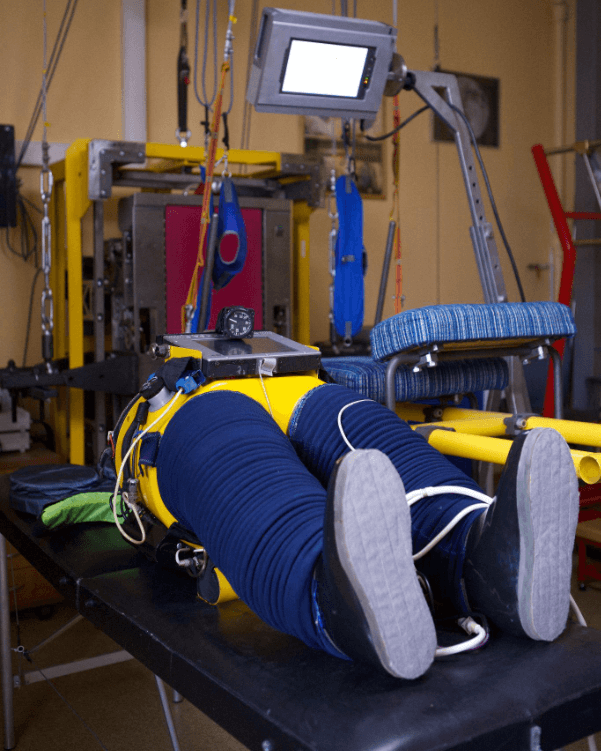
After the flight, I have a special feeling for what “the power of engineering thought” means when I see such devices as, for example, the “Chibis” product, which simulates the effect of gravity on the human body in space flight conditions. I never cease to admire how engineers can solve problems that at first glance have no solution.
The profession of a design engineer in the space field requires deep knowledge of mathematics, physics, materials science, as well as specific disciplines — ballistics, engine theory, flight dynamics. A modern engineer must be confident in the use of computer-aided design systems (CAD/CAM/CAE), such as SolidWorks, CATIA, NX.
In Russia, the leading enterprises employing space technology design engineers are S.P. Korolev RSC Energia, S.A. Lavochkin NPO, M.V. Khrunichev State Research and Production Space Center, and M.F. Reshetnev Information Satellite Systems. Each of them has its own specialization: from developing manned spacecraft to creating communications and navigation satellites.
Aerospace Programmer
The role of programmers in the space industry cannot be overestimated. They create software for controlling spacecraft, processing scientific data, and modeling space missions.

Margaret Hamilton, NASA's lead programmer for the Apollo program
The role of programmers is very clearly shown by a photo of the chief programmer for the Apollo program with volumes of code that provided flights to the Moon in the last century, the total height of the specialist himself — despite the fact that the permanent memory of the computer that operated this code was limited to only 72 kilobytes. What was it like to solve the most complex problems of space navigation and motion control, having such strict hardware limitations!
Today we have come close to the long-desired task of manned flights to Mars. But at some points in orbit, the time it takes for a signal to travel from the ship to Earth and back can be up to 20 minutes. In such conditions, a high degree of autonomy in decision-making in difficult situations must be implemented, since it will be impossible to get support from the Mission Control Center when it is urgently needed. In this regard, I think that it is necessary to develop a new control complex based on AI systems that will provide necessary support to the crew in operational decision-making.
Other promising areas for aerospace programmers include development of computer vision systems for autonomous navigation, the creation of spacecraft’s digital twins and the use of artificial intelligence technologies to analyze data from space telescopes and probes.
Communications and Navigation Specialist
Space communications specialists ensure reliable communication between spacecraft and Earth, as well as the operation of satellite navigation and communications systems.
Space communications have their own peculiarities and difficulties. The signal must travel huge distances, undergoing significant attenuation and delays. For example, the signal from the Perseverance rover to Earth takes from 5 to 20 minutes, depending on the relative positions of the planets. To transmit data from deep space vehicles, powerful directional antennas and special communication protocols that are resistant to delays and packet loss are used.
One of the largest deep space communication systems is NASA Deep Space Network, which consists of three complexes with 70-meter antennas located in the USA, Spain and Australia. Space communications specialists create and operate GPS and GLONASS satellite navigation systems, Iridium, Inmarsat, and Gonets satellite communications systems, and data relay systems such as TDRS (Tracking and Data Relay Satellite) for the ISS.
The professional way of a specialist in this field begins with education, namely in radio engineering, electronics, and telecommunications systems. Deep knowledge of radio wave propagation, antenna theory, digital signal processing, and an understanding of the specifics of their application in outer space are required.
Astronomer and Astrophysicist
Astronomers and astrophysicists study space objects and phenomena, from the planets of the Solar System to distant galaxies and quasars. Their work is the fundamental scientific basis for space activities.
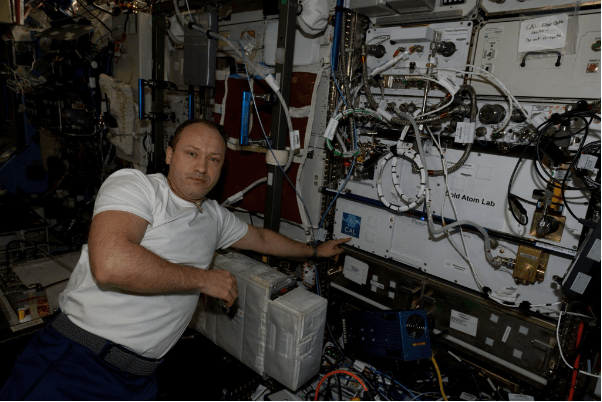
Astrophysicists are installing their equipment on the ISS as well. Of particular interest is the Cold Atom experiment, a unique laboratory where the behavior of ultra-cold atoms in microgravity conditions is studied. This experiment allows us to test fundamental physical theories and has potential for use in creating a new generation of ultra-precise atomic clocks.
Modern astronomy is not only about ground-based telescopes, but also about space observatories such as Hubble, James Webb, Chandra, which provide us with the images of space of unprecedented quality. For example, the James Webb telescope, launched in 2021, is able to look into the earliest epochs of the Universe thanks to its infrared “vision”.
Russian astrophysicists make a significant contribution to world science by participating in projects such as the Spektr-RG orbital observatory, designed to study the Universe in the X-ray range, and the Spektr-UV space telescope, which is being prepared for launch, for observations in the ultraviolet range.
For astronomers and astrophysicists, practical skills in working with astronomical data, the ability to program and use specialized software, and mathematical modeling of space processes are especially important. More and more research in this area is being conducted using machine learning and artificial intelligence methods to analyze huge amounts of data.
Doctor for Orbital Missions
Space medicine is a specialized field that studies the influence of space factors on the human body and develops methods of adaptation, prevention and treatment in flight.
Specialists in this field are involved in the selection and training of cosmonauts, medical support for flights, development of life support systems, rehabilitation after returning to Earth. They solve such problems as loss of bone and muscle mass in zero gravity, changes in the cardiovascular system, sleep disorders, psychological effects of isolation.
In Russia, the leading centers of space medicine are the Institute of Medical and Biological Problems of the Russian Academy of Sciences and the Yuri Gagarin Cosmonaut Training Center. Specialists working at these institutions are developing and testing methods that allow cosmonauts to maintain their health during long expeditions to the ISS.
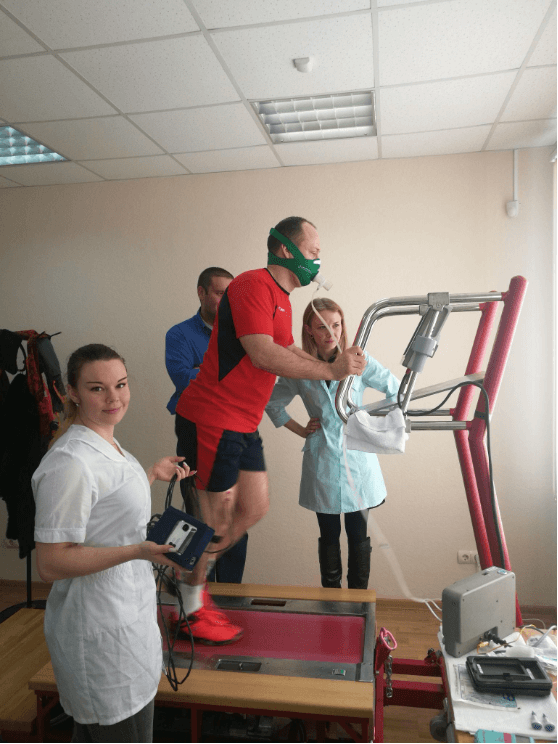
With plans to explore the Moon and future missions to Mars, space medicine faces new challenges: protection from cosmic radiation during long flights, medical care in autonomous conditions when communication with Earth is limited, and psychological support for crews on flights lasting more than a year.
Space Crew Psychologist
Psychological health of the crew is no less important than the physical, especially during long missions. Psychologists work with cosmonauts at all stages: selection, preparation, flight support and rehabilitation after return.
One of the key tasks of a space psychologist is to assess the psychological compatibility of crew members.
As the duration of space missions increases, the role of psychologists also intensifies. For future expeditions to Mars lasting 2–3 years, psychological support of the crew will become one of the critical success factors. Psychologists are already participating in ground experiments simulating such missions: the MARS-500, HI-SEAS, and SIRIUS projects, where the effects of long-term isolation are being studied and methods for overcoming them are being developed.
Space Robotics Specialist
Space robotics is one of the fastest growing areas in the industry. Robots are essential for planetary exploration, outer space work, satellite servicing, and space facility construction.
The most famous examples of space robots are Mars rovers such as Curiosity and Perseverance, automatic interplanetary stations, robotic manipulators on the ISS: the Canadian Canadarm2 and the European ERA (European Robotic Arm), installed on the Russian segment of the station.
The future of space robotics lies in the creation of increasingly autonomous systems capable of making decisions independently in unpredictable environments and limited communication with Earth. Promising areas include the development of robots for mining resources on the Moon and asteroids, robotic systems for assembling large space structures in orbit, and robotic assistants for future lunar and Martian bases.
The creation of space robots requires an interdisciplinary approach that combines knowledge in the fields of mechanics, electronics, programming, control systems and artificial intelligence. The adaptation of robotic systems to extreme space conditions: radiation, vacuum, extreme temperatures, microgravity or low gravity on the surface of other planets — is particularly challenging.
Where to Study for Space Career
Quality education is the basis for a successful career in the space industry. Along with fundamental knowledge in physics, mathematics, engineering, interdisciplinary competencies and practical experience with real projects are becoming more and more important.
Modern educational opportunities are not limited to traditional higher education. Online courses, specialized advanced training programs, participation in student space projects are becoming an important part of the education of a future space industry specialist.
Universities and Programs in Russia
Russian education system has a long tradition of training specialists for the space industry. The country's leading technical universities offer specialized programs and have strong ties with space industry enterprises.
Bauman Moscow State Technical University is the oldest technical university in Russia, training rocket and space engineering designers. Specialized Mechanical Engineering and Aerospace faculties provide training in the areas of designing launch vehicles, spacecraft, and propulsion systems. The average passing score for these specialties is 270–290 points based on the results of the Unified State Exam.
Moscow Aviation Institute (MAI) specializes in training specialists in aviation and rocket-space systems. The Aerospace Faculty and Institute No. 6 “Aerospace” offer programs in the design and production of aircraft, engines, and control systems.
The Moscow Institute of Physics and Technology (MIPT) trains specialists in fundamental physics, applied mathematics, and information technology for the space industry. A special feature of MIPT education is the “Phystech system,” which involves early inclusion of students in real scientific and engineering work in basic organizations, including Roscosmos enterprises.
Lomonosov Moscow State University offers programs in astronomy, cosmology, space physics at the Faculty of Physics and the Faculty of Space Research, established in 2017. Students participate in real space projects such as satellite monitoring, space weather, and processing of space mission data.
Peter the Great St. Petersburg Polytechnic University (SPbPU) is known for its programs in rocket and space technology, materials science, applied mechanics and robotics. The university actively cooperates with space industry enterprises of the North-West region.
Other significant universities training specialists for the space industry include South Ural State University (SUSU), Siberian State Aerospace University (SibSAU), and Samara National Research University named after S.P. Korolev.
To enroll in space specialties, applicants must pass the Unified State Exam in mathematics, physics, computer science, and Russian. Additional admission opportunities are provided by specialized Olympiads, such as “Step into the Future”, “Phystech”, the All-Russian Engineering Olympiad for Schoolchildren, as well as participation in specialized classes and technical creativity clubs.
International Directions
There are also many prestigious educational institutions abroad that train specialists for the space industry. Prominent among them are Massachusetts Institute of Technology (MIT) and California Institute of Technology (Caltech) in the United States, which work closely with NASA; Technical University of Munich in Germany and École Polytechnique Supérieure de Paris, which work with the European Space Agency.
Of particular note is International Space University (ISU) in Strasbourg, offering interdisciplinary programs in space science, engineering and management.
Skills Valued in Space Industry
Successful career in the space industry requires not only specialized technical knowledge, but also a number of universal competencies that are becoming increasingly in demand as the industry evolves.
Technical skills listed below remain the foundation for most space professions.
- Systems thinking — the ability to see a problem as a whole, understand the relationships between different components of complex systems, which is critical when creating spacecraft, where the failure of one element can lead to the loss of the entire mission.
- Engineering analysis and modeling — the ability to apply mathematical models and computer modeling to predict the behavior of technical systems in various conditions, including extreme conditions of outer space.
- Working with big data — the skills to collect, process and analyze large amounts of information are becoming increasingly important as the volume of data received from spacecraft and telescopes grows.
- Programming and algorithmic thinking — not only for software developers, but also for engineers, scientists, analysts working with automated systems and data processing.
Personal qualities and “soft skills” are no less important.
- High motivation and determination — space projects often last for years and even decades, requiring long-term commitment and persistence in achieving goals.
- Stress resistance and adaptability — the ability to work efficiently under uncertainty, rapidly changing environment and high responsibility.
- Teamwork and communication skills — space projects are always implemented by teams, often international, which requires the ability to efficiently interact with colleagues of different specialties and cultural backgrounds.
- Critical thinking and attention to detail — in the space industry, the cost of mistakes is extremely high, so the ability to critically evaluate information and pay attention to even the smallest details is important.
- Continuous learning — a willingness to continually update knowledge and master new technologies, which is especially important in the rapidly developing space industry.
In the context of increasing international competition and commercialization of space activities, interdisciplinary competencies are becoming increasingly valuable.
- Understanding the economic aspects — space projects require significant investments, therefore it is important to understand the principles of project financing, risk assessment, and business planning.
- Knowledge of the legal framework — international space law, which governs activities in space, is becoming increasingly complex and important for the implementation of commercial projects.
- Ecological thinking — understanding the impact of space activities on the near-Earth environment (space debris) and the surfaces of other planets is becoming more and more important with the increasing intensity of launches and given plans to explore the Moon and Mars.
How to Get into the Industry: Where to Start
The road to the space industry can be different for specialists of different profiles, but there are general recommendations that will help you take the first steps in this direction.
1. Get a quality basic education in STEM fields (science, technology, engineering, mathematics). Fundamental knowledge in physics, mathematics, engineering sciences, computer science will become a solid foundation for further specialization in the industry.
2. Supplement your formal education with independent study of cosmonautics. Today, many online courses are available from leading universities and space agencies: courses on astronomy, space engineering, satellite technologies on Coursera, edX platforms, lectures and webinars from NASA, ESA, Roscosmos.
3. Take part in specialized events and communities:
- student design bureaus and scientific societies at universities;
- hackathons and space project competitions (NASA Space Apps Challenge, ActInSpace, SPHERES);
- conferences and exhibitions on space topics (Airshow China, MAKS, International Astronautical Congress).
4. Develop your own student projects or join existing ones.
- The creation of small satellites of the CubeSat standard, which are becoming increasingly accessible to university teams.
- Development of amateur rockets and stratospheric balloons.
- Participation in ground experiments simulating space missions.
- Projects for processing open data from space missions and telescopes.
5. Look for opportunities for internships and first employment.
- Targeted training programs from space industry enterprises.
- Internships in design bureaus, research institutes, private space companies.
- Programs for young specialists of Roscosmos and other space agencies.
- Entry-level positions in companies working with satellite data, geographic information systems, and space telecommunications.
6. Develop professional connections and a personal brand.
- Attend industry conferences and seminars.
- Publish scientific articles, participate in open projects.
- Run a blog or podcast about space.
It is important to understand that the road to the space industry requires persistence and patience. Many specialists start from positions in related fields — aviation, radio electronics, IT, defense industry — and gradually move on to work on space projects, having accumulated experience and expertise.
Space Career Prospects
The space industry is currently on the threshold of a new stage of development. Commercialization, plans to return to the Moon and further exploration of Mars, the creation of new orbital stations and satellite constellations open up unprecedented opportunities for specialists of various profiles.
A significant trend of the last decade has been the democratization of access to the industry. Earlier on, it was an elite sphere with a limited number of employers, mainly State ones, and today hundreds of companies around the world are engaged in space activities — from large corporations to startups.
This has led to new career paths. For example, someone with experience in an IT company or autonomous systems can apply their skills to space robotics. A biologist or physician — to deal with issues of space medicine or astrobiology. A lawyer with an understanding of international law — to specialize in the legal regulation of space activities.
The following areas will be particularly promising in the next 10–15 years.
- Moon exploration — creation of permanent lunar bases, development of life support systems, extraction and use of lunar resources.
- Mars programs — preparation of manned missions, development of technologies for life and work on Mars.
- Orbital manufacturing — creation of materials and products with unique properties in microgravity.
- Space tourism and commercial orbital stations — a new direction that requires specialists in both technical fields and in the service sector.
- Using artificial intelligence to increase the autonomy of space systems.
- Recycling of space debris and sustainable use of near-Earth space.
For those who are just starting out in this field, it is important to understand that modern space projects are complex interdisciplinary initiatives that require not only narrow specialists, but also professionals with a broad outlook, capable of seeing the interrelations of various systems and aspects.
The space industry remains one of the areas where the romantics of discovery, high technology and practical benefits for humanity are harmoniously combined. The journey to the stars begins with the first step here on Earth: choice of education, development of skills and persistent movement towards your dream.
To learn more about the interaction of cosmonauts and astronauts on Earth and in space, experiments at the ISS and a record-breaking spacewalk, watch the fifth episode of the “Space Calling” project.
Pilot-Cosmonaut, Hero of Russia
Alexander Misurkin
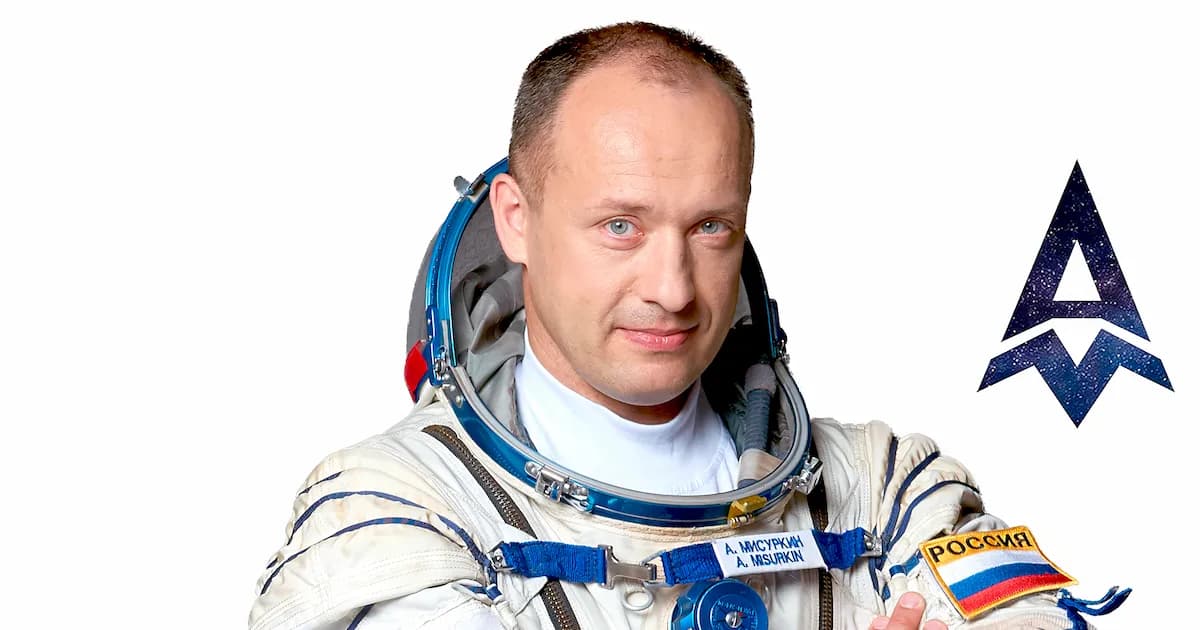
Hello! I'm cosmonaut Alexander Misurkin. My AI assistants Luke Vestin and "19-57" will answer your questions about space exploration and my experience.
To chat with Luke – simply type your question in the text field. If you're looking for space-related information from online sources, type "19-57, find information about ..." (it may take a moment – our robot is very thorough when searching the web).
Enjoy the conversation!