Spaceships: Past, Present, and Future of Space Exploration
06.05.2025As a part of the “Space Calling” project, we continue a series of publications about space and everything associated with it. Today, I will talk about the evolution of manned spacecraft, from the first experimental models to modern systems and promising concepts of the future.
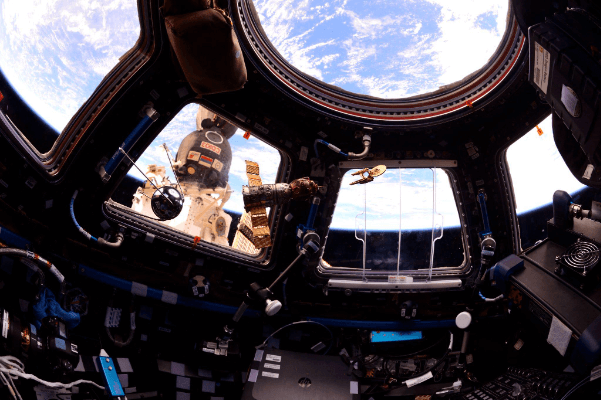
Introduction to the Space Age
Humanity took its first steps into space long before actual flights, thanks to the work of outstanding rocket theorists. Konstantin Tsiolkovsky, Friedrich Zander, Yuri Kondratyuk and Hermann Oberth laid the foundation of cosmonautics, predicting the possibility of human flight beyond the Earth's atmosphere.
The historical context was decisive for the development of space technology. The onset of the Cold War turned space exploration into an arena of geopolitical confrontation between the USSR and the USA. The launch of the first artificial satellite on October 4, 1957 marked the beginning of the space age and simultaneously launched the “space race” — a competition for technological leadership in space.
It is important to understand the fundamental difference between a launch vehicle, which provides the launch into orbit, and the spacecraft itself — the apparatus designed for human flight into space. To ensure the survival of the crew, the ship must have a sealed cabin with life support system, reliable power supply, communication, navigation and orientation systems, and ensure safety of return to Earth.
The First Manned Spacecraft
In the early 1960s, technology was advancing rapidly. The designers of the two superpowers were going their separate ways, but the goal was the same: to be the first to send a man into space. Soviet and American programs had fundamental differences in their approaches to the design of spacecraft, which reflected not only the technical capabilities of the countries, but also the philosophy of the projects.
Vostok Program, USSR
Vostok spacecraft, created under the leadership of Sergei Korolev, became the first vehicle to allow humans leave the atmosphere. On April 12, 1961, Yuri Gagarin made a historic 106-minute flight (initially it was stated that Gagarin spent 108 minutes in flight, but in the mid-2000s, thanks to the publication in the historical album “Pages of History: Pokrovsk — Engels”, the data was clarified) in near-earth orbit, opening the way into space for humanity.
The design of Vostok was extremely simple and reliable. The ship consisted of two main modules: a spherical descent module with a diameter of 2.3 m and a conical instrument compartment. The total mass of the ship was about 4.7 tons. Inside the descent module, there was a single-seat cosmonaut cabin with life support system, communications equipment and control elements.
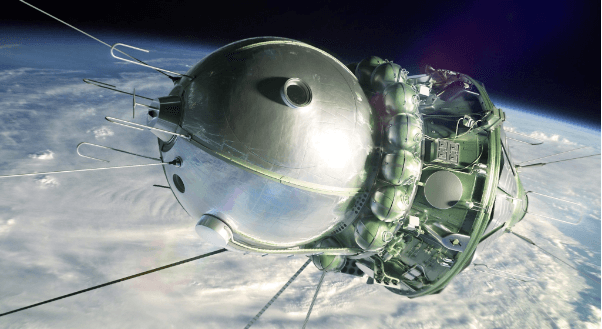
The landing scheme was a special feature of Vostok: the cosmonaut ejected from the descent vehicle at an altitude of about 7 km and landed separately on his own parachute. The orientation system allowed manual control of the ship's position, but the design did not provide for the ability to change the orbit.
Vostok was used for six manned flights from 1961 to 1963. It set several historical records: the first manned space flight (Yuri Gagarin, Vostok 1), the first 24-hour flight (German Titov, Vostok 2), the first group flight (Andrian Nikolaev and Pavel Popovich, Vostok 3 and Vostok 4), and the first flight of a female cosmonaut (Valentina Tereshkova, Vostok 6).
Mercury Program, USA
In response to the Soviet Union's successes, the United States accelerated the development of its own manned Mercury program. Key design decisions were made under the leadership of the outstanding engineer Max Faget, who became one of the architects of US space program.
Mercury spacecraft was conical in shape with a heat shield at the base and was designed for one astronaut. Its mass was only about 1.4 tons, almost three times less than Vostok. This was due to the limited capabilities of American launch vehicles of the time.
The first suborbital flight on Mercury was performed by Alan Shepard on May 5, 1961 (23 days after Gagarin's flight), and the first orbital flight was performed by John Glenn (February 20, 1962).
Unlike the Soviet specialists, the Americans chose to splash down in the ocean, which eliminated the need for ejection. The ship was equipped with a full-fledged emergency rescue system at the launch site. The astronaut had more control over the ship's systems, reflecting the American “man in the loop” philosophy. Flight duration increased gradually, from 15 minutes on suborbital missions to 34 hours on the program's final mission.
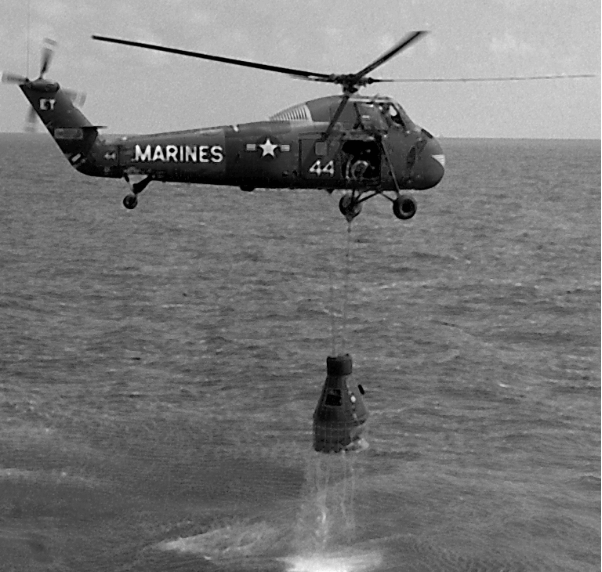
Freedom 7 (MR-3) capsule being lifted by a Sikorsky HUS-1 helicopter
Evolution of Spacecraft
After the initial successes in space exploration, both countries set themselves more ambitious goals: multi-seat ships, spacewalks, rendezvous and docking in orbit. These new challenges required the creation of second-generation ships.
Voskhod and Gemini Programs
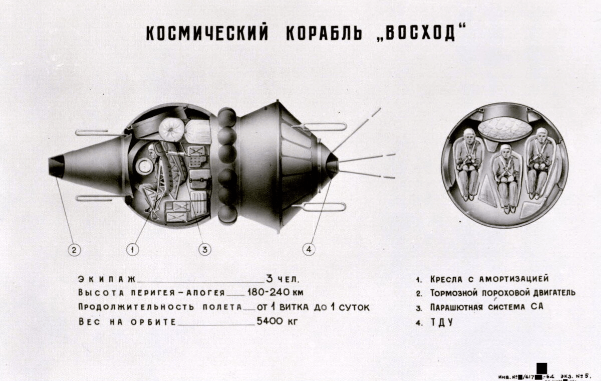
Voskhod (USSR) was a modification of Vostok adapted for a crew of two or three people. The changes were made with minimal design modifications: ejection systems were removed, and cosmonauts were placed without spacesuits (a three-person crew was planned). Due to mass and volume restrictions, no launch escape system were added, which was considered an acceptable risk.
Despite the compromises, Voskhod program achieved significant results: the first multi-seat flight (Voskhod 1, October 12, 1964, crew — Vladimir Komarov, Boris Egorov and Konstantin Feoktistov) and the first human spacewalk (Alexey Leonov on Voskhod 2, March 18, 1965).
The US Gemini Program became an intermediate stage between Mercury and Apollo. The two-seater spacecraft were significantly improved compared to Mercury: they allowed changing orbit using their own engines, performing rendezvous and docking with other devices, and conducting long missions, up to 14 days.
Gemini also became a platform for practicing spacewalks. Astronaut Edward White became the first American to walk in space on June 3, 1965, two and a half months after Alexey Leonov.
Soyuz and Apollo Spacecraft
By the mid-1960s, both space programs had moved on to third-generation spacecraft, which became industry classics.
Soyuz spacecraft that performed its first flight in 1967 had a revolutionary three-module design. It consisted of living compartment, descent module (where the crew was placed during launch and landing), and instrument-assembly compartment (with power supply systems, engines, and equipment). Up to three cosmonauts could be on board the Soyuz at the same time.
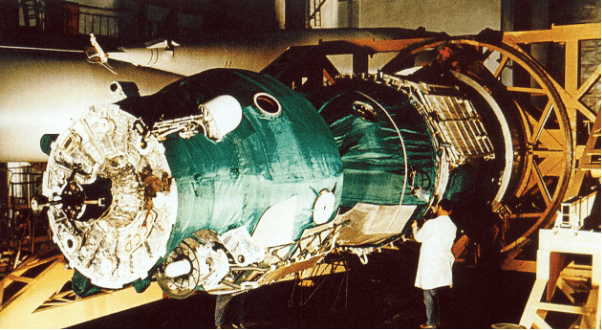
Soyuz 3 Spacecraft, 1968
This ship has become a real long-liver: with continuous upgrades, it is still in use, for more than half a century. During this time, several modifications were created: from the first Soyuz to the modern Soyuz MS. The main improvements concerned docking systems, computer equipment, communications and navigation, while maintaining basic design.
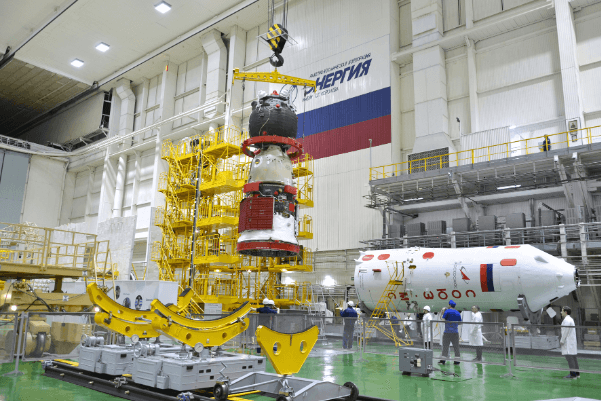
Soyuz MS-27 Spacecraft, 2025
The US Apollo was designed specifically for the lunar landing program. It consisted of a conical command module, where the crew of three astronauts stayed during the launch and return to Earth, and a cylindrical service module with main engine, fuel tanks, power sources and life support systems. For Lunar missions, a lunar module was added; it provided landing on the surface of the Earth's natural satellite and takeoff from it.
Apollo remains the only spacecraft in history to have carried humans beyond low Earth orbit. A total of 11 manned flights of this type of spacecraft were carried out, including six successful landings on the Moon from 1969 to 1972.
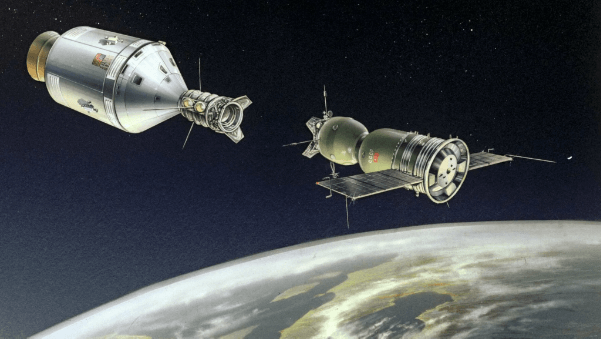
Joint Soyuz-Apollo flight in 1975 became an important symbol of potential cooperation between the superpowers. A special docking system compatible with both ships was created for it, and serious preparatory work was carried out. This project demonstrated that even in the conditions of the Cold War, cooperation in space was possible.
Reusable Systems
By the late 1970s, US and Soviet space agencies began working on a fundamentally new concept: reusable spacecraft. The idea was to create a system that could be used over and over again, which would theoretically reduce the cost of access to space.
Space Shuttle
Space Shuttle was the world's first partially reusable system. It consisted of three main components: orbital vehicle with wings, external fuel tank, and two solid rocket boosters.
The aircraft-like orbiter was fully reusable. It could launch up to 24 tons of payload into orbit and return up to 14.4 tons to Earth. The crew usually consisted of seven people; one more member could be added.
The first flight of the Space Shuttle Columbia took place in April 1981.
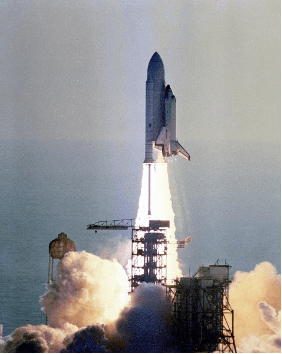
Launch of the first Space Shuttle
The program used five orbiters in total: Columbia, Challenger, Discovery, Atlantis, and Endeavour. They made a total of 135 flights before the program was closed in 2011.
Shuttles made a huge contribution to space exploration: they launched and repaired satellites (including Hubble telescope), conducted scientific experiments, and delivered modules for the construction of the ISS. However, the program was marred by two disasters: the loss of Challenger in 1986 and Columbia in 2003, which took the lives of fourteen astronauts.
Despite many outstanding technical features and achievements, Space Shuttle program failed to meet economic expectations. Launch costs were higher than predicted, and flight frequency was lower. The complexity of maintenance between flights led to high operating costs.
Buran
Soviet response to the US Shuttle, the orbital ship Buran, made its only unmanned flight on November 15, 1988. Despite formal resemblance to its American counterpart, Buran had a fundamentally different launch scheme. Instead of an integrated propulsion system, engineers created a universal super-heavy launch vehicle, Energia, for this ship.
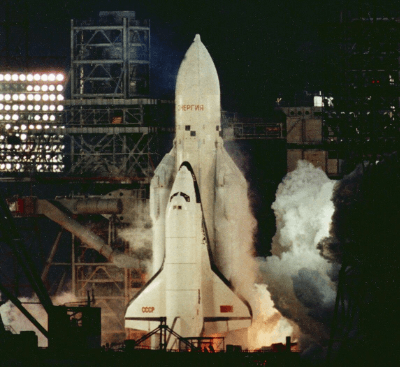
Buran's most impressive feature was its fully automatic control system. During its only flight, the ship orbited the Earth twice and landed automatically, with an accuracy of several meters—something the US Shuttle had never managed.
Buran program was closed after the collapse of the USSR due to economic difficulties and the lack of explicit practical tasks. However, the technologies developed for it — composite materials, thermal protection and automatic control systems — were adopted by other industries.
Modern Developments
After the completion of Space Shuttle program and the closure of Buran project, the development of manned spaceflight went in two main directions: a return to the capsule configuration of ships and an increase in the number of countries participating in space programs. The role of private companies in the space industry became especially remarkable.
Shenzhou
China's manned space program has developed gradually and methodically. Shenzhou (“Divine Ship”) spacecraft became the third type of manned spacecraft in history to regularly deliver people into orbit, after the Russian Soyuz and the US Shuttle.
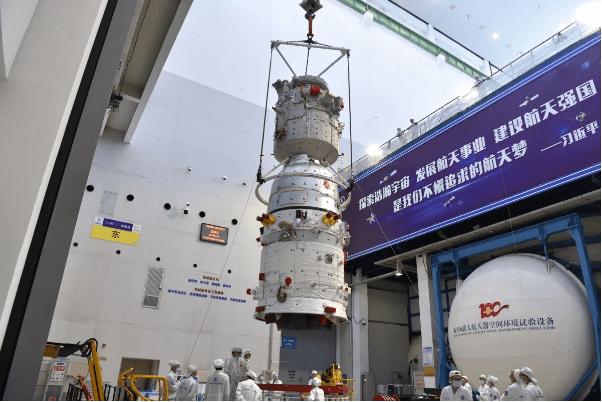
Shenzhou’s design is similar to Russian Soyuz. It consists of three modules: habitation module (CM), descent module (DM) and instrumentation module (IM). However, the Chinese ship is larger in size and has a more spacious CM.
Shenzhou was first launched unmanned in 1999, and its first manned mission happened in 2003. Yang Liwei became China's first astronaut in orbit. Since then, there have been more than a dozen manned flights, including China's first spacewalk, a docking with the Tiangong orbital laboratory, and the creation of a fully-fledged modular space station.
Chinese space program is developing systematically. Nowadays, a space station is operating in orbit, consisting of the main module, Tiānhé, and two laboratory modules. The plans include the development of a heavy carrier rocket for the lunar program and the creation of a new-generation reusable spacecraft.
Crew Dragon and Starship
The emergence of private companies capable of creating full-fledged manned spacecraft has become a true revolution in modern space exploration. The leader in this area is the US company SpaceX. Crew Dragon, a manned spacecraft designed by the company, is a capsule capable of carrying up to four astronauts into orbit. It was developed as part of NASA's Commercial Crew program, which aims to create an alternative to Russia's Soyuz for transporting expedition members to the ISS.
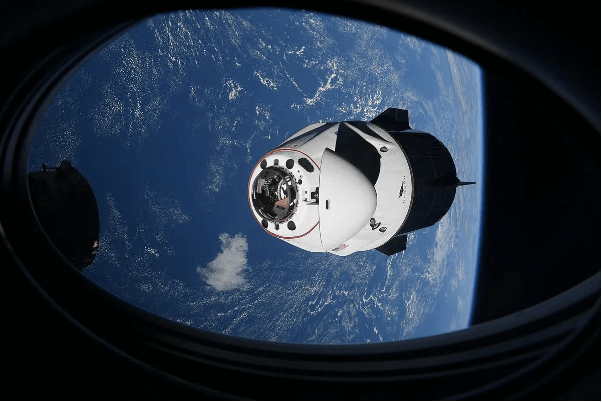
Dragon combines proven capsule configuration with modern technological approach. Instead of traditional switches and analog devices, there are touch screens and computerized control. Flight participants note that, although the automatic docking system is reliable, the lack of manual docking option raises certain doubts among professionals.
It is important to mention another development of a private company — Boeing Starliner, which, after lengthy tests and repeated postponements of the launch date, made its first manned flight to the ISS in June 2024. However, the flight was marred by serious technical problems, including multiple helium leaks in the propulsion system and failures of several control engines during docking. These malfunctions were so severe that NASA eventually decided to return the ship to Earth unmanned, and astronauts Barry Wilmore and Sunita Williams were forced to remain at the ISS to return on the SpaceX ship — and ended up spending 286 days on the station instead of the originally planned eight. The troubled flight showed how difficult it is to develop reliable manned space systems.
But the real breakthrough is the Starship system, developed by SpaceX. It is a fully reusable two-stage rocket and space system capable of delivering up to 100 tons of payload to low Earth orbit. Starship is designed for missions to the Moon and Mars.
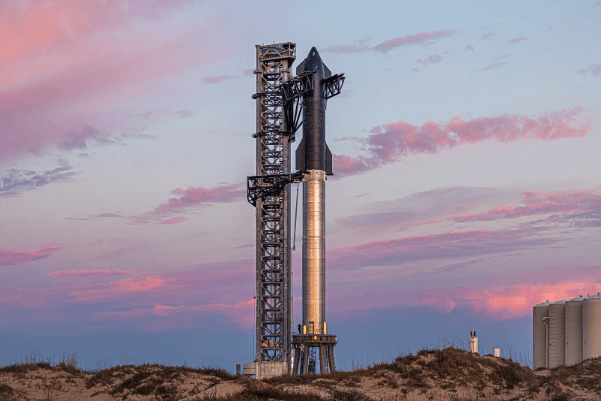
Reusable super-heavy launch vehicle Starship Super Heavy (SpaceX)
From April 20, 2023 until today, eight test flights of the system have already taken place, each of them allowed to work out various aspects of the ship's operation — from the successful return of the booster and its capture by the “mechanical arms” of the launch complex to testing in space. Once fully developed, the system will open up new possibilities not only for space exploration, but also for revolutionizing intercontinental travel on Earth. SpaceX plans to use Starship to transport passengers super-fast between any point on the planet in under an hour.
Prospects and Future of Spacecraft
Analysis of the history of space technology shows that technological development does not proceed linearly, but in cycles. After a period of experimentation and rapid progress in the 1960s, an era of relative stabilization began, followed by an attempt to create universal reusable systems. Now we are witnessing a revival of interest in capsule ships, but at a new technological level.
The key areas of development of manned spacecraft in the coming decades are related to the return of man to the Moon and preparation for missions to Mars. Russian corporation Roscosmos is developing a promising transport ship, Orel (formerly Federation), which should replace Soyuz and provide the possibility of flights beyond low Earth orbit, including lunar orbit.
The development of commercial astronautics becomes an important trend: from space tourism to servicing orbital stations and production in space. This opens up new prospects for the development and use of spacecraft for various purposes.
Technological challenges for the near future include creation of effective radiation protection systems for long-term flights, development of reliable nuclear power plants for space applications, and creation of new-generation closed life support systems.
However, in my opinion, a real breakthrough in space technologies will only occur after a “mental” breakthrough towards international cooperation. History shows that competition can be a powerful motivator for initial development, but to solve truly complex problems, such as building lunar bases or flying to Mars, joint efforts of all mankind are required.
The International Space Station program has demonstrated the potential for such cooperation, but spacecraft development is still dominated by competition. I sincerely hope that humanity will find a way to a mutually beneficial partnership in space, without waiting for a global disaster to force us to unite, as has often been the case in history.
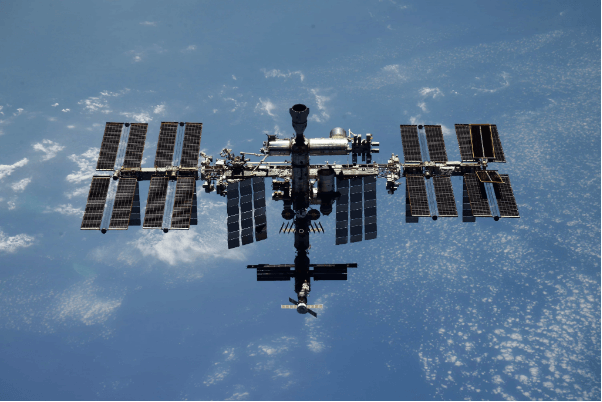
Spaceships of the future may be created by international consortiums that combine the best technologies and experience of different countries. That will allow the most efficient use of resources for space exploration, and then the goals that seem fantastic today will become a reality for future generations.
Pilot-Cosmonaut, Hero of Russia
Alexander Misurkin
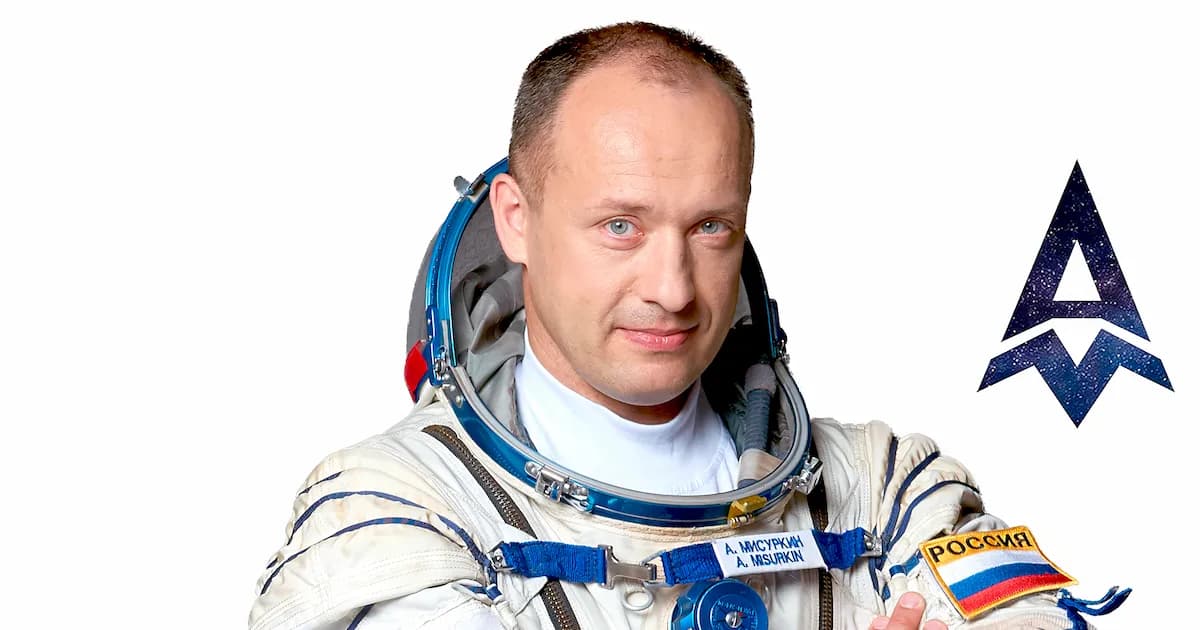
Hello! I'm cosmonaut Alexander Misurkin. My AI assistants Luke Vestin and "19-57" will answer your questions about space exploration and my experience.
To chat with Luke – simply type your question in the text field. If you're looking for space-related information from online sources, type "19-57, find information about ..." (it may take a moment – our robot is very thorough when searching the web).
Enjoy the conversation!