Training of Cosmonauts as Part of the Crew: Simulators and Training Equipment
18.04.2025Today, as part of the series “Space Calling,” we will look at the specifics of the preparation’s final stage for a specific space mission, reveal the features of working on simulators, and talk about survival training.
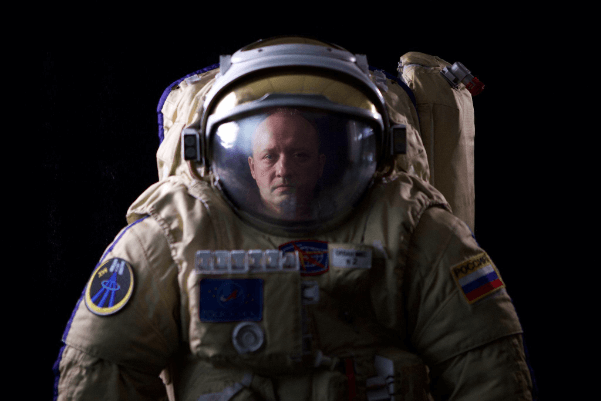
What is Crew Training and When Does It Start
The journey to space begins long before the launch vehicle starts its flight. Crew training is the final stage of astronaut training before a specific mission. It is preceded by general space training (GST), after which the astronaut is assigned to a specialization group where he or she undergoes training for three to four years. Only then does the assignment to a crew follow — as a rule, first as a backup. After gaining experience in preparing for a specific expedition as backups, the crew continues training as the main crew. Thus, training as part of a crew during the initial course can last 1.6–1.8 years and differs from the previous stages in its focus on a specific mission. The program is developed individually for each crew, taking into account the flight objectives and the composition of the participants.
At the same time, there is a noticeable trend towards reducing the timeframe for visiting expeditions. If once such preparation could take a year, then half a year, then for the filming of the movie “Challenge” and the first Soyuz flight to the ISS with two space tourists at the same time (Visiting Expedition # 20) it took only three months. Within the framework of such short programs, participants are trained according to a very limited program. Their task is to master the skills of working with personal protective equipment, interaction with the crew in emergency situations, and everyday aspects of life on the station.
Main Areas of Training
In the process of cosmonauts’ training as part of the crew, the main focus is on the technical, physical, medical, psychological and scientific aspects of future work. All components are interconnected and require an integrated approach. The intensity and ratio of different types of training changes as the launch date approaches.
Physical Training
Physical training at the stage of work in the crew is as intensive as at the previous stages. We comprehensively train all the main physical qualities: speed, strength, endurance, flexibility and agility. An important task is to maintain the overall level of physical training of at least 7.0 points on a 10-point scale.
The special feature of this stage is passing tests on specialized simulators emulating space equipment. On the onboard treadmill stand, the cosmonauts must run, pushing the track under themselves in passive mode. The sensations are comparable to running when you pull a heavy load behind you. The space bike ergometer allows you to pedal with both your legs and arms. The arm test is especially important: it helps assess the cosmonaut's readiness for work in outer space, which requires significant upper body endurance.
Physical training specialists constantly monitor the condition of the cosmonauts and, if necessary, adjust the training program taking into account individual characteristics and the dynamics of results.
Psychological Stability
Psychological fitness is an important aspect of cosmonaut training. Work on various methods, individual or group, is carried out at the stage of training in a specialization group. Those who are psychologically ready for this stage are assigned to the crew. As part of the crew, psychologists supervise all “heavy” training: practicing emergency situations on the ship or station simulator, practicing activities in outer space in the hydrolaboratory or on the Vyhod-2 stand, survival. It is important to make sure that during the process of difficult training the crew unites and becomes a monolith.
Simulators in Training
Simulators play a key role in developing skills for space flight. Modern models reproduce real flight conditions as precisely as possible. Cosmonauts conduct most of their technical training on simulators, practicing both standard operations and responses to emergency situations. Each operation is practiced many times until the actions become fully automatic. Upon completion of the training, the cosmonauts pass a series of tests, exams, and examination drills.
Soyuz and Russian Segment ISS Simulators
On the Soyuz simulators, fully emulating the living quarters (habitable compartment, HC) and the descent vehicle (DV), cosmonauts practice all autonomous flight operations, from prelaunch preparation to actions after landing. Typically, one training session lasts four hours, with at least 30% of the training required to take place in spacesuits.
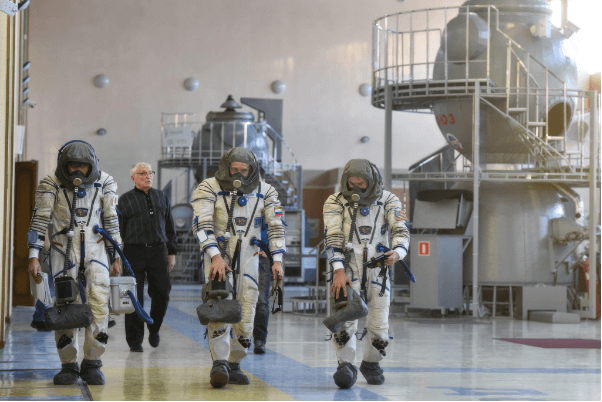
An important part of cosmonaut training is practicing the skills of using Sokol emergency rescue suits. As the crew commander, I insisted that all our training take place in the suits. Our international partners, unlike Russian cosmonauts, are only beginning to get acquainted with the spacesuit at this stage, and as a commander, it is important for me to be sure that the entire crew confidently uses the rescue equipment.
One day, at the beginning of our training, I noticed that my flight engineer Mark Vande Hei, even before he had started training, was already drenched in sweat as soon as he took his place in the simulator (until the skill had been formed, it was very uncomfortable to sit in the simulator in spacesuits). I got worried: how could he sit through the entire training session if he was already so hot. I asked him: “Mark, are you okay?” And he replied: “Sasha, what's good enough for the commander is good enough for me.” A rock of a man!
Here, the skills of manual control of the ship at different stages of flight are also practiced. About thirty such training sessions are mandatory.
Everything ends with comprehensive examination training lasting 7–8 hours. During this entire “flight”, the crew must not make mistakes and cope with five emergency situations. Then they are ready to fly on the ship.
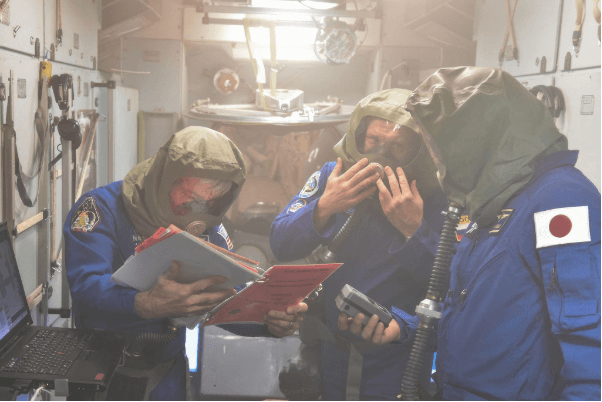
We practice our actions on the station using the simulator of the Russian segment of the ISS, which consists of all life-size modules. By the end we take a comprehensive examination training on the ISS RS, where from morning to evening we perform various routine tasks, repair work, deal with emergency situations, and in the final, we must save the station from fire, depressurization, or other emergency situations. The crew's actions are assessed on a 5-point scale with an accuracy of tenths. And it doesn't matter who made the mistake: the assessment is the same for everyone. This is a good psychological tool for uniting the crew.
Rotation on a Centrifuge
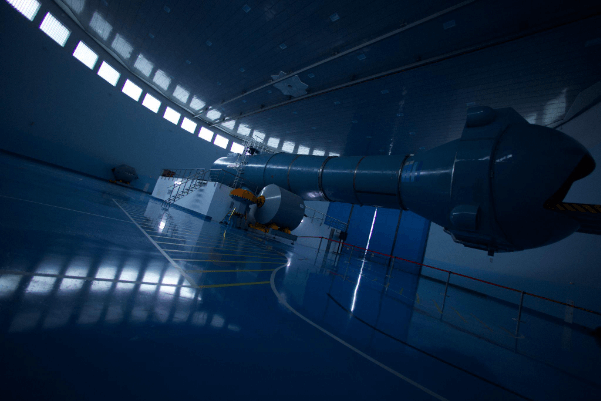
In addition to the familiarization rotation according to the schedule of insertion and descent, rotations according to the medical control program, where the ECG, pressure, pulse, respiratory rate, angle and visual acuity at overload are checked, there are also rotations on a centrifuge with an integrated cosmonaut control panel and a manual descent control simulator (MDC). The cosmonaut controls the ship manually when returning to Earth and experiences the overloads that he creates with his actions. This is the most dynamic operation, requiring not only physical readiness for overloads, but also fast and precise operator activity. This is the funniest “carousel”: you are flattened, and you, maintaining control over the situation, continue to calculate in your mind arithmetic problems of three actions with two variables.
Preparing for Extreme Situations
In 2025, we celebrated an anniversary — 60 years since the first human spacewalk (03.18.1965). Back then, many things did not go according to plan, landing included. Pavel Ivanovich Belyaev and Alexey Arkhipovich Leonov waited for evacuation for two days and survived in the taiga, where winter still reigned. Since then, we have been practicing survival skills in different climatic and geographical zones.
Cosmonauts must be prepared for an emergency landing anywhere on Earth between 51.7° north and south latitudes, and under any climatic conditions. In addition, such training helps strengthen team spirit and improve interaction within the crew.
Winter Survival
As part of the crew, we practice winter survival in the forest.
During these training sessions, we learn to build different types of shelters, make fires, communicate with rescuers, provide medical assistance, and navigate the terrain. And the most important, we see our comrades in extreme conditions, we learn to work together when everyone is having a hard time. This is how the team's cohesion is formed. This training lasts two days. As a result, the participant loses 3–4 kg.
Preparing for Landing on Water
School taught us that 2/3 of our planet’s surface is occupied by water. And if suddenly you had a very bad day in space today — so bad that you had to quickly fly home, and even very urgently turn on the engine for descent so that you ended up not on land, but on water, and at the same time the descent module (DM) suddenly started to leak, — then, in order to survive, you need to take off your spacesuits if possible, put on a wool suit, winter pants and jacket, and on top of all this, a rubber “Forel” jumpsuit, and with a portable emergency supply (PES) and means of communication, get out onto the water. All these actions are necessary because the temperature of ocean water is lower than that of the human body. If the cosmonauts have to wait for rescuers for a day or two, without the right equipment, hypothermia is inevitable, which can be fatal. Wool suits keep you warm, and the waterproof Forel suit does the same. Dressing correctly is not just a matter of comfort, but of survival in extreme conditions.
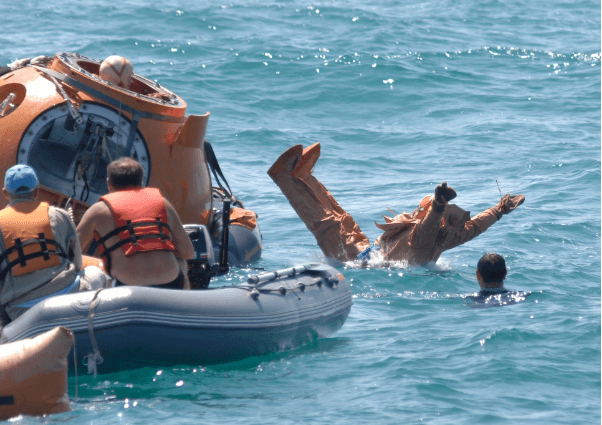
To practice these skills, we have a specialized simulator Ocean — a descent vehicle adapted for work on water. Considering the small volume and the impossibility of comfortably settling down inside the DV to change clothes, in the two hours allocated for this work, a person loses up to 3 kg of body weight.
Preparing for Work in Outer Space
If your flight program includes a spacewalk, you will spend a lot of time in the hydrolaboratory (HL). By creating neutral buoyancy for a person in a spacesuit, we provide conditions similar to weightlessness, and in these conditions we practice all routine and emergency work in outer space.
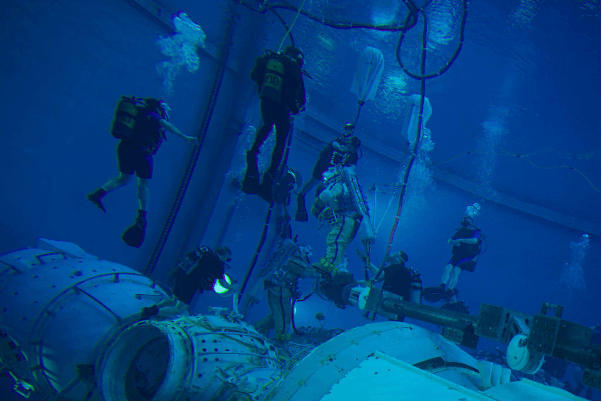
In addition, we use special stands that emulate weightlessness in a confined space to practice airlock procedures and spacesuit skills, and we use VR technologies to create the most complete image of the activity that lies ahead.
Spacewalks are my favorite part of space work because they don't become routine anytime soon. Each of them brings new challenges, and each time you prepare for something to go wrong. And I really resonate with the words of Anatoly Yakovlevich Solovyov, the world record holder for the number of spacewalks and, perhaps, also for the number of emergency situations in flights: “The rooster pecks unexpectedly! Therefore, you need to prepare not for a certain level, but with a large reserve!”
Why Simulators Are an Integral Part of Crew Training
Ever since my cadet years, I remembered the saying: what you know on Earth at excellent, in the air you know at satisfactory at best. That's why I never had any doubts about the importance of completing this entire training complex in full and as well as possible. And when boredom from the repetition of the tasks being worked on began to creep in, the instructor and I looked for a way to make them more difficult.
For example, to perform manual docking, two cosmonauts are required according to the rules: one measures the distance to the station and the speed of approach with an instrument, and the other controls the ship taking this information into account. On my third flight I didn't have a flight engineer, but I knew for sure that if something happened, I had to be ready to perform a manual approach without measurements. So I did these trainings, even though they were not mandatory in the training course. And I am very grateful to all the instructors and specialists who, understanding the logic and importance of these trainings for our flight, gave me this opportunity.
To learn more about cosmonauts’ preparation for flight, watch the third episode of the series “Space Calling”.
Pilot-Cosmonaut, Hero of Russia
Alexander Misurkin
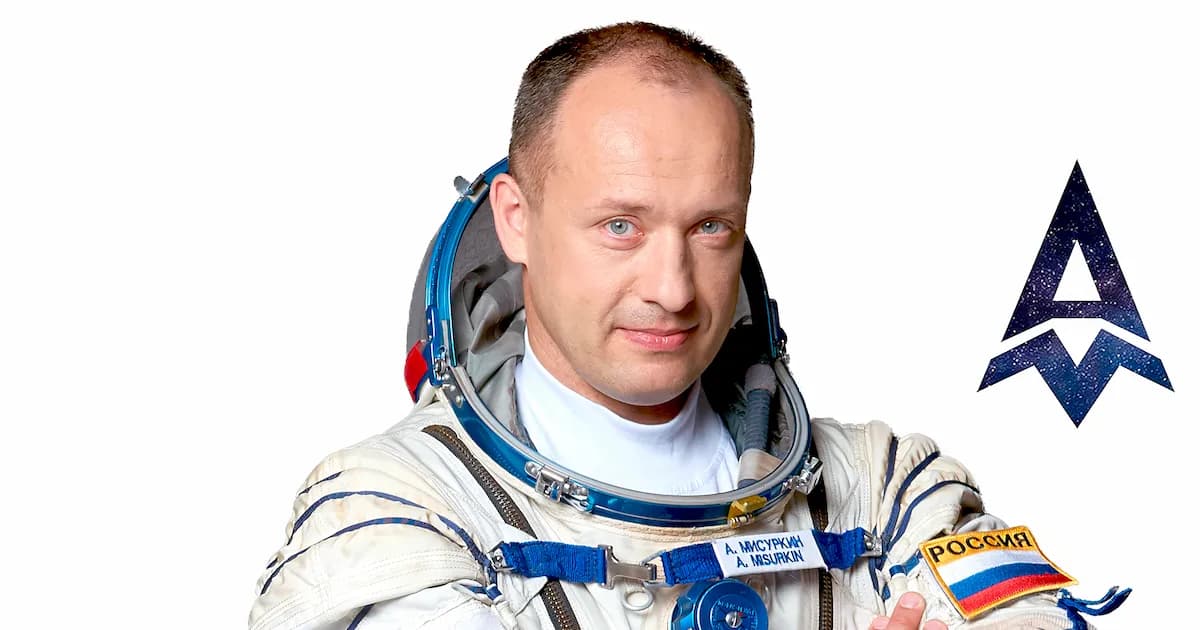
Hello! I'm cosmonaut Alexander Misurkin. My AI assistants Luke Vestin and "19-57" will answer your questions about space exploration and my experience.
To chat with Luke – simply type your question in the text field. If you're looking for space-related information from online sources, type "19-57, find information about ..." (it may take a moment – our robot is very thorough when searching the web).
Enjoy the conversation!