Yuri Gagarin: The Man Who Opened the Road to Space
12.04.2025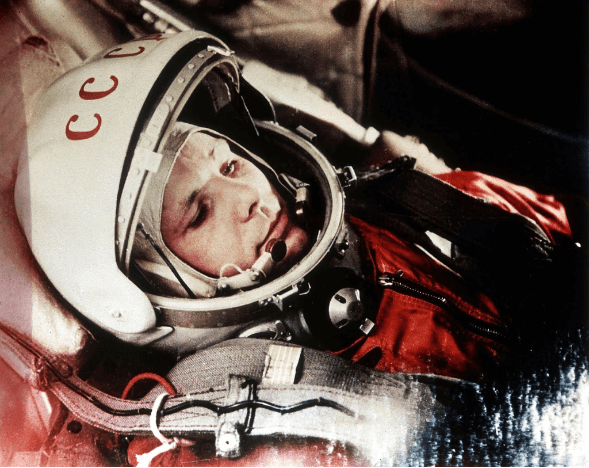
As part of the “Space Calling” project, today we appeal to the story of the man who opened the way to space: Yuri Alekseyevich Gagarin. His biography is not just a chronicle of the outstanding person’s life, but the story of how an ordinary boy from a village in the Smolensk region became the symbol of an entire era.
Fellow Countryman and Pioneer: a Look Through the Decades
I am sometimes being asked: was my childhood dream of flying to the stars inspired by the glory of fellow countryman and pioneer Yuri Gagarin? I honestly answer that I compared information about my fellow countryman with Yuri Alekseevich later than I decided to become a cosmonaut. When we were kids, we baked potatoes in a fire on the edge of the village and spent long hours at night by the fire. And that's where I could gaze at the starry sky for a long time and fly away to distant galaxies in my dreams.
Surely Gagarin, in his childhood, in the post-war years, gazed at the starry night sky. Could he have imagined then that he was destined to be the first of the earthlings to step towards these stars?..
For me, Gagarin is not just a historical figure from textbooks. Every year on March 9, his birthday, cosmonauts come to the city of Gagarin in the Smolensk region, where Gagarin Readings are held.
What Are the Gagarin Readings?
The Gagarin’s Readings are an annual scientific and practical conference held since 1974 in memory of the first cosmonaut on the planet. The event gathers cosmonauts, scientists, engineers, historians of cosmonautics, representatives of educational institutions and museums. The conference discusses issues of modern development of cosmonautics, promising areas of space exploration, as well as the preservation of the historical heritage of the industry.
Gagarin’s Readings are not only scientific reports, but also live communication between working cosmonauts and young people, an opportunity to pass on the baton of dreams to new generations. For many schoolchildren, meeting with cosmonauts becomes a starting point in choosing a future profession related to space.
Traditionally, cosmonaut candidates must visit the village of Klushino, the Gagarin House Museum, and the dugout in which the family of the first cosmonaut had to live during the occupation by the Nazi invaders. This is a kind of ritual of generations’ continuity, an opportunity to touch the origins of a dream that changed the world.
What did Yura Gagarin think while looking at the same stars several decades before me? What did the village boy dream about, not knowing then that he was destined to pave the way for humanity to these distant worlds?
Childhood and Youth
Family and Early Years
Yuri Gagarin's biography began on March 9, 1934, in the village of Klushino, Gzhatsky district, Smolensk region. He was born in an ordinary peasant family of Alexei Ivanovich and Anna Timofeevna Gagarins. His father was a carpenter, his mother worked on a collective farm. There were four children in the family, Yuri was the third.
The future cosmonaut's childhood fell on hard times. When he was seven, the Great Patriotic War began. Gagarins found themselves in occupied territory. German troops kicked them out of their home, and the family was forced to live in a dugout that his father scooped out in the yard. Yuri's older brother and sister, Valentin and Zoya, were forced to work, but managed to escape in Belarus. After release, they did not return home but continued to take part in the war: Valentin in tank troops, and Zoya as a nurse.
In 1945, when the war ended, Gagarin family moved to the city of Gzhatsk (now Gagarin) where Yuri continued his school education. Harsh trials of the war years tempered the character of the future cosmonaut, taught him resilience, endurance and the ability to overcome difficulties.
Education and First Steps in Aviation
In 1949, after finishing six grades of school in Gzhatsk, Yuri entered vocational school No. 10 in Lyubertsy near Moscow, where he received the specialty of a molder-founder. Along with his professional training, he continued his general education at an evening school for working youth, which he graduated with a silver medal.
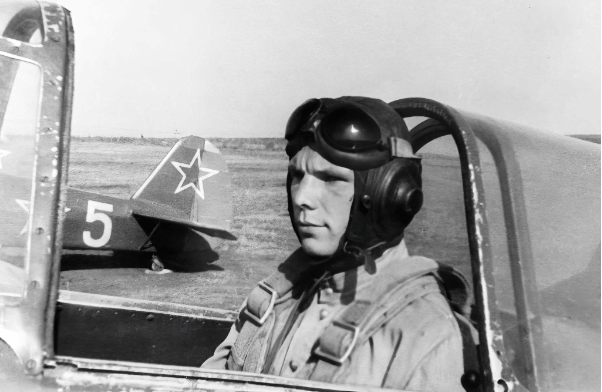
In 1951, Gagarin entered the Saratov Industrial College where he studied to be a foundry worker. In Saratov he first became acquainted with aviation: he began training at the local flying club. He made his first solo flight on Yak-18 training aircraft. That was an important step towards his future space career.
Road to Space
Flight School
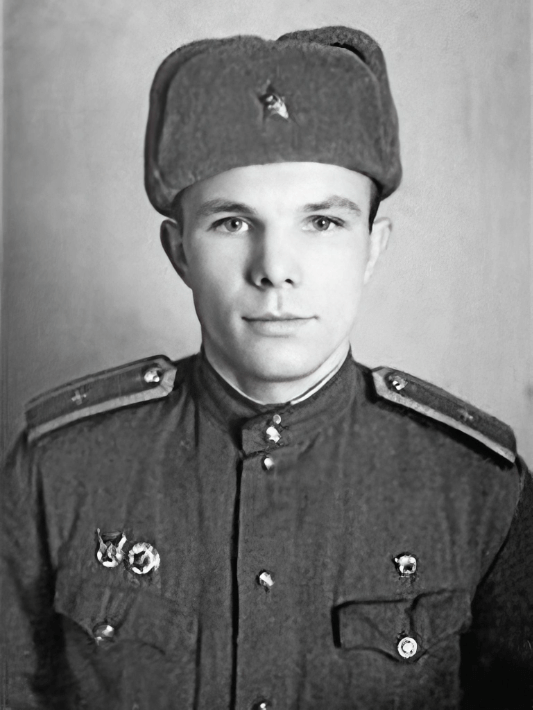
In 1955, after graduating from the Saratov Industrial College, Gagarin was drafted into the army and sent to the First Chkalov Military Aviation School of Pilots named after K.E. Voroshilov in Orenburg. He successfully mastered the MiG-15 jet fighter there.
In Orenburg, Yuri met Valentina Goryacheva, a student from the medical college. In 1957, Gagarin graduated with honors, receiving the qualification of Military Pilot. That same year, he and Valentina got married. After graduation, Yuri was sent to serve in the 769th Fighter Aviation Regiment of the 122nd Division of the Northern Fleet Air Force in the Arctic. In April 1959, a daughter, Elena, was born to the young family, and shortly before the historic flight, in March 1961, a second daughter, Galina, was born.
Selection for the Cosmonaut Corps
By the end of the 1950s, active preparations for manned space flights began in the USSR. The decision to create the first cosmonaut corps was made in 1959. The selection criteria were strict: age up to 30, height not higher than 170 cm, weight up to 70 kg, excellent health and impeccable reputation.
Gagarin was recommended by his unit's command and successfully passed all stages of selection, including the most difficult medical and psychological tests. Out of more than 3,000 candidates, only twelve people were initially selected and enrolled in the first cosmonaut squad on March 7, 1960. Gagarin was in this first dozen. Later on, the detachment was increased by eight more people, and its total number amounted to twenty people.
The First Manned Flight into Space
Preparation for the Flight
The first group of cosmonauts were preparing for the most mysterious flight in human history. The level of risk and uncertainty in its preparation was the highest compared to all subsequent steps in space exploration. A tragic reminder of the danger was the death of one of the twenty candidates, Valentin Bondarenko, during tests in a pressure chamber.
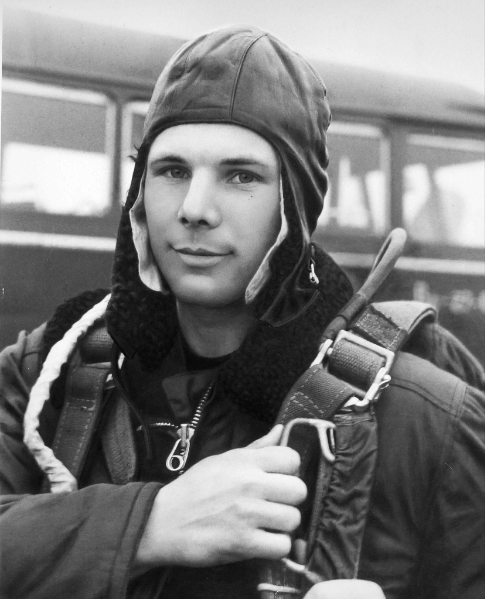
The preparation of the first cosmonauts’ group included theoretical classes, physical training, tests in pressure chamber and centrifuge. The “shock six” were selected from twenty candidates. On April 5, they left for Baikonur, led by General Nikolai Petrovich Kamanin. There was only a week left before the launch, but it had not yet been decided who would be the first to fly into space. Kamanin wrote in his diary: “So, who — Gagarin or Titov? <…> It is difficult to decide who to send to certain death, and it is equally difficult to decide which of the two or three is worthy of making world famous and keeping his name forever in the history of mankind.”
The decision to appoint Gagarin as the main pilot and German Titov as the backup was made on April 8, 1961. The cosmonauts only learned it on April 10.
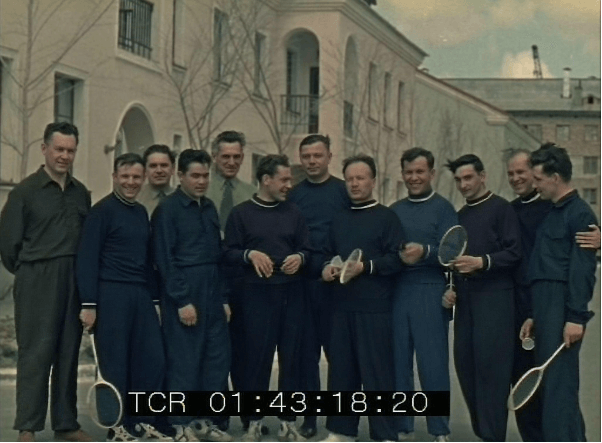
As the president of the regional badminton federation, who was introduced to the sport by space training many years ago, I was pleased to see footage of the pre-launch training at Baikonur of the first six cosmonauts where they played badminton, among other things. Sport has always been and remains an important part of cosmonaut training.
Flight on Vostok 1 Spacecraft
On April 12, 1961, at 9:07 am Moscow time, Vostok 1 spacecraft with Yuri Gagarin on board was launched from the Baikonur Cosmodrome. His famous “Let's go!” became a symbol of the beginning of the space era for mankind.
The 4,725 kg ship entered an orbit at an altitude of 181–327 km and circled the Earth at a speed of about 28,000 km/h. The actual duration of the flight was 108 minutes.
During the flight, Gagarin conducted observations, transmitted messages to Earth, and made entries in the flight log. Upon returning to Earth, unforeseen technical problems arose. At 10:25 the retrorocket system was activated, but it shut down earlier than expected due to the fuel supply being exhausted. This led to an abnormal situation: the ship began to rotate at a speed of about 30 ° per second.
Gagarin himself later described it this way: “It turned out to be a 'corps de ballet': head-legs, head-legs with a very high rotation speed. Everything was spinning. Now I see Africa, then the horizon, then the sky. I only had time to cover myself from the Sun so that the light would not fall into my eyes.”
Due to a failure in the standard descent cyclogram, the instrument compartment and the descent module separated according to the backup scheme (instead of the main one) from the thermal sensors at an altitude of 130 km with a delay of about 10 minutes. At an altitude of about 7 km, the cosmonaut ejected from the descent module. During the descent, not only the main, but also the reserve parachute unexpectedly opened, and Gagarin could not open the breathing valve for some time.
Despite these difficulties, he landed safely near the village of Smelovka in the Saratov region — symbolically, not far from the places where he studied at a technical school and mastered the basics of flying.
The estimated landing site was 110 km south of Stalingrad (now Volgograd), but Vostok landed with a large overshoot.
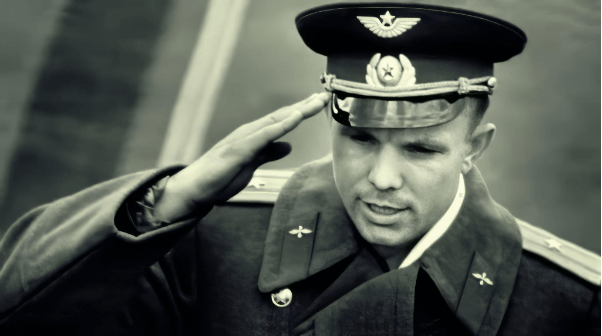
The official TASS report stated: “...At 10:55 Moscow time, the Soviet ship Vostok made a safe landing in the designated area of the Soviet Union.” There was no information at the time that the cosmonaut and the ship had landed separately.
Life After the Flight
International Recognition and Travel
After the historic flight, Yuri Gagarin's life changed dramatically. He was awarded the title Hero of the Soviet Union, the extraordinary military rank of major, and became the most famous person on the planet.
A series of foreign visits known as the “Peace Mission” began. Gagarin visited more than 30 countries, where he was received by heads of state and millions of adoring people. His natural charm, modesty, and diplomatic skill made him an effective ambassador for the Soviet space program.
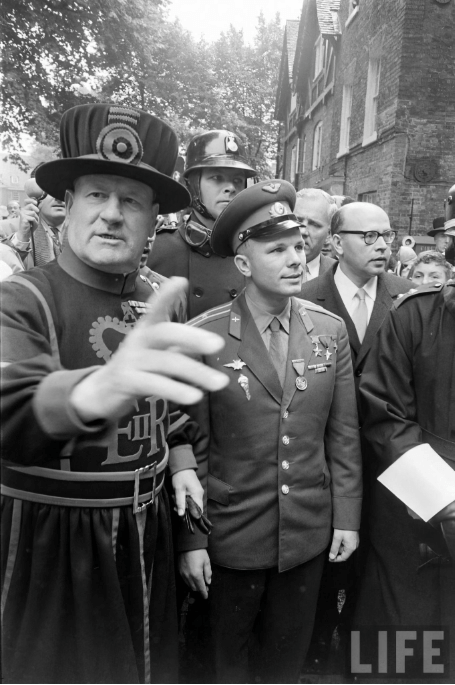
International recognition was expressed in numerous awards: K.E. Tsiolkovsky Gold Medal of the USSR Academy of Sciences, Gold Medal of the British Society for Interplanetary Communications, de Lavaux Medal of the International Aviation Federation, and many others.
Work at the Cosmonaut Training Center
In 1963, Gagarin was appointed deputy head of the Cosmonaut Training Center. He took an active part in preparing for subsequent space flights.
For those who want to learn more details about how the fate of Yuri Alekseevich and his colleagues developed after the significant flight on April 12, 1961, I recommend reading the space diaries of the head of the training of the first Soviet cosmonauts, General Kamanin, “Hidden Space,” put out by Kosmoscope publishing house.
Despite his new responsibilities and public role, Gagarin continued his professional development. In 1961, he entered the Zhukovsky Air Force Engineering Academy, where he studied until 1968. His thesis was devoted to the horizontal landing of a spacecraft on Earth, which anticipated the idea of a reusable spacecraft.
Gagarin was eager to return to active flights and was already Vladimir Komarov's backup for the Soyuz-1 flight. However, fate decreed otherwise.
Tragic Death
On March 27, 1968, Yuri Gagarin was performing a training flight on MiG-15UTI training fighter together with an experienced instructor, Hero of the Soviet Union Vladimir Seregin. The flight ended in a catastrophe near the village of Novoselovo in the Vladimir region.
The official investigation of 1968, which explained the causes of the accident, stated: “The aircraft made a sharp maneuver involving a turn away from an unrelated target (a flock of geese, a balloon probe), and collided with the ground. The crew died!”
But the debate about the exact circumstances of the first cosmonaut’s death continues up to today.
Legacy and Memory
Influence on the Development of Cosmonautics
Yuri Gagarin's flight opened the era of manned spaceflight and became catalyst for accelerating space programs around the world. His feat inspired thousands of young people to choose space professions and devote themselves to science.
The principles of cosmonaut training developed for the first team formed the basis of modern training methods both in Russia and in other countries. The Cosmonaut Training Center today bears the name of Yuri Alekseyevich Gagarin and continues to train new generations of space conquerors.
Memorials and Memorable Dates
The memory of the first cosmonaut of the planet is immortalized in Russia and the world in many ways. His hometown Gzhatsk was renamed Gagarin, and a memorial museum was created there.
Monuments to Gagarin have been erected in dozens of cities around the world, including the famous titanium monument at Gagarin Square in Moscow, designed by sculptor Zurab Tsereteli.
April 12 is celebrated as Cosmonautics Day in Russia and International Day of Human Space Flight by the UN. More than 60 years have passed since that historic flight, when Gagarin first stepped into the unknown for the sake of all mankind. But even today, when recording the ascent contact (CP) at the start, we still say Gagarin's “Let's go!”
Pilot-Cosmonaut, Hero of Russia
Alexander Misurkin
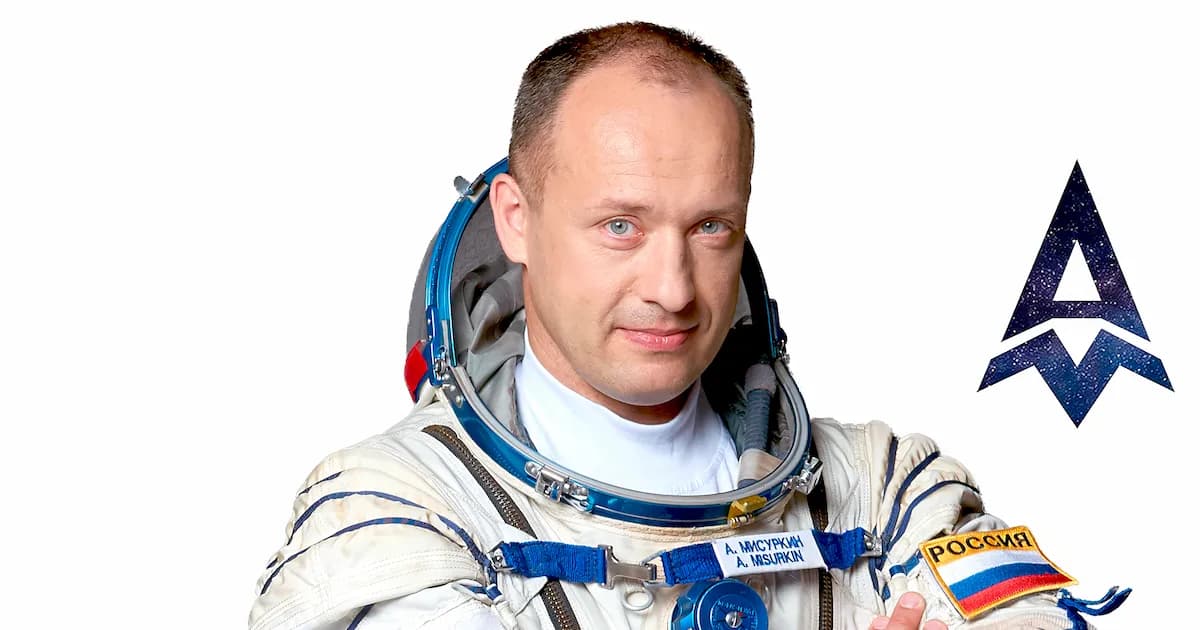
Hello! I'm cosmonaut Alexander Misurkin. My AI assistants Luke Vestin and "19-57" will answer your questions about space exploration and my experience.
To chat with Luke – simply type your question in the text field. If you're looking for space-related information from online sources, type "19-57, find information about ..." (it may take a moment – our robot is very thorough when searching the web).
Enjoy the conversation!