 Lecture
Time of Singularity. A View from Orbit on the Future of Humanity
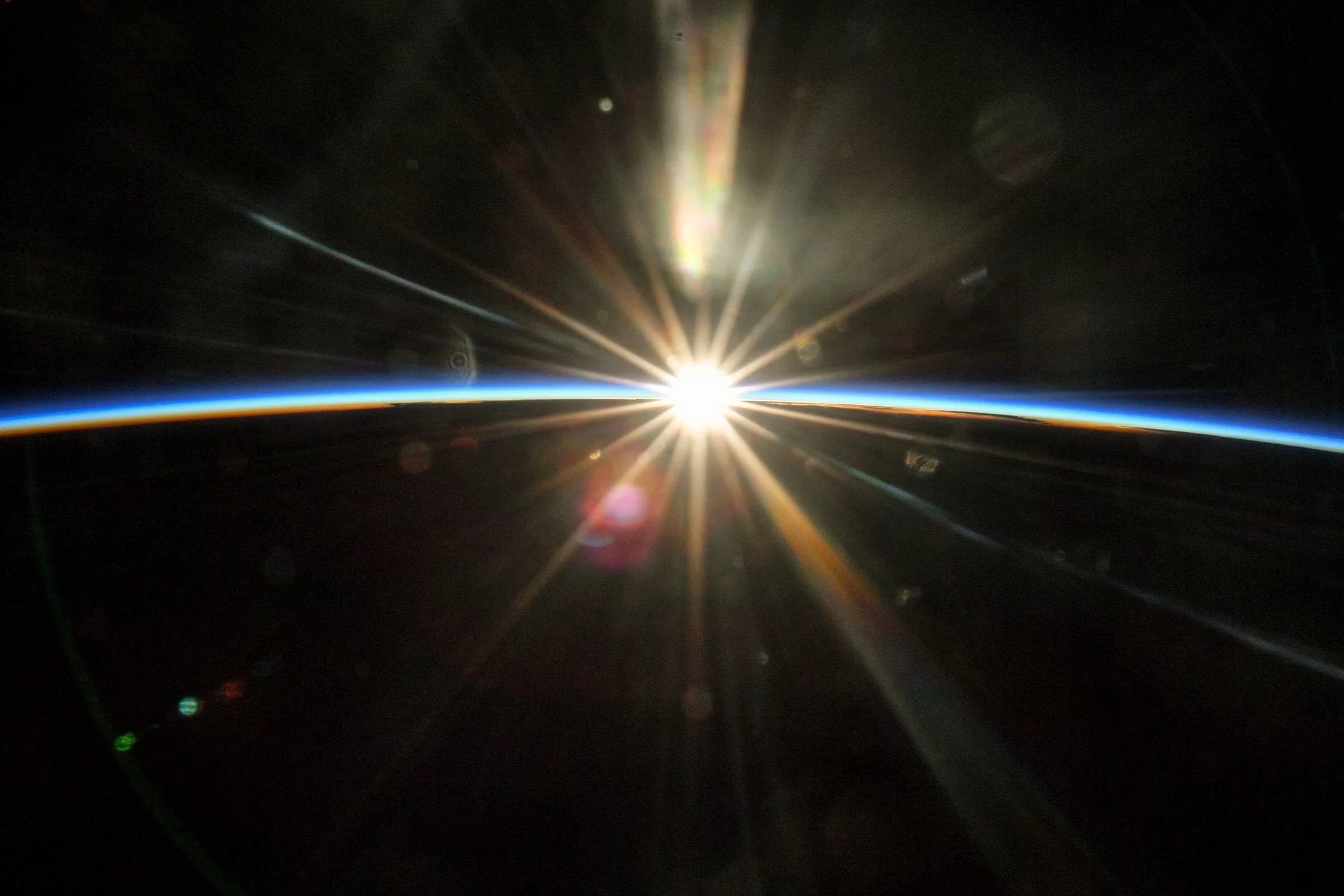
In an era of rapid technological change, it is especially important to pause and look at what is happening from orbital altitude. This lecture is an invitation to rise above the daily race of technological progress, to recognize the uniqueness of the moment humanity is living through, and to understand how each of us can influence the trajectory of civilization’s development.
Today we are keenly searching for exoplanets similar to Earth, hoping to find other inhabited worlds. But what if somewhere out there someone has been watching us for a long time already? If such observers had been monitoring the solar system since its formation 4.5 billion years ago, they would have witnessed an astonishing story, from the origin of life to the emergence of intelligence and the unprecedented acceleration of evolution in recent centuries. And observing Earth today, they would see a planet surrounded by millions of pieces of space debris—the first signs of a technological civilization that does not always use its capabilities wisely.
We stand on the threshold of technological singularity—a moment when a combination of breakthrough technologies may change our civilization qualitatively. Artificial intelligence, biotechnology and quantum computing already exist. Each of these technologies is capable of transforming the world radically. And their synergy is capable of creating a reality we cannot yet imagine.
But, as the outstanding science fiction writer and thinker Isaac Asimov observed, the saddest aspect of our time is that science gathers knowledge far faster than society gathers wisdom. Will we be able to cope with the challenges that these incredible opportunities bring? To use a cosmological metaphor, we face a choice: a jump through a “wormhole” into a new quality of civilization, or an irreversible fall into the black hole of self-destruction.
Will we manage in time to restore the balance between technological progress and the wisdom of applying it? Who should do this, how, and what is the role of each of us in that process? History knows examples of people who changed the world for the better. Analyzing their experience, we have to make the right choice.
What will our hypothetical observers see when they point their telescopes at Earth a hundred years from now? The answer to that question depends on the decisions we make today.
Format
Storytelling: the problem—a story from practice, my own or my colleagues’—analysis—conclusion. A presentation with photos and video, and dialogue with the audience.
Who this lecture is for
The lecture “Time of Singularity. A View from Orbit on the Future of Humanity” will be of interest to:
- entrepreneurs in high technology;
- specialists working on innovative developments;
- staff of research organizations;
- teachers and students in technical and humanities fields;
- anyone who thinks about the future of technology and humanity.
Key ideas
- We are on the threshold of technological singularity, when the pace of change becomes unprecedented.
- Technology is developing faster than the wisdom to apply it is growing.
- The future of civilization depends on the decisions we make today.
- Every person is capable of influencing the trajectory of humanity’s development.
- A future artificial intelligence will copy the behavior of its creators—and there is less and less time left to become a worthy example.
Lecture program
THE EVOLUTION OF LIFE AND CIVILIZATION:
- the unique characteristics of the solar system and of Earth that made the origin of life possible;
- modern methods of searching for exoplanets (the solar gravitational lens);
- the stages in the development of life and civilization.
THE CHALLENGES OF TECHNOLOGICAL SINGULARITY:
- the exponential growth of technology (AI, biotechnology, quantum computing);
- the imbalance between the development of technology and the wisdom of applying it;
- global risks and opportunities.
LEADERS OF CHANGE:
- an analysis of what today’s visionaries are doing (Elon Musk and SpaceX, Martine Rothblatt and United Therapeutics);
- the experience of building a new image for the space industry (my third flight—the first flight to the ISS on a fully commercial basis, with the Japanese entrepreneur Yusaku Maezawa on board);
- the key qualities of people who change the world: ambitious goal-setting, proactivity, accepting risk and responsibility, high IQ and EQ.
THE PATH INTO THE FUTURE:
- the importance of human solidarity (the view of Earth from space: a thin greenish band of atmosphere on a moonlit night—and the planet as a fragile common home);
- the shift from competition to cooperation: when each breakthrough comes faster than the one before, we have to make the move in time from “the strongest survives” to “the one most capable of mutually beneficial cooperation survives”—and this applies to people and to states alike;
- the role of personal fulfillment in the development of civilization: finding your calling leads to the wish to create and to improve the world around you, and through that to a sense of the unity of humanity;
- shaping the right behavioral models for a future artificial intelligence: as it comes into being, artificial general intelligence (AGI—intelligence at human level and above) will copy the behavior of its creator, and there is less and less time left for change.
After this lecture you will:
- become familiar with the global trends in the development of civilization from a cosmonaut’s point of view;
- learn about the key technologies capable of changing the future of humanity;
- gain a new perspective on the role of the individual in an era of global change;
- hear real stories of people who are changing the world for the better.
Duration
45–60 minutes, including Q&A.
Hello! I'm cosmonaut Alexander Misurkin. My AI assistants Luke Vestin and "19-57" will answer your questions about space exploration and my experience.
To chat with Luke – simply type your question in the text field. If you're looking for space-related information from online sources, type "19-57, find information about ..." (it may take a moment – our robot is very thorough when searching the web).
Enjoy the conversation!