Viktor Zakharchenko: 65 Years of Service
I am writing this the morning after the concert. On the evening of November 6, shortly after National Unity Day, I was at the Moscow International House of Music for a concert by the Kuban Cossack Choir. I went to listen to songs and never expected that I would also come away with an incredible charge of energy and a lesson from a true leader.

Viktor Zakharchenko and the choir on the stage of the Svetlanov Hall at the House of Music
First, a digression. When you speak in public a lot, after a while you learn to catch the mood of the audience. With some audiences you are on the same wavelength very quickly, with others you are not. It depends on how much the audience shares your ideas, your experiences and feelings, if you share them.
That instinct doesn't switch off even when you are sitting in the audience yourself. So that evening I felt keenly how, from one number to the next, the hall took to a man who was sitting not on the stage but in the front row, and how it rallied around his ideas, embracing them wholeheartedly.
This man is 88 years old, and the concert marked 65 years of his creative career. Viktor Gavrilovich Zakharchenko, People's Artist of the RSFSR and Hero of Labour, has led the Kuban Cossack Choir since 1974, and by his own account the choir has toured more than a hundred countries. He did not come out to the footlights before each number: he had his own seat in the front row, right in front of the stage. From there he would rise from time to time and conduct standing, and from there, between songs, he would turn to the audience and speak.
The front-row seat was not only a matter of age. Zakharchenko walked to it leaning on a cane and limping, and later he told the audience that after a car accident he had spent more than a year in hospital. Listening to this, you think how little we value simple things: getting up off the couch, walking to the bathroom on your own. And you realize what willpower it takes to come back to work after something like that.
No special oratory skill, no booming showman's charisma: he speaks rather quietly, sometimes haltingly. But about what he considers most important he speaks in a rush, as if his words can't keep up with his thoughts. To me it sounds like the speech of a very modest and well-mannered man. And for me there was a dissonance in that: when someone is called a leader, you usually picture a strong, forceful person. But the first thing you feel when you listen to him is his faith in what he says and does. And so you come to respect him — not only as a master of his craft, but for his service: he is carrying out a mission that turns out to matter to you too. And you see the same thing happening to the whole hall.
Video: the Kuban Cossack Choir dance
That evening two lines ran side by side. One was art: the choir on stage. The other was Zakharchenko's thoughts and motives, which he brings to life through his work. And the audience responded to each in its own way. After the songs, people in the hall chanted "Bravo!" to the choir. And around the man in the front row the hall drew closer and closer together as he developed his thought between the songs: the first applause after his words was respectful; by the finale it was the applause of comrades-in-arms.
During "Farewell of Slavianka" the audience rose to its feet.
Video: “Unharness the Horses, Lads” and “Farewell of Slavianka”, the audience standing
So what is this mission that I learned about that evening? There are two main ideas in it.
The first is about the thread of time. The choir was founded in 1811, and for Zakharchenko the culture that existed before 1917 and the culture that came after are one heritage. Tying that thread together is a task that fired him at the very start of his career and has stayed with him ever since.
The second is about today: the unity of the peoples of Russia. He came back to it more than once. The choir is a Cossack choir, but being a Cossack is not a nationality: Zakharchenko takes people into the choir by their spirit, whatever people they come from. As I understood it, he believes that what makes us one people under the common name "Russians" (that is how the world sees us) is knowing and understanding our history, and respect for it and for one another. He spoke about this with reverence for every people of Russia. And here he sees his task in bringing these words closer to reality, so that they strike a chord in everyone and so that this is how the world sees us.
Now I have realized, and can explain, where that feeling in the hall came from. People recognized something of their own in Zakharchenko's words, and with that recognition Viktor Gavrilovich's authority grew. A leader is recognized when people see their own goal in his.
The concert fell in the week of National Unity Day, and I also saw in Zakharchenko a true patriot. The word has been worn thin in recent years: too often it is said loudly, like a slogan, and for many people it now provokes a smirk or at least doesn't sound sincere. Zakharchenko's patriotism is different — quiet, like his voice. I know this kind of patriotism from Count Ignatyev's book "Fifty Years in the Ranks": a Russian general and military attaché in France, after 1917 he preserved the state's millions held in his personal account, and in 1925 he returned them to his country. In émigré circles he was branded a traitor, but for him Russia did not end in 1917. That is the very thread of time Zakharchenko spoke about. He himself has been tying it together all his life — with a choir in which he has gathered people of different peoples and which sings songs to the verses of poets from different eras.
And there was one more lesson that evening, this time for each of us personally. At 88, Zakharchenko is on fire with his work, and it shows: he has something to live for — something worth coming back to the choir for after a year in hospital, worth rising from his seat to conduct and to speak to the audience. A person driven by a great purpose, embodied in the work he loves, lives a life that may not be easy but is happy and full, and shares his light with the people around him — we in the hall felt it all evening. These are the people worth following if you want to move, think and live to the fullest at ninety too.
From the stage they also announced the next big concert: in March 2027, for Zakharchenko's 89th birthday, the choir will perform at the State Kremlin Palace.
With all my heart I wish Viktor Gavrilovich and his creative team a cosmonaut's health. To all of us — to remember that we who live in Russia are one people, who must know our history and build our relations on mutual respect. And to each of us — to find our own mission and live a long, bright life, on fire with it.
Alexander Misurkin is a pilot-cosmonaut and keynote speaker.
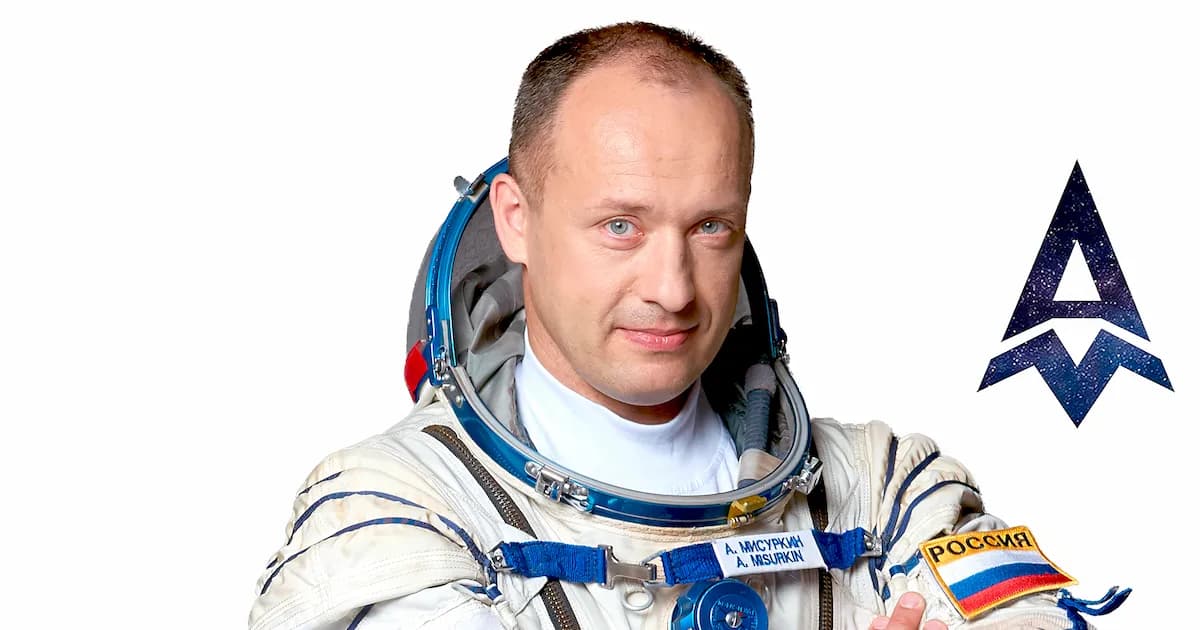
Hello! I'm cosmonaut Alexander Misurkin. My AI assistants Luke Vestin and "19-57" will answer your questions about space exploration and my experience.
To chat with Luke – simply type your question in the text field. If you're looking for space-related information from online sources, type "19-57, find information about ..." (it may take a moment – our robot is very thorough when searching the web).
Enjoy the conversation!