Who I Was Telling This For
29.09.2026I glanced up at the clock: fifteen minutes until the bell, and I was only just approaching the most important part of my lecture on how people become cosmonauts. September 25, St. Petersburg, Academic Gymnasium No. 56.
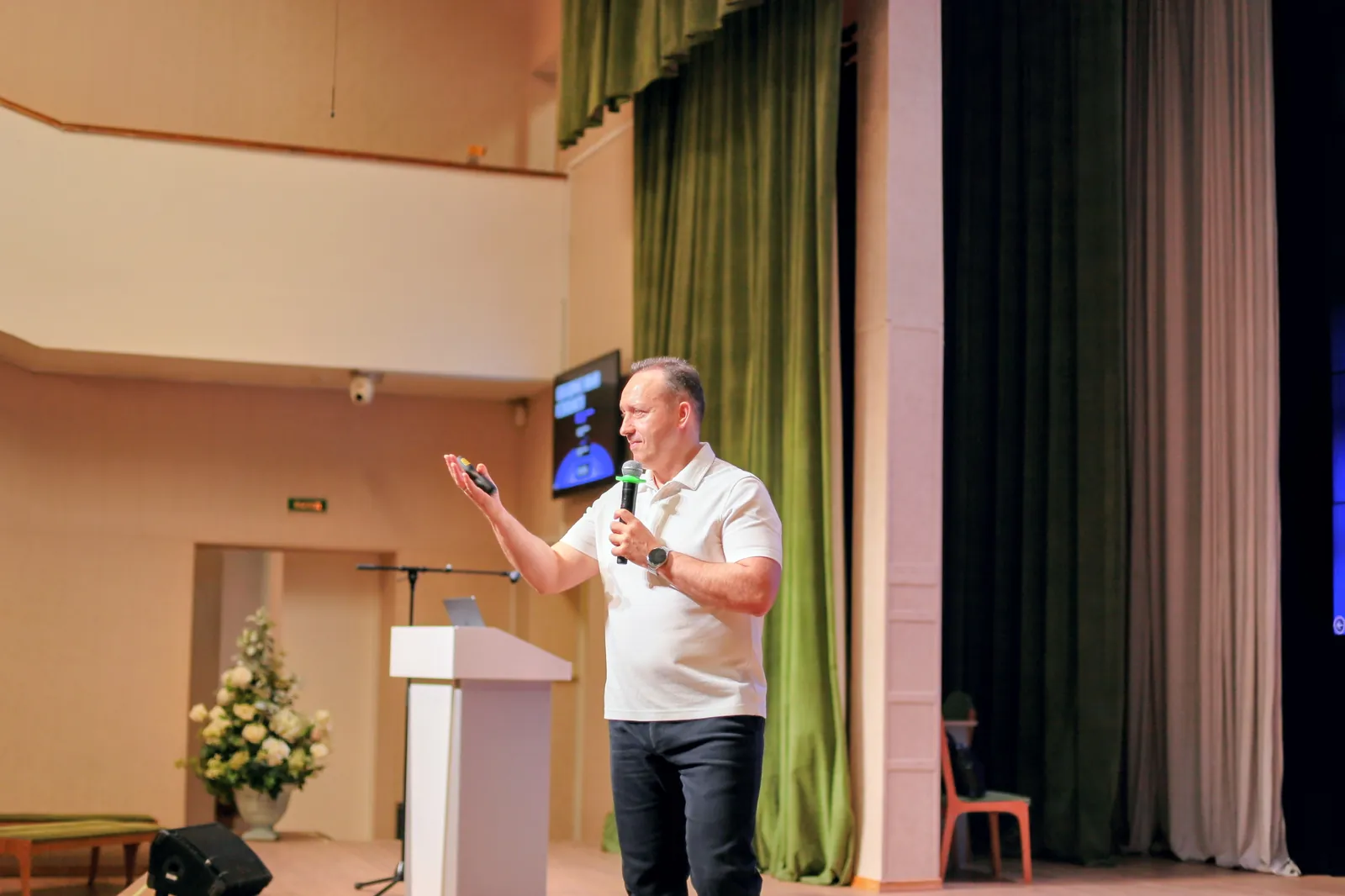
I had come to St. Petersburg to give a corporate lecture. On business trips, whenever I can, I try to make time for a school as well: I hold these meetings through the non-profit B-612. At the M. B. Pildes Gymnasium we were given one lesson, forty minutes, plus the break that followed.
The lecture “Cosmonauts Are Made, Not Born—And That Path Is Open to Many!” runs up to an hour and a half in full, so I had shortened the presentation in advance. Not enough, as it turned out. In it I break down my own path: what actually took me from a school in Oryol to the cosmonaut corps, what I misjudged about myself, and what worked in the end. I give it to schoolchildren only in the senior grades: to hold the whole chain in your head, you need a fairly high level of self-awareness.
I tried not to cut anything and to fit it all into the time left, which meant speeding up. And I sped up exactly where you must not: in the final part, about the strong line—what a person does best—and about the three main qualities of a cosmonaut candidate that the psychologists at the Cosmonaut Training Center once named for me, and which, as it turns out, are needed today not only by cosmonauts. And about why all of us will have to keep learning our whole lives, and how to develop those qualities in ourselves. And then where dreams, energy and goal-setting fit into it all… In short, none of this is simple.
A few people in the hall were in dialogue with me, some aloud, some silently, but you could see they were thinking along with me. With experience you can feel whether an audience is listening because it has to or because it is engaged. That time I couldn’t give myself an honest answer: the chain was long, and I was rushing it. Fifty-five minutes in all; there was no time left for questions, the students had their next lesson. I finished with mixed feelings.
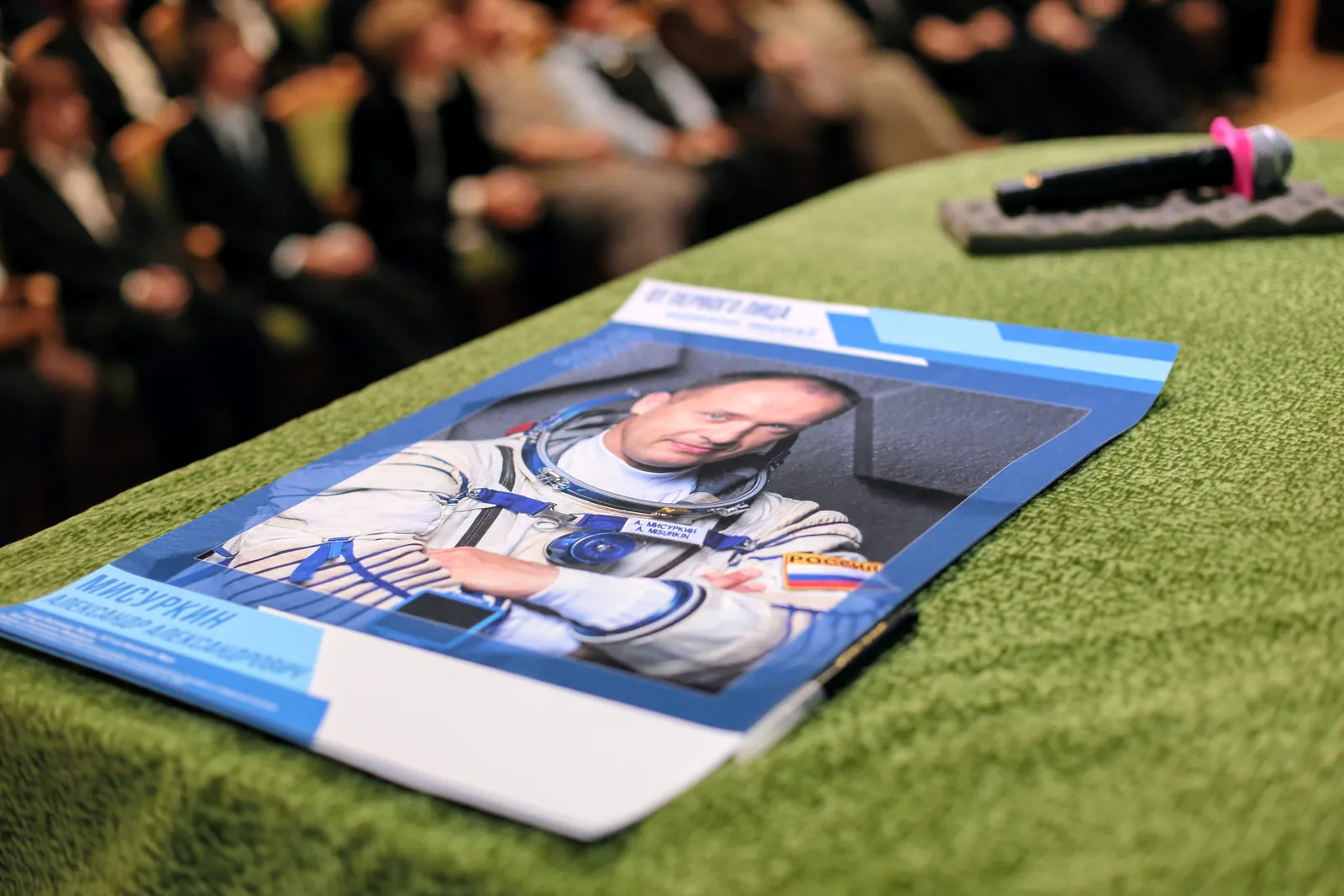
And I remembered my first lecture: I had left it with the same feeling. It grew out of a question I once asked myself: “Why are you so lucky?” In 2013, aboard the ISS, Luca Parmitano told me I was the youngest of everyone who had been on the station. I hadn’t kept such statistics, and later I checked: not the youngest, but one of the youngest professional cosmonauts on the ISS at that point. I completed my training in six years against an average of nine, and on my very first flight I got three spacewalks and a new four-orbit rendezvous profile—six hours to the station instead of two days. Why am I so lucky? Having broken it all down step by step, I saw that there is no luck. There is the natural result of actions I had been taking, without realizing it, since I was fourteen—since I decided to become a cosmonaut. That is how the lecture “Rules of Space – Rules of Success” came about.
The first to hear it, in the summer of 2014, were applicants to the Timiryazev Agricultural Academy. I failed to fire up the audience. There was no connection with the listeners, and by the end I was waiting for it to be over myself. Not a great feeling. But after the lecture a young man came up to me: “I had a choice—to come to your talk or to the open day at Moscow State University. I came to you, and I don’t regret it one bit.” I breathed out. I had told all of it above all for him. For the others too, but above all for him.
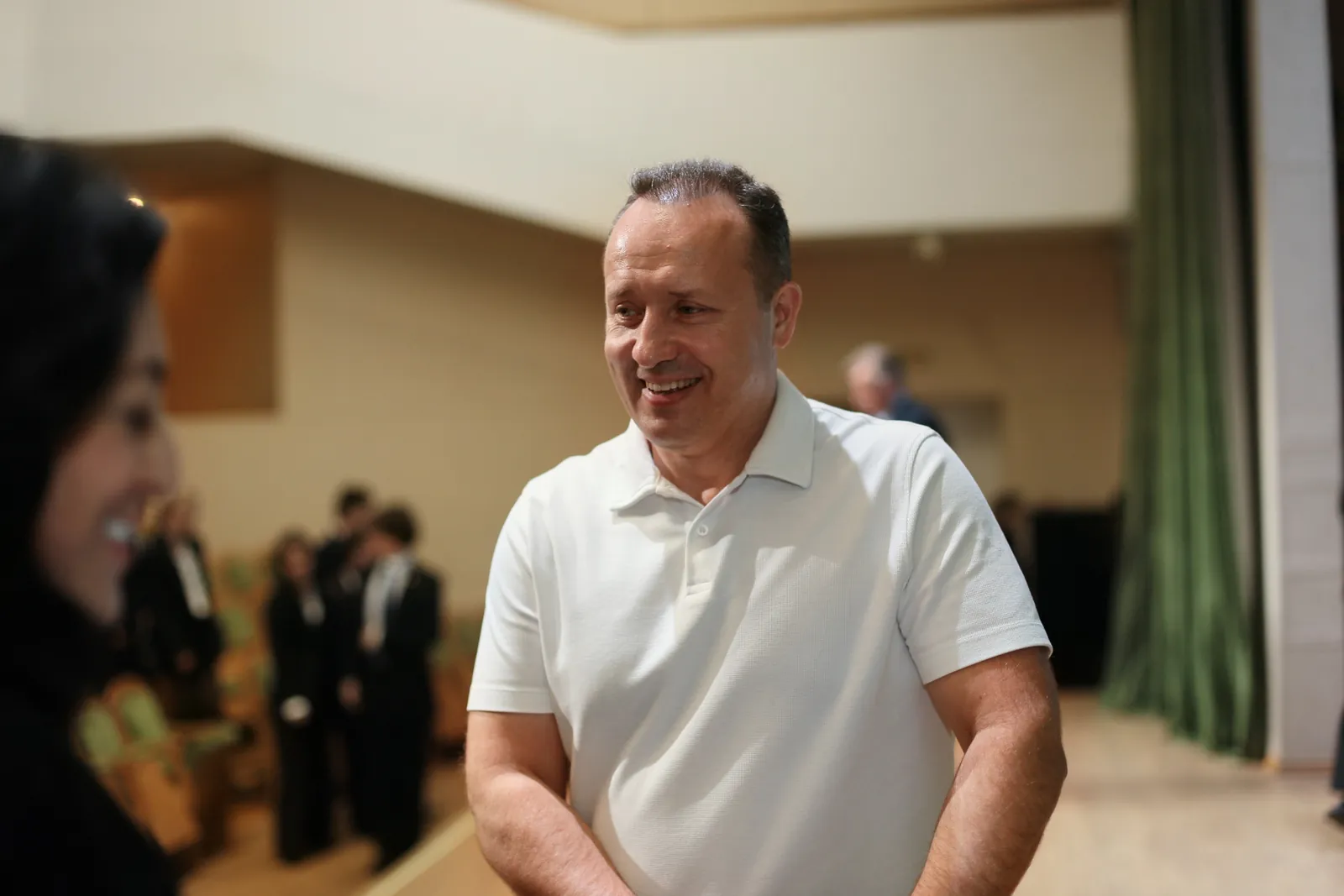
At Gymnasium No. 56, twelve years later, a girl came up to me after the lecture. She said she was a humanities person by nature and had expected a cosmonaut’s talk to be full of technical details that would bore her. But when we reached the part about meaning, the very part I had rushed, it resonated with her so strongly that she now wants to consciously search for herself and her own path. And she thanked me. I gave her a hug.
Self-awareness usually comes much later than school. It is harder to fire up an audience by analyzing a life path than with a story about a spacewalk, and the results of such conversations are almost never visible right away. You speak to everyone. Most people carry what they heard away in silence, and you will never know whom it reached. But when people come up after a lecture and thank you with such enthusiasm, you know for certain it was not in vain, and you get the energy to keep going.
I know this from both sides. The plan for “how to become a cosmonaut” was devised for me in ten seconds, when I was fourteen, by my school technology teacher, Natalya Vladimirovna Afanasyeva: first become a pilot, and for that, join a flying club. After my first flight I went back to the school to thank her and give her a photograph from space. She was deeply embarrassed: she had not been our homeroom teacher, she taught us a short course, as she did many other classes, and I could sense she barely remembered me. Yet for me she did what started it all.
And whose words once inspired you to look for your own path? Does the person who said them know?
* * *
Alexander Misurkin is a cosmonaut, Hero of Russia, commander of ISS Expedition 54, and holder of the Russian record for spacewalk duration.
Business speaker on the extraordinary results of people and teams.
Hello! I'm cosmonaut Alexander Misurkin. My AI assistants Luke Vestin and "19-57" will answer your questions about space exploration and my experience.
To chat with Luke – simply type your question in the text field. If you're looking for space-related information from online sources, type "19-57, find information about ..." (it may take a moment – our robot is very thorough when searching the web).
Enjoy the conversation!