Less Than a Minute to Disaster. And a Lesson from Dzhanibekov
22.05.2026Contact with Earth was restored at the moment when just over a minute remained before the catastrophic separation of the spacecraft's modules. Had that separation gone through, the descent module with two cosmonauts aboard would have been stranded in orbit. No engine. Not enough life-support resources to wait out a natural orbital decay.
This was September 1988. The return from the Mir orbital station. In the commander's seat: twice Hero of the Soviet Union Vladimir Afanasyevich Lyakhov, on his third spaceflight. Beside him: Afghan cosmonaut Abdul Ahad Mohmand.
All Systems Nominal. Every Circumstance Against Them
Commanders of visiting missions with a foreign cosmonaut were chosen from those trained to rescue-cosmonaut level -capable of flying the ship entirely alone and, if something went wrong, literally able to fly out and retrieve a crew "stranded" in orbit.
To give a sense of what that level of training means, here's a brief look at how crew readiness is tested. Final comprehensive exams are held separately -for work aboard the spacecraft and for work aboard the station. Each one runs a full working day. Drawing an exam ticket before the test begins, the crew must handle five contingency situations. Their exact composition is unknown in advance. None of them -nor the nominal procedures -may be executed with errors. Vladimir Afanasyevich was trained to do all of this essentially alone.
That is the ceiling of maximum professional readiness. And yet even that ceiling doesn't turn a person into a machine.
So, two people in the descent module. One a professional of the highest level of training and experience. The other a man with minimal knowledge.
And here begins what would be more accurately described not as a single "contingency" but as a confluence of circumstances -a chain of events, each one individually manageable by a trained commander, and each one draining a piece of his inner reserve.
At the scheduled time, the engine failed to fire for the braking burn: while establishing orientation, the infrared sensor mistook the terminator line for the horizon line. Within a few minutes orientation was restored. But the window had long passed -had braking begun then, landing would have been somewhere in China, since every second of delay adds eight kilometers of overshoot from the designated landing point. Everyone understood this, yet for some reason the computer fired the engine anyway. As trained, Lyakhov shut the engine off manually -it took him just three seconds.
Descent was pushed back by two orbits. Mission Control loaded a new program into the onboard computer. After roughly three hours of waiting, strapped into their couches and staying alert through the night, the crew again prepared for the descent maneuver. But the program contained an error: a far too small braking impulse had been set. Where before the engine had fired "unauthorized" and the commander had to shut it down, now the engine fired on time -but, having executed the programmed value, cut off after just seven seconds.
What came next was the most frightening part. Once the engine-off command was given, the standard algorithm started a timer counting down the minutes to the moment when the instrument and propulsion module was due to separate from the descent module -the very module housing both the engine and the oxygen supply.
If separation happened now, the cosmonauts were doomed: they would be left in orbit inside a sealed capsule with no engine and not enough life-support resources to wait out a natural orbital decay.
By the book, the crew commander was supposed to shut down the computer, halt every active operation, wait once more for a communication window with Earth, and start over from scratch. But through Lyakhov's eyes, coming right after the previous contingency, the situation felt so bizarre -some kind of "quantum entanglement," I'd say -with this engine. There was no time to deliberate, and Vladimir Afanasyevich made a different call: he fired the engine manually, again and again. Seven seconds. Fourteen. Twenty-eight. He was building up the braking impulse in pieces, but each time something cut it short. And running underneath it all the entire time -the timer. Invisible. Merciless.

At that exact moment, the spacecraft entered the coverage zone of ground tracking stations. Mission Control received telemetry. In a matter of seconds, specialists figured out what was happening and issued an abort command. Lyakhov blocked separation.
Seconds Remained Before the Module Was Jettisoned
Had Vladimir Afanasyevich understood where things were heading, he would have issued the abort command himself, without waiting for the signal from Mission Control. But first the puzzle with the engine, then the decision to depart from procedure, and then the worsening situation of the engine repeatedly cutting out -all of it led to what's known as tunnel vision, when you fix on the problem that seems most urgent and lose sight of the bigger picture. And that, in my view, is one of the main dangers for any team where decisions are made and taken alone.
What followed was another long and grueling day in orbit. In their spacesuits. Without the orbital module -back then it was jettisoned before the braking burn. Which meant no way to take off the suits, no toilet, no proper food. Sitting in a seat molded to their bodies.
The descent would go nominally. They would come home.
After this incident, the procedure was changed: the orbital module would only be jettisoned after the braking burn had been delivered. Lyakhov later acknowledged that his decision to depart from procedure had been a mistake, and put it this way: "...I just wanted so badly to get home."
"Nothing Will Go the Way You Planned"
After his return, Vladimir Afanasyevich uttered a phrase that became something of a catchphrase in our professional circle: "Nothing will go the way you planned."
Not the way you trained for it. Not the way you pictured it. Not the way it's written in the manual, the plan, or the flight assignment.
I always find it hard to listen to confident judgments about episodes like this from people who've never been in such situations themselves and who, checking the crew's actions step by step against the manual, judge everything on a binary scale of "right" or "wrong."
To understand what is actually happening in minutes like that, whenever I can I prefer to mentally sit in that commander's seat. To understand how the situation was unfolding as a whole, to feel how his psychological reserve was draining, and to work out why, at some point, the sheer will to get home overpowered the instruction manual.
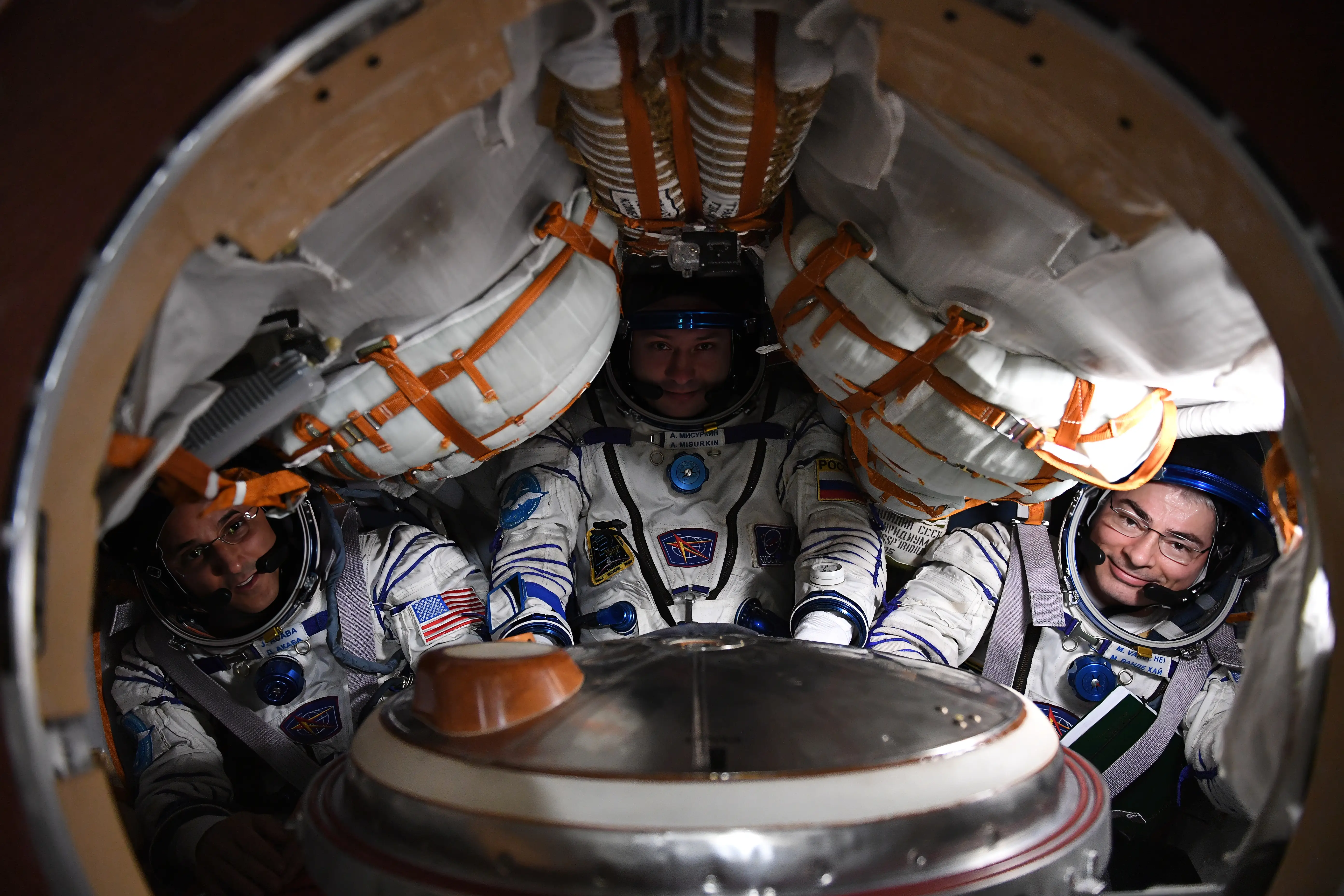
Back from my cadet years, I remember this: "Everything you know on the ground at a solid five, in the air you know, at best, at a three." I was reminded of it again on my second flight, in 2018. On the return leg, preparing for undocking. During the hatch-seal check between the descent module and the orbital module, you just have to hold the control time -and wait. Sitting in the Soyuz seat, assessing my own readiness for nominal and contingency work, I wrote down in my kneeboard everything that was distracting me, felt uncomfortable, or kept me from focusing. All the things that never showed up on the simulator at Star City, which after years of training becomes like a cozy apartment to you -you know every inch, every body position, every angle. But an actual flight is different. A multitude of small factors, each trivial on its own, add up into a background hum that eats into your cognitive resources.
I won't get into the technical details -what matters is this: the list turned out to be not short. And the key thing I realized then: nothing had actually happened. The flight was nominal. Yet part of my reserve was already being spent "off-nominal" -simply to counter the negative effect of factors that never appeared on the simulator and that Mission Control has no way of knowing about.
So I understand what Lyakhov went through that September in 1988. His competence was at the very top of the scale. But competence is what you know how to do. Resource is how many percent your "battery" is charged right now. And that resource drains quietly and continuously. First the orientation problem. Then the engine firing at the wrong moment. Then three hours of waiting curled up like an embryo. Then everything else. And in the moment, you have no answer to questions like: "What just happened? Was that an IR sensor failure or not? Why did the engine fire when it shouldn't have?" and so on. From the inside, it looked like a growing snowball of ambiguous events. It was only afterward that everything got sorted into a neat, orderly chain of events.
It's like diving on a held breath, and when you try to surface, discovering that something is holding you down. You solve one problem -some of your reserve is gone, but you're holding on. You solve a second -still holding on. And just when it feels like "this is it, I'm done," and the urge to breathe becomes unbearable, you make one more stroke upward, and something snags you again. That's the moment when the sheer will to take a breath overrides the understanding that you need to dive back down to free the snag. That's what happens when you hit your breaking point. That's what that phrase means: "I just wanted so badly to get home."
Today I find myself asking: if I know that "nothing will go the way I planned," how do I raise my own breaking point, how do I increase the cognitive resource available to me, and how do I avoid falling into the tunnel-vision effect that I myself fell into during training?
In one conversation, Anatoly Yakovlevich Solovyov -the world record holder for total spacewalk time and number of spacewalks -once said: "The fire alarm always goes off when you least expect it, so you shouldn't train to hit some target someone else set, but with a large margin to spare." That, essentially, reflects my own attitude to training, both in flying and in spaceflight. And it applies not only to personal preparation but to the quality of group interaction as well -because your resource doesn't have to be only your own, given that science has shown distributed intelligence works more effectively, and a group's collective psyche is more resilient than an individual one.
Dzhanibekov's Lesson
And this is exactly the moment to remember another man whose name is spoken with special weight in our profession. Vladimir Aleksandrovich Dzhanibekov recently turned 84. Five spaceflights, twice Hero of the Soviet Union, commander of the very mission that in 1985 brought the uncontrolled Salyut-7 station back to life.
In 1981, Dzhanibekov was preparing to fly to the Salyut-6 station with Mongolian cosmonaut Jügderdemidiin Gürragchaa under the Interkosmos program. In the standard format for such visiting missions, the commander was responsible for everything -getting there, carrying out the program, getting back -and on the legs of the flight to and from the station he was expected to do it all himself. The foreign cosmonaut could effectively be "almost a passenger": minimal duties, minimal involvement in flying the ship.
But during training, Dzhanibekov did something different. He asked Gürragchaa a simple question: "If something happens to me in flight, what do you want? To drift up there with a corpse, or to be able to get back on your own? If you want to get back, you'll need to work as a flight engineer."
Gürragchaa understood instantly. And he began training not as a passenger but as a full-fledged flight engineer -someone who understood what was going on and was capable of monitoring and analyzing the situation.
In flight, that preparation never had to be used -everything went nominally. But Dzhanibekov had built himself an enormous reserve. Not in the form of fuel, oxygen, or backup systems -but in the form of a living, thinking, engaged crew member. The principle of distributed intelligence in action. And something else too: an emotional foundation -you are not alone. There are two of you. A crew.
The commander could have simply ordered him: "Go learn the buttons." Gürragchaa would hardly have refused, but his attitude toward the work would have matched the ask. Dzhanibekov could have done everything himself -faster and simpler than waiting for someone else to learn. Instead, he chose the harder path: he gave Gürragchaa a personal reason to work harder than the formal training program required, and he gave him the means to act on it. Training as a genuine flight engineer. The right to think, to monitor, to analyze. Gürragchaa's personal motivation and the commander's objective ended up pointing in the same direction.
By doing this, he showed care for his crewmate, demonstrated that he wasn't thinking only of himself, and -most importantly -sharply raised the team's overall reserve for overcoming whatever might go wrong. When crew members see that kind of attitude, you don't need to push them. They come with you on their own.
This is a short episode from his training that Vladimir Aleksandrovich told me himself. An episode that shaped much of my own understanding of how a real crew is formed, and of what leadership is fundamentally about. Your strength -your resource -is your team. And Dzhanibekov showed exactly where a real team begins: with a leader's work on meaning. Sometimes it's one shared meaning for everyone, like the cleaning lady at Korolev's design bureau who, asked what she does there, answered, "We build rockets." Sometimes it's a personal meaning for each individual, aligned with the shared goal, as with Dzhanibekov and Gürragchaa. But either path comes down to the same thing: a leader builds a team through meaning before demanding action. I share this story in my programs "The Making of a Space Crew" and "Crew Commander: From Appointment to Recognition" -because that one short episode captures nearly everything essential about what turns a crew into a crew, and an appointed commander into someone people choose to follow.
Why This Matters Today
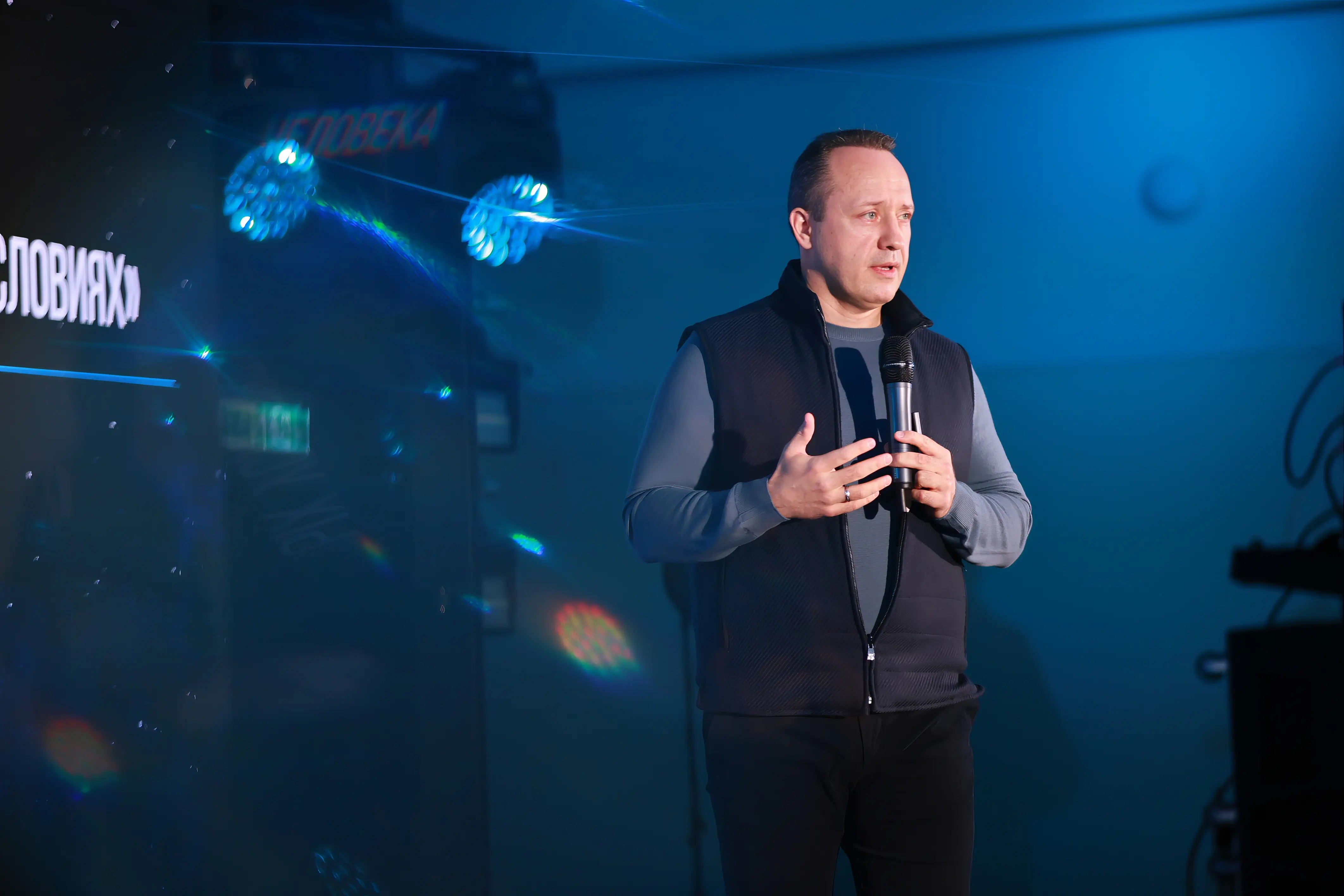
A few years ago I was invited to share with a group of entrepreneurs how space crews are formed and bonded. And it made me wonder: why would entrepreneurs need the same thing we need in space? The answer turned out to be obvious.
Any modern business is a spaceflight. Sudden shifts in circumstances, inevitable contingencies, a shared outcome that depends on everyone's contribution. And the pace of change today is such that predicting how a situation will unfold over the long run has become nearly impossible.
Lyakhov's experience shows once again that no one flies into the unknown alone, and his phrase -"nothing will go the way you planned" -rings especially true today. Which is exactly why a team isn't some trendy buzzword from a training seminar, but the only real way to compensate for what you can't plan for in advance.

Thank you to Vladimir Aleksandrovich Dzhanibekov and Vladimir Afanasyevich Lyakhov -for the lessons they gave us, not only in space exploration but in teamwork itself. In the age of AI, it turns out we need those lessons not less, but more.

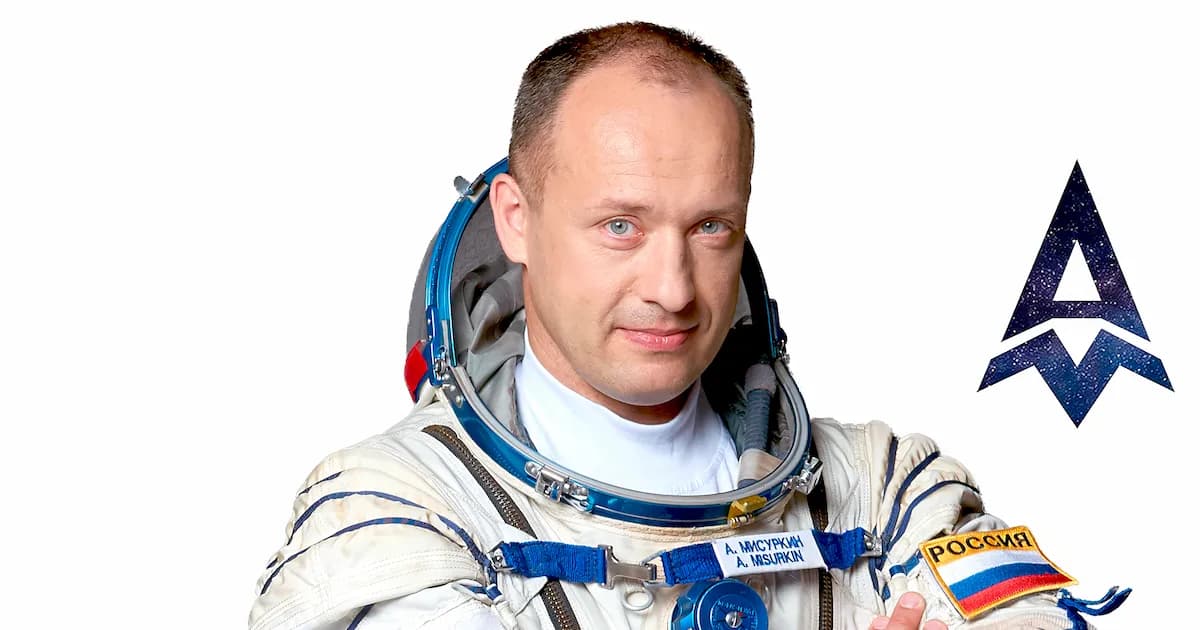
Hello! I'm cosmonaut Alexander Misurkin. My AI assistants Luke Vestin and "19-57" will answer your questions about space exploration and my experience.
To chat with Luke – simply type your question in the text field. If you're looking for space-related information from online sources, type "19-57, find information about ..." (it may take a moment – our robot is very thorough when searching the web).
Enjoy the conversation!