A Cosmonaut Is Always Fine
01.11.2026
Roscosmos's fifth open recruitment for the cosmonaut corps is coming to an end: applications were accepted until June 30, testing finished on September 30, and the results will be announced by November 10. Finding out how to become a cosmonaut and applying keeps getting easier: in 2026, for the first time, applications could be submitted through Gosuslugi, Russia's public services portal, and the requirements and selection procedure are posted on the website of the Cosmonaut Training Center (all the documents are in Russian). Getting in is still hard: there were almost 500 applications, and the plan is to select four to six people. So anyone thinking of applying in future rounds should know in advance what it will take. This time the conditions were: no older than 35 at the end of 2025, a university degree (specialist or master's) with an average grade of at least 4.0 out of 5, at least three years of professional experience in the field, height from 150 to 190 cm, weight from 50 to 90 kg.
The approximate physical standards: 12 pull-ups, one kilometer run in 3 minutes 30 seconds, 800 meters freestyle swum in 20 minutes 10 seconds. The full list of standards and the other requirements are in those same documents, and the selection process itself is described in detail in a document on the sequence and content of the procedures.
But documents can't list everything you will need. For those waiting for the decision and those who will apply later, I want to describe my own psychological selection and something that isn't in any standard.
"Name One": Psychological Selection in 2006
In 2006, psychological selection came down to one day for me. From morning till evening I talked with Rostislav Borisovich Bogdashevsky, the psychologist who had overseen the psychological training and selection of cosmonauts since the days of Yuri Gagarin and who led the selection of my group.
By the end of the day I felt as if I had spent it unloading coal. I was glancing wistfully out of the window at people leaving work. Rostislav Borisovich caught that glance, understood everything, smiled and said, "All right, all right, I'm letting you go." And in the same breath he asked me to name ten qualities I considered important for a cosmonaut.
By then my brain had stopped working. I started listing the virtues of the bogatyrs, the heroes of Russian epic tales, mumbling heaven knows what, and he stopped me: "Wait, wait. Name one."
What he wanted to hear was: a sense of humor.
Today, selection is set up so that almost everything in it is measured and entered in the record: health, height and weight, education, work experience, physical standards, math and physics tests. Even the psychological tests are mostly taken on computers. When I went through selection, it was very different: the man who had led the psychological selection of all our predecessors talked with me for a whole day and at the end asked about a quality that isn't in any standard. Whether today's tests check for this quality is hard for me to judge; probably they do, to some extent. But you won't read about it anywhere in the requirements, and it matters both in space and on Earth, then as now.
"Remember"
Rostislav Borisovich had another lesson too, although it wasn't addressed to me. A friend of mine got a four out of five on an exam and took it very hard: he felt the grade had been unfairly lowered. He was walking away from the exam, indignant, when he met Rostislav Borisovich in the corridor. Rostislav Borisovich asked what had happened, and my friend explained how he saw the situation. The answer he got was: "Remember: for a cosmonaut, always, everything is fine."
At the Training Center they assess not only exams but also how you react to setbacks. And when a decision could go either way, then, as in life, a great deal depends on how people perceive you. I felt this both in selection and in training.
My cosmonaut certificate is No. 203, yet I flew to space as Russia's 116th: 202 people received the certificate before me, and 115 had been to orbit. Years pass between the certificate and the flight, and how a person handles injustice, failure and waiting during those years gets noticed too.
When my friend told me how Rostislav Borisovich had answered him about that four, I remembered that I had often said something similar to myself, if not quite consciously: I watched my mood and managed it through frank talk with myself. In 2016 I was commander of the backup crew for Soyuz MS-02. At Baikonur, the launch site in Kazakhstan, we were riding from the cosmodrome to the hotel, and I caught myself preoccupied with some business of my own, my mood pretty low. And I said to myself: it's probably raining in Moscow, and here the sun is shining and camels are walking around. You're riding in a bus that only about thirty people in the whole country get to ride: cosmonauts. And you're sitting in the commander's seat, which not every one of them will get to sit in. So why wouldn't you enjoy life? And somehow I immediately felt livelier, more cheerful.
Six People for Half a Year: Why a Cosmonaut Needs a Sense of Humor
Today, after three flights, a sense of humor is one of my top five qualities for a cosmonaut. Or rather, not so much the sense of humor itself as a positive way of thinking, of which humor is one expression.
When crews rotated only on Soyuz spacecraft, up to 2020, three people at a time arrived at the ISS, and six worked on board at once. Crews changed in turn, so during one long expedition you got to work with two crews. Twenty-four hours a day, seven days a week, in a confined space, with the same people. Without humor it is very hard to spend half a year like that, however good those people are.
Every person has their own baseline level of positivity: the mood they live in from day to day. Imagine a scale from 0 to 10, where 10 is always upbeat and smiling and 0 is almost always down. Who would you be more comfortable around? For me it's someone at 6–7 and no lower, especially in a confined space. Everyone's baseline affects how easily the whole flight goes.
The Russian Answer to Pizza
During my second flight, on Expedition 53, colleagues on the American segment came up with the idea of making pizza in zero gravity. The ingredients had been sent up to them in advance, and it was all filmed. I was supposed to be there too, but our toilet suddenly broke, and that thing takes priority. Sergey Ryazansky kept floating over to me: "Sanya, how's it going over there?" (Sanya is short for Alexander.) And there I was under the floor, repairing the toilet. I finished just in time for the main event, eating the pizza. The video went online and spread all over the world.

Expedition 53 pizza. Photo: NASA
Later, in a letter from my sister, I read that people back home were discussing the American pizza in space on the radio and wanted to know what the Russian answer would be. My first reaction was: good grief, why does this need an answer too? I thought and thought about what could be done. I hadn't prepared any ingredients in advance, and I'm no cook anyway.
In December 2017, Anton Shkaplerov arrived at the station. I told him, "Anton, people at home are waiting, we have to do something. What shall we make?" He said right away, "Well, New Year's is coming up, let's make Olivier salad." (That's the potato, sausage, pea and mayonnaise salad every Russian table has at New Year's.) "Out of what? Where do we get sausage?" And he pulled out a stick of smoked sausage.

Then I started going through the ingredients from memory, and everything seemed to add up. We had fresh onion. The peas were freeze-dried, and we rehydrated them; it came out almost like pea puree, but still. We picked potatoes out of a can of "Potatoes with Pork," taking only the chunks. We chopped everything into our space bowl, made of a thick polyethylene bag; getting the chopped pieces into it in zero gravity was a whole separate bit of fun. We mixed it with cheese sauce. It was the first Olivier in space, and the first Olivier I had ever made. When people ask me what the riskiest thing in my life was, I tell them about that salad: I was making it for the first time, and my tasters were going to be the most out-of-this-world experts in haute cuisine.
We celebrated New Year's as a whole crew on Moscow time. Our colleagues wolfed down this Russian salad, as Olivier is called in English, in five minutes and asked for it every Friday. Here is the video of us making it.
I am very grateful to all the colleagues I flew with: there was something to learn from each of them. But with Anton it was as easy and positive as it gets, and that is exactly what I learned from him. It doesn't mean laughing all the time, but laughing together now and then is absolutely necessary. With one phrase he turned my "why does this need an answer too" into a celebration for the whole crew.
Atmosphere Doesn't Just Happen
I have been meaning to write this article since April, when I was given a tube of badminton shuttlecocks, but I only got around to it now. On April 12, 2026, Cosmonautics Day, everyone who was at practice that day at the Iskra badminton club signed it. And they joked: cosmonauts are forever being asked to sign something, so this time we'll sign something for you. The tube stands on my desk and reminds me of the sense of humor, the very one Rostislav Borisovich wanted to hear from me.

Iskra is, in my view, the most positive badminton club in Moscow. I go there not so much for the workout, or even for the game I love, as for the atmosphere: that's where I shake off stress, breathe out and recover. An atmosphere like that doesn't arise by itself; the credit goes one hundred percent to Alexey Komarov, who runs the club. It's the same on board the station: the mood of the whole crew depends on how each person behaves, above all the person responsible for the team.
But everyone's average level of positivity is, by nature, their own. Can anything be done about it?
It can. About a third of the differences between people in well-being are linked to genes, and the rest is life, the people around us and how we're used to thinking. True, that one-third comes from a one-off survey, which also picks up whatever mood you happen to be in that day. If you average a person's answers over several years, less of that randomness remains and the genetic share comes out higher. But even this stable level doesn't stay frozen: psychologists Fujita and Diener followed people in Germany for 17 years, and in about one in four, life satisfaction changed noticeably. Sleep, exercise, the people around you and health all affect that baseline. I talk about this, about the humor that unites a team, and about choosing your attitude in a difficult situation in my lecture "Think Positive: Space Lessons for Modern Life."
To those waiting for the selection results and those who will apply later, I'll say one thing: space will test your knowledge and your health no matter what, but other people will be living and working beside you for months, and it matters to them that you're easy to be around.
At my selection, Rostislav Borisovich never did hear the right answer from me. Today I would answer right away: a sense of humor. It's definitely in the top five.
And what one quality would you name?
Alexander Misurkin is a pilot-cosmonaut and keynote speaker.
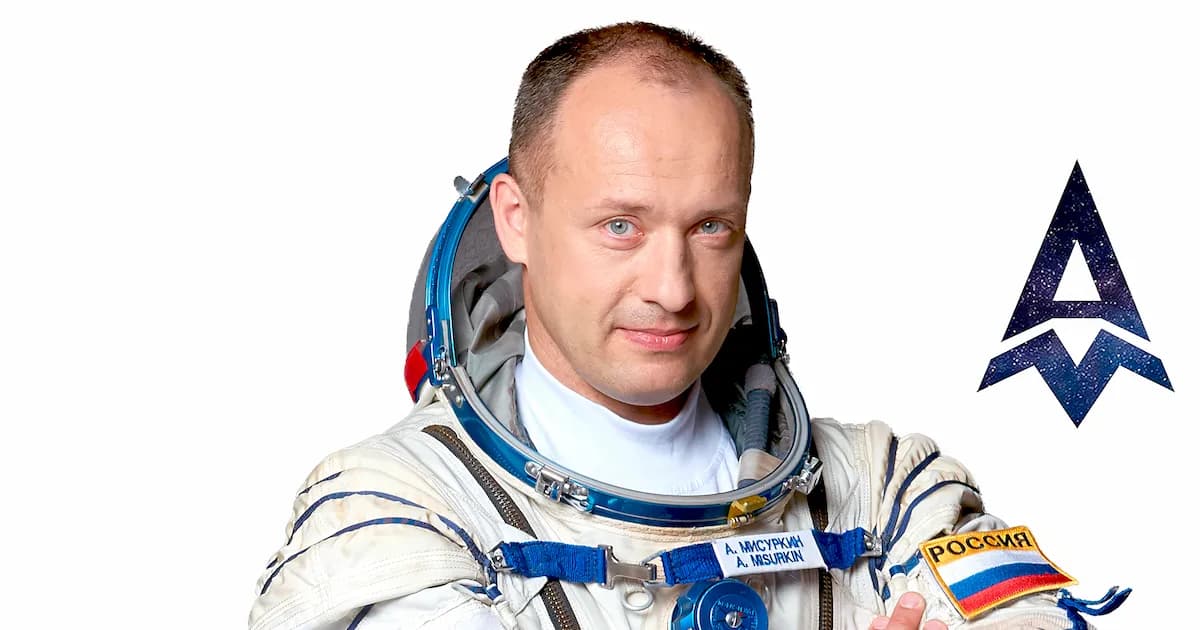
Hello! I'm cosmonaut Alexander Misurkin. My AI assistants Luke Vestin and "19-57" will answer your questions about space exploration and my experience.
To chat with Luke – simply type your question in the text field. If you're looking for space-related information from online sources, type "19-57, find information about ..." (it may take a moment – our robot is very thorough when searching the web).
Enjoy the conversation!